Looking for the Fort Campbell EAP?
Emergency Action Plan
Revised January 2026
The Austin Peay State University Emergency Action Plan (EAP) is designed to provide basic information so that the reader can be better prepared in the event of an emergency or critical incident. The EAP is not designed to give definitive answers for every type of emergency. Each incident is unique and constantly evolving. Only those involved in the incident can make decisions that they believe are correct to ensure their own safety.
Being prepared is the most important step one can take to minimize risks during an emergency. Advanced planning can save time when making decisions about what action to take during a critical incident. No document or person can provide concrete answers about a given situation. Individuals are responsible for their own safety and to prepare themselves for emergencies. The information provided in the Emergency Action Plan is designed to provide the resources for informed decision-making. We encourage you to familiarize yourself with the information contained within the EAP prior to an occurrence and to review the information on a regular basis.
1. Emergency Notification Systems
 APSU Alert Notification System is made up of four systems; Rave Alert notifications, outdoor warning sirens, Alertus Desktop notifications, and the Rave Guardian app. Other forms of communication that APSU may use to broadcast messages are:
Rave Alert Notifications
APSU utilizes an emergency notification system, RAVE Alert, to communicate official information during an emergency that threatens the health and safety of members of the campus community or disrupts normal campus operations.
All APSU students, staff, and faculty are registered for the RAVE Alert with their official university e-mail address. We encourage students, staff, and faculty to add their cell number to their APSU Alert accounts. Parents, media, visitors, and other interested parties may register for RAVE Alert on a voluntary self-subscription basis by texting APSU Govs to 67283.
RAVE Alert uses the following methods to send immediate notifications:
-
Text Messages—sent to phone numbers that have been entered by the individual user.
-
Email—sent to all apsu.edu email addresses.
We encourage you to edit your RAVE Alert account to include multiple forms of notification as just one part of your personal emergency action plan. For more information on emergency planning at APSU and ideas for personal preparedness.
Outdoor Warning System
-
Three sirens are located on campus and have a half mile audible alarm.
-
Outdoor warnings are for individuals outdoors only, they are not designed to be heard inside of buildings.
-
APSU sirens are located:
-
The roof of the Morgan University Center (MUC)
-
Henry street eastside of the stadium
-
Emerald Hills
-
-
If the National Weather Service (NWS) issues a Severe Thunderstorm Warning or a Tornado Warning, you will hear a ten-second tone with the spoken text of the alert. The alert will then repeat. When the threat is over, there may be an “All Clear” tone and spoken text. If conditions persist there may not be an “All Clear” siren, as to not confuse people if there is another storm in the area.
-
Sirens are tested silently once a week.
-
Audible tests of the system happen the third Wednesday of every month at 11:20 a.m.
Alertus Desktop Notifications
Alertus can perform University-wide alerts from APSU Public Safety. If an alert is issued it will take over every University owned computer with important information. This system is tested on the third Wednesday of every month.
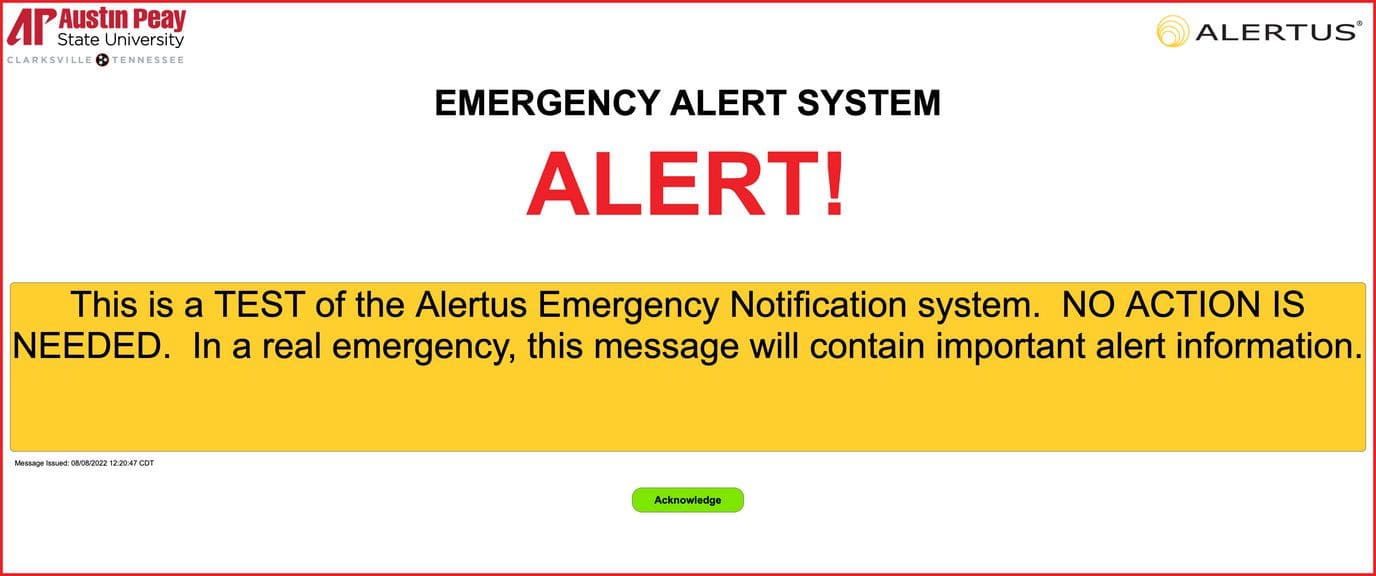
Alertus Desktop Panic Button
 In addition to notification, every APSU-owned and maintained computer on the secure
network has the Desktop Activator button to silently alert APSU PD of any incident
in progress. PD will immediately dispatch an Officer to your location. Your computer
must be “hardwired” to the network. The alert will not give your exact location if
you are on the wireless system.
In addition to notification, every APSU-owned and maintained computer on the secure
network has the Desktop Activator button to silently alert APSU PD of any incident
in progress. PD will immediately dispatch an Officer to your location. Your computer
must be “hardwired” to the network. The alert will not give your exact location if
you are on the wireless system.
Rave Guardian App
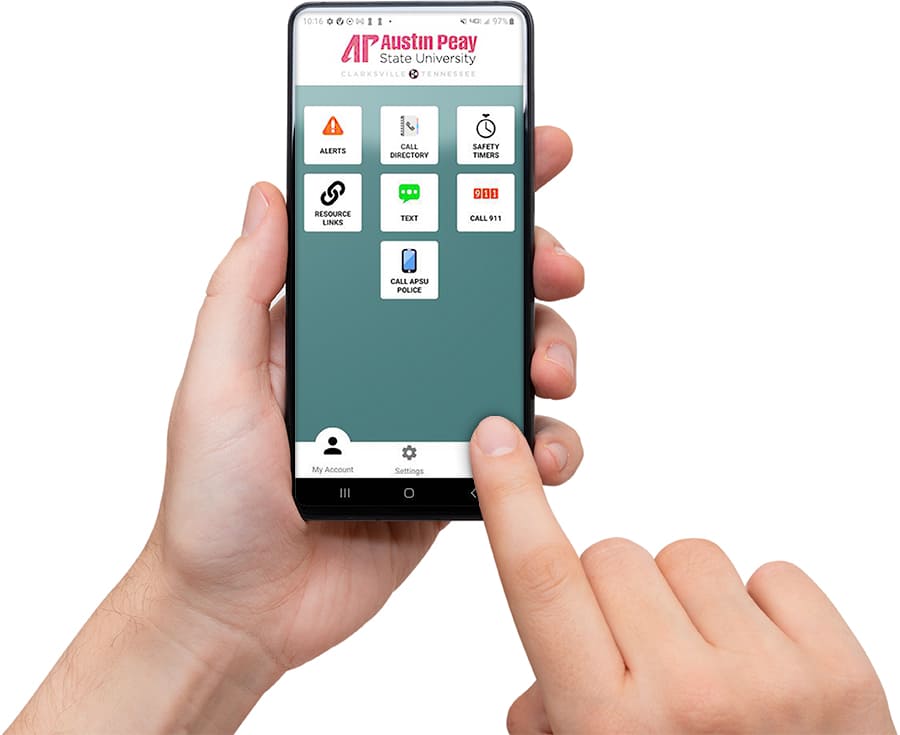 Rave Guardian is a personal safety app that Austin Peay State University provides
to all students, faculty, and staff to download for free. The app provides a quick,
convenient, and discreet way to communicate with APSU Police, enhancing your overall
safety and allowing Austin Peay police to better protect you.
Rave Guardian is a personal safety app that Austin Peay State University provides
to all students, faculty, and staff to download for free. The app provides a quick,
convenient, and discreet way to communicate with APSU Police, enhancing your overall
safety and allowing Austin Peay police to better protect you.
Features:
-
Virtual campus safety escorts: The “Safety Timers” feature allows anyone walking on campus to invite a virtual guardian from their contacts to view their location while they walk. If their safety timer runs out without the user of the application disabling it, APSU police will be contacted and sent to their last recorded location.
-
Direct contact with campus police and 911: The call directory and 911 features allow users to make emergency calls directly from the app.
-
Location-based safety alerts: The Rave Guardian App will send out safety notifications or emergency alerts to anyone on or near campus.
-
Campus safety directories: The directory includes several safety resources, including the APSU police as well as Poison Control.
-
Anonymous reporting of campus activity: The text feature in the app allows students to directly report to campus safety officials and chat with them in real time, with the option of anonymity available as well.
Download the App
|
|



2. Severe Weather
Tornadoes | Storm Shelters | Severe Thunderstorms | Power Outage | Flooding | After the Storm
Up-to-Date Weather Information in Middle Tennessee
2.1 Tornadoes
Tornadoes can cause fatalities and devastate a neighborhood in seconds. A tornado appears as a rotating, funnel-shaped cloud with whirling winds that can reach 300 miles per hour. Damage can be more than one mile wide and 50 miles long. Every state is at some risk from this hazard.
Interesting facts about tornadoes:
-
They may strike quickly, with little or no warning.
-
They may appear nearly transparent until dust and debris are picked up or a cloud forms in the funnel.
-
The average tornado moves Southwest to Northeast, but tornadoes have been known to move in any direction.
-
Waterspouts are tornadoes that form over water.

Tornado WARNING
Campus Sirens will sound.
-
Take shelter immediately
-
Go to the lowest floor of the building
-
Under stairwells and in bathrooms
-
Keep away from windows and doors with glass
-
Stay in place until "All Clear"
What Do You Do if...?
If you are in a vehicle, trailer, or mobile home:
Never try to outrun a tornado in urban or congested areas in a vehicle. Instead, get out immediately and seek safe shelter (the lowest floor of a sturdy building). If there is no basement, go to the center of an interior room on the lowest level (closet, interior hallway) away from windows, doors, and outside walls. Put as many walls as possible between you and the outside.
If you are outside with no shelter:
Watch out for flying debris. Flying debris from tornadoes causes most fatalities and injuries. Try to find safe shelter (the lowest floor of a sturdy building).
Storm Shelters
Shelters are located in the basement of Govs Terrace North and South, and Eriksson Residence Halls. When the Tornado Warning siren sounds, the doors will automatically unlock and the elevators will go to the shelter. Everyone is welcome in the shelter. Exterior doors are marked with Tornado Shelter signage. Each shelter is equipped with restrooms and emergency lighting.
2.2 Severe Thunderstorms
Thunderstorm WARNING
Campus Sirens will sound. Take shelter indoors immediately.
Power Outage
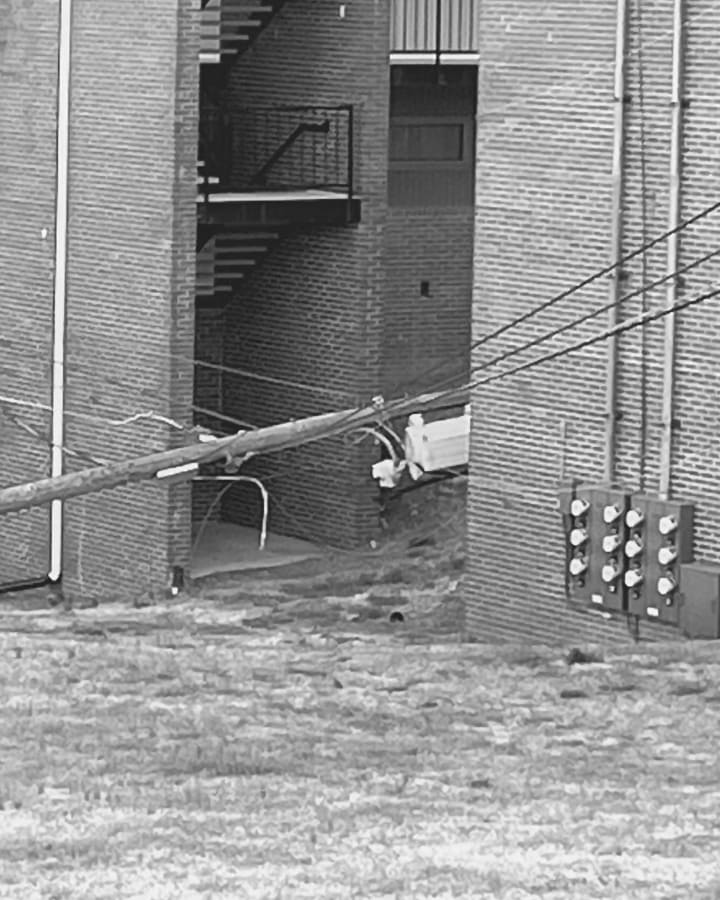
Some buildings on campus have emergency generators. All buildings have emergency lighting for at least 90 minutes. To report a power outage on campus, call the Physical Plant at 931-221-7465.
-
Turn off or disconnect any appliances, equipment or electronics you were using when the power went out. When power comes back on, it may come back with momentary "surges" that can damage equipment such as computers.
-
Leave one light turned on so you will know when your power returns.
-
Leave the doors of your refrigerator and freezer closed to keep your food as fresh as possible.
-
Use the phone for emergencies only. Listening to a portable radio can provide the latest information.
-
Eliminate unnecessary travel, especially by car. Traffic signals may stop working during an outage, creating traffic congestion.
Flooding
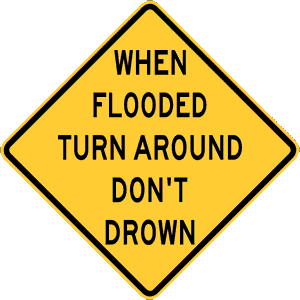
The only flood prone area on campus is South Drane Street.
Flood Levels with a HIGH Impact:
-
6" of water can sweep a person away.
-
12" of water can sweep a most cars away.
-
18" of water can sweep a large vehicle away.
After the Storm Passes
★ Be aware of fallen trees and power lines.
Never approach a downed wire. Call the power company to report. Do not cut trees leaning on power lines
★ Throw away food if power out longer than 4 hours.
Refrigerated medications may also have to be tossed. Consult your doctor.
★ Use a portable generator only in an open area.
Fumes from the generator can be deadly. Never operate a generator in an enclosed space. Always position the generator away from open windows or doors.
3. Earthquake
An earthquake can occur without warning and may cause falling objects, structural damage, utility disruptions, and other hazards.
During the shaking
-
Drop to your hands and knees.
-
Cover your head and neck and take shelter under a sturdy desk or table if available.
-
Hold On until the shaking stops.
-
Stay away from windows, glass, shelves, and heavy objects.
-
If outdoors, move to an open area away from buildings, trees, streetlights, and utility lines.
After the shaking stops
-
Check yourself and others for injuries.
-
Evacuate if the building is damaged or instructed to do so.
-
Be alert for aftershocks.
-
Avoid damaged areas and downed utility lines.
-
Report injuries, hazards, or structural damage to emergency responders.
Remember
-
Do not use elevators during or immediately after an earthquake.
-
Follow instructions from emergency personnel and university officials.
4. Evacuation
An evacuation may be required due to a fire alarm, hazardous materials incident, gas leak, severe weather, structural concern, or other emergency.
If an evacuation is ordered or a fire alarm sounds
-
Remain calm.
-
Stop your activities and prepare to leave immediately.
-
Use the nearest safe exit.
-
Do not use elevators.
-
Assist individuals who may need assistance if it is safe to do so.
-
Proceed to the designated rally point for your building.
-
Remain outside the building until emergency personnel provide an all-clear.
Remember
-
Know at least two evacuation routes from your work area or classroom.
-
Follow instructions from emergency personnel.
-
Report any injuries, hazards, or missing persons to first responders.

5. Active Shooter
Call 911, campus Police at 931-221-7786, or text silently with APSU PD through the Guardian App as soon as you are out of immediate danger.
|
Let the dispatcher know:
|
When Police arrive:
|
|
Run.
|
Hide.
|
Fight.
|
6. Fire
When the building's smoke alarm sounds, state law mandates that everyone must evacuate the building.
-
Close your door as you leave.
-
Know at least two escape routes from wherever you are.
-
If you see smoke or fire and the alarm is not sounding, activate the fire alarm as you exit.
-
Go to the nearest exit.
-
Do not use the elevator.
-
Stay low to the ground if you see smoke.
-
Once outside, stay outside.
-
Do not re-enter the building until emergency responders have given the “all clear.”
-
If your clothing catches fire: Stop. Drop to your stomach. Rock until the flames are out.
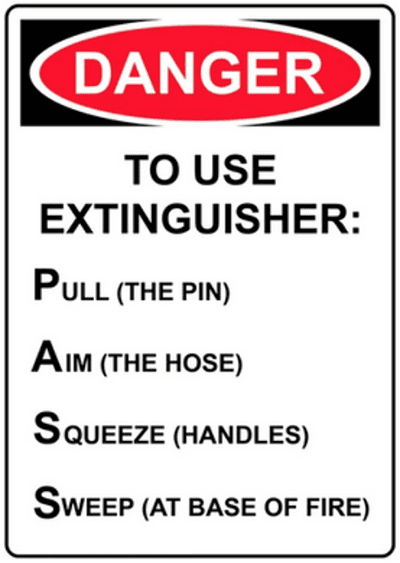
Fire Extinguisher
You should only consider using a fire extinguisher if you have been trained on how to use one and only if you feel confident that you can use one safely. A fire extinguisher can save lives and property by putting out a small fire. However, fire extinguishers have limitations. There is only about 30 seconds of fire suppressant in them. Be ready to evacuate when the tank is empty.
7. Hazardous Material Release or Spill
Hazardous materials are substances that are flammable, combustible, explosive, toxic,
noxious, corrosive, oxidizing, irritant, or radioactive. A hazardous material release
or spill can kill you or affect your health or property. An incident can result in
the evacuation of a few people, a section of a facility, or an entire neighborhood.
To help protect yourself, you must identify and label all hazardous materials stored, handled, produced, and/or disposed of in your area. You must follow government regulations that apply to your facility. And, you must obtain and have access to Material Safety Data Sheets (MSDS) for all hazardous materials at your location.
If there is a release or spill:
-
Evacuate the area.
-
Secure the location.
-
Contact APSU Environmental Health and Safety at 931-221-6103 or call 911.
8. Natural Gas Leak
A natural gas leak may be indicated by the smell of rotten eggs, a hissing sound near gas equipment or piping, or an activated gas detection alarm.
If you suspect a natural gas leak
-
Remain calm.
-
Evacuate the area immediately.
-
Leave doors open if it is safe to do so.
-
Move to a safe location away from the building.
-
Call 911, APSU Police, or Physical Plant from a safe location.
Do Not
-
Use electrical switches, appliances, or elevators.
-
Use cell phones or other electronic devices near the suspected leak.
-
Attempt to locate or stop the leak yourself.
-
Re-enter the building until authorized by emergency personnel.
Remember
-
Follow instructions from emergency responders.
-
Report the location of the suspected leak and any known hazards.
9. Medical Emergencies
 During operational hours, APSU students are eligible for care at Boyd Health Services.
APSU Employees
Emergency treatment for job-related injury or medical illness can be obtained by calling 911 or APSU PD at 931-221-7786 or 931-221-4848.
An Employer’s Report of Illness or Injury form must be completed for all incidents of job-related illness and injury. Please contact:
Human Resources and Environmental Health and Safety for forms and assistance.
Psychological Crisis
If an unusual or potentially dangerous situation occurs, remember the following:
-
Never try to handle a situation that you feel might be dangerous.
-
Notify APSU Police at 931-221-7786 and clearly state that you need immediate assistance.
-
Give your name, telephone number, location, and the nature of the problem.
Who Do You Call?
A psychological crisis exists when an individual is threatening harm to themselves
or
others, or is agitated and disruptive.
|
Suicide Hotline |
988 or |
|---|---|
|
If the situation becomes |
Call 911 or |
|
APSU Counseling Center (students) |
931-221-6162 |
|
Employee Assistance Plan (employee) |
800-308-4934 or |
|
Crisis Hotline |
1-800-273-TALK |
|
Community Crisis Hotline |
1-800-928-8000 |
|
Rape Crisis Center |
1-800-656-4673 |
Seasonal or Pandemic Flu
Seasonal influenza viruses are influenza A and B viruses that spread and cause illness in people during the time of year known as the “flu season.” Seasonal influenza viruses cause annual U.S. influenza epidemics during fall, winter, and spring, and circulate among people worldwide. A seasonal flu vaccine is strongly recommended for everyone. They can be obtained at a primary doctor’s office, drug store and the Boyd Health Services in the Ard Building. Call 931-221-7107 for an appointment.
In 2020 SARS-CoV-2, also referred to as COVID, was declared a global pandemic flu. Eighteen months into the pandemic more than 4.9 million people died worldwide, over 730,000 of those in the United States. To get the most recent COVID Vaccine, contact the Boyd Health Services, 931-221-7107, for an appointment.
10.1 Bomb Threats
If you receive a bomb threat, report the time and phone number or the way that the threat was received. In addition, report as much information as you can to the Police about the threat. Details help with investigations.
Call 911 immediately. If the caller is still on the phone, call 911 from another phone. Or call APSU PD at 931-221-7786.
If You Receive a Verbal Bomb Threat:
★ Ask the caller:
|
|
10.2 Suspicious Packages
If you receive a suspicious letter or package:
|
STOP |
Do not handle, shake or bump the package |
|
ISOLATE |
Shield yourself from the package. |
|
CALL |
911 or APSU PD at 931-221-7786 |
|
EVACUATE |
Leave immediately! |
 Watch out for:
-
No return address.
-
Incorrect title or addressed to title only; Restrictive markings.
-
Misspelled words. Badly typed or written.
-
Sealed with (excessive) tape.
-
Unknown powder or suspicious substance; Oily stains, discolorations, crystallization on wrapper; Strange odor.
-
Rigid or bulky; Lopsided or uneven; Protruding wires.
11. Civil Disturbance
A civil disturbance is a disruptive event involving individuals or groups whose actions threaten public safety, disrupt normal operations, or create an unsafe environment.
If you encounter a civil disturbance
-
remain calm and avoid engaging with disruptive individuals.
-
Remove yourself from the area if it is safe to do so and encourage others to do the same.
-
If the disturbance becomes threatening, violent, or prevents access to or from a building, move to a secure location and contact APSU Police immediately.
Call 911 or campus Police at 931-221-7786.
-
Monitor official university communications for updates
-
follow instructions from emergency personnel.
12. Cyber Incident
A cyber incident is any event that compromises the confidentiality, integrity, or availability of university information systems, data, or technology resources. This includes unauthorized access, malware infections, data breaches, phishing attempts, scam emails, or other suspicious activity involving university technology.
If you suspect a cyber incident
-
Do not click on suspicious links
-
Do not open unexpected attachments
-
Do not provide sensitive information
-
Immediately report the incident to Information Technology.
If the incident involves threats, fraud, or criminal activity, notify APSU Police at 931-221-7786 and preserve any relevant emails, messages, or screenshots for investigation.
13. Flood/Water Line Break
Flooding or a water line break can create safety hazards, damage property, and disrupt building operations. If you discover significant flooding, a burst pipe, or a water leak, avoid affected areas, especially where water may come into contact with electrical equipment or outlets.
Contact Physical Plant at 931-221-7424 or APSU Police at 931-221-7786
If Inside:
-
If you are on dry ground, turn off power and electrical equipment. If standing in water, do not touch electrical equipment.
-
Do not attempt to move any equipment.
-
Leave area and wait for further instructions from Physical Plant or APSU Police.
If Outdoors:
-
Move to higher ground.
-
Do not walk or drive through moving water.
-
If floodwater rises around your vehicle, abandon your vehicle and move to higher ground if you can do so safely.
14. APSU Police & Important Numbers

APSU Police Department
The APSU Police Department has 18 Police Officers, 5 Security Guards, 3 Dispatchers, and 3 Command Staff. They are on campus on duty 24/7/365, including holidays. APSU PD can be reached by phone at 931-221-7786 or 931-221-4848. You can also reach them using the Alertus Desktop Panic Button; they will dispatch an officer immediately to your location without contacting you. You can also text APSU PD through the RAVE Guardian app.
Other Emergency Numbers
|
Clarksville Police Department |
911 or 931-648-6011 |
|---|---|
|
Montgomery County Sheriff's Office |
911 or 931-645-7456 |
|
Clarksville Fire Rescue |
911 or 931-645-7456 |
|
Student Disability Resource Center |
931-221-6230 |
|
Information Technology GOVS TECH |
931-221-4357 |
|
Poison Control |
1-800-222-1222 |
|
Suicide Hotline |
988 |