


Outreach & Partnerships
INITIATIVES
REAP
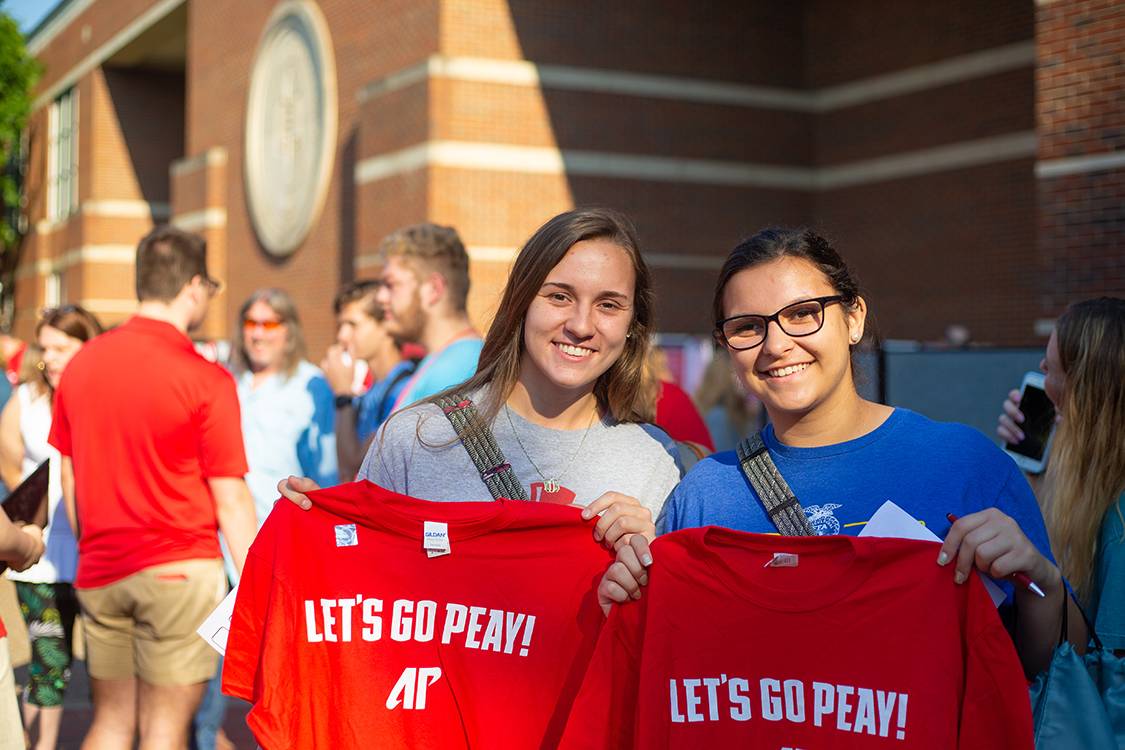
Our Rural Education at Austin Peay (REAP) initiative focuses on the potential opportunities for recruitment of pre-collegiate students from rural districts, and:
- Encourages them to consider teaching as a career;
- Explores the multiple pathways available for current teachers/paraprofessionals seeking certification in the APSU teacher education graduate and undergraduate programs.
The dual-enrollment program offers education courses in rural schools, giving high school students early access to the quality teacher education programs at Austin Peay.
The Center for Rural Education will seek opportunities for APSU to take a leading role in contributing to the limited body of knowledge regarding rural education through publications and conference presentations.
This conference aims to foster collaboration and innovation in rural schools nationwide, bringing together a diverse group of practitioners, researchers, policymakers, and educational leaders. Registrants will have the opportunity to interact with innovative educators and leaders working in rural schools and communities.
Center for Rural Education Advisory Board
Dr. Erica Boone
Amber Button
Melanie Dickerson
Campus Partners
 The Full Spectrum Learning (FSL) Center at APSU's Eriksson College of Education is a student-driven, research-based
support program for learners with Autism Spectrum Disorder. It provides structured
academic and social assistance through cohort-based classes, peer and faculty mentorship,
tutoring, monitored study hours, and social activities—designed to boost academic
engagement, retention, and career readiness.
The Full Spectrum Learning (FSL) Center at APSU's Eriksson College of Education is a student-driven, research-based
support program for learners with Autism Spectrum Disorder. It provides structured
academic and social assistance through cohort-based classes, peer and faculty mentorship,
tutoring, monitored study hours, and social activities—designed to boost academic
engagement, retention, and career readiness.
 The Furniture Connection Ed Tech Studio, housed in APSU’s Eriksson College of Education, is a state-of-the-art learning facility
that empowers pre-service teachers with hands-on experience using cutting-edge educational
technology. Equipped with VR headsets (enabling virtual classroom immersion), 3D printers,
LEGO Education (Spike Prime) sets, Finch and Hummingbird robotics kits, Alienware
desktops, AI-tracking webcams, and more, the studio supports development in classroom
management, lesson planning, technology integration, and student engagement. It serves
multiple roles: offering instructional practice and tech fluency for teacher candidates,
facilitating faculty development, engaging with local K–12 partners, and driving educational
technology research through initiatives like the DATA Research Lab.
The Furniture Connection Ed Tech Studio, housed in APSU’s Eriksson College of Education, is a state-of-the-art learning facility
that empowers pre-service teachers with hands-on experience using cutting-edge educational
technology. Equipped with VR headsets (enabling virtual classroom immersion), 3D printers,
LEGO Education (Spike Prime) sets, Finch and Hummingbird robotics kits, Alienware
desktops, AI-tracking webcams, and more, the studio supports development in classroom
management, lesson planning, technology integration, and student engagement. It serves
multiple roles: offering instructional practice and tech fluency for teacher candidates,
facilitating faculty development, engaging with local K–12 partners, and driving educational
technology research through initiatives like the DATA Research Lab.
 The Jack Hunt STEM Center — a collaborative initiative between APSU’s College of STEM and the Eriksson College
of Education — is dedicated to strengthening STEM teaching through immersive, hands-on
learning and professional development. Pre-service teachers gain access to a modern
science classroom equipped with diverse scientific tools and technologies, engaging
directly in inquiry-based and student-centered activities that emphasize creativity
and resourcefulness in lesson design. The center also empowers in-service educators
with continuing education seminars, an extensive STEM equipment checkout program—offering
items like scales, pipettes, and hot plates free for up to two weeks—and a STEM Teacher
Externship program that connects teachers with real-world STEM environments, earning
them graduate credits, stipends, and practical insights for classroom application.
The Jack Hunt STEM Center — a collaborative initiative between APSU’s College of STEM and the Eriksson College
of Education — is dedicated to strengthening STEM teaching through immersive, hands-on
learning and professional development. Pre-service teachers gain access to a modern
science classroom equipped with diverse scientific tools and technologies, engaging
directly in inquiry-based and student-centered activities that emphasize creativity
and resourcefulness in lesson design. The center also empowers in-service educators
with continuing education seminars, an extensive STEM equipment checkout program—offering
items like scales, pipettes, and hot plates free for up to two weeks—and a STEM Teacher
Externship program that connects teachers with real-world STEM environments, earning
them graduate credits, stipends, and practical insights for classroom application.
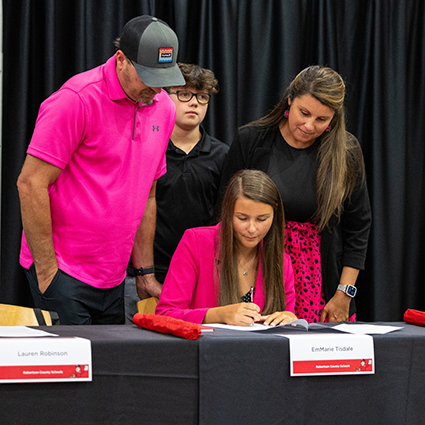 The Grow Your Own Teacher Residency, offered by Austin Peay State University's Eriksson
College of Education, is a pioneering, tuition-free apprenticeship program that empowers
high-school graduates, classified school employees, or community members—regardless
of whether they hold a bachelor’s degree—to earn their teaching licensure while being
paid. Launched in partnership with local districts in 2019 and nationally recognized
in January 2022 as the first federally registered teaching apprenticeship in the U.S.,
the program blends hands-on, paid classroom work with accelerated college coursework—ultimately
building a local, diverse pipeline of qualified teachers to address persistent shortages.
The Grow Your Own Teacher Residency, offered by Austin Peay State University's Eriksson
College of Education, is a pioneering, tuition-free apprenticeship program that empowers
high-school graduates, classified school employees, or community members—regardless
of whether they hold a bachelor’s degree—to earn their teaching licensure while being
paid. Launched in partnership with local districts in 2019 and nationally recognized
in January 2022 as the first federally registered teaching apprenticeship in the U.S.,
the program blends hands-on, paid classroom work with accelerated college coursework—ultimately
building a local, diverse pipeline of qualified teachers to address persistent shortages.
Community Partners
The STAR Scholars Network (Society of Transnational Academic Researchers) is a global, member-supported nonprofit that fosters cross-border academic collaboration, especially for emerging scholars. It offers mentoring, fellowship and certified research programs, conferences, awards, open-access publishing, and grants (such as the Edward J. Valeau Scholarship and the Global Education for Peace Award). Guided by values like human-to-human relationships, open access, multilingualism, distributed leadership, and continuous learning, STAR has built a network of over 20,000 scholars and students across hundreds of universities worldwide.
The National Rural Education Association (NREA) has served as the trusted voice for rural schools and communities since 1907, advocating for the 9.7 million students enrolled in rural schools across the United States. As a national organization with over 1,000 members in 50 states, NREA provides critical resources, research, and advocacy to ensure rural educators have the tools and support needed to create resilient, successful learning communities. Through their research initiatives like the Why Rural Matters report and professional development opportunities, NREA champions educational equity and opportunity for every rural learner and educator.
The Center for Rural Education at Austin Peay State University partners directly with
rural school districts, including Cheatham, Dickson, and Robertson counties, to provide
professional development and teacher support that strengthens educator effectiveness
and retention.
The River Ribbon Collaborative connects Austin Peay State University's Center for
Rural Education with school districts in nine rural counties along the Tennessee River
— Benton, Decatur, Hickman, Houston, Humphreys, Lawrence, Lewis, Perry, and Wayne
— to strengthen teacher effectiveness and retention through targeted professional
development and support. This partnership addresses the unique needs of rural communities
where approximately 30% of students are economically disadvantaged, building vital
connections between the university and neighboring districts to improve educational
outcomes. With the potential to impact over 1,800 schools, 999,000 students, and 67,000
teachers statewide, the collaborative represents a significant investment in Tennessee's
rural education landscape.