


What is Hazing?
Hazing is generally defined as any activity expected of someone joining or participating in a group that humiliates, degrades, abuses or endangers them, regardless of a person’s willingness to participate.
This pervasive issue has existed for centuries, but its dangerous consequences, particularly those related to alcohol, have become increasingly documented. Since January 2000, over 100 lives have been lost due to hazing activities in the U.S., with over 60% of these fatalities linked to substance use, almost always alcohol. Hazing is alarmingly common among college students: 55% of those in clubs, teams, and organizations report experiencing it, and nearly three-quarters of college student-athletes have been hazed. Many students even anticipate being hazed in college, often due to prior experiences in high school.
The Hazing Spectrum
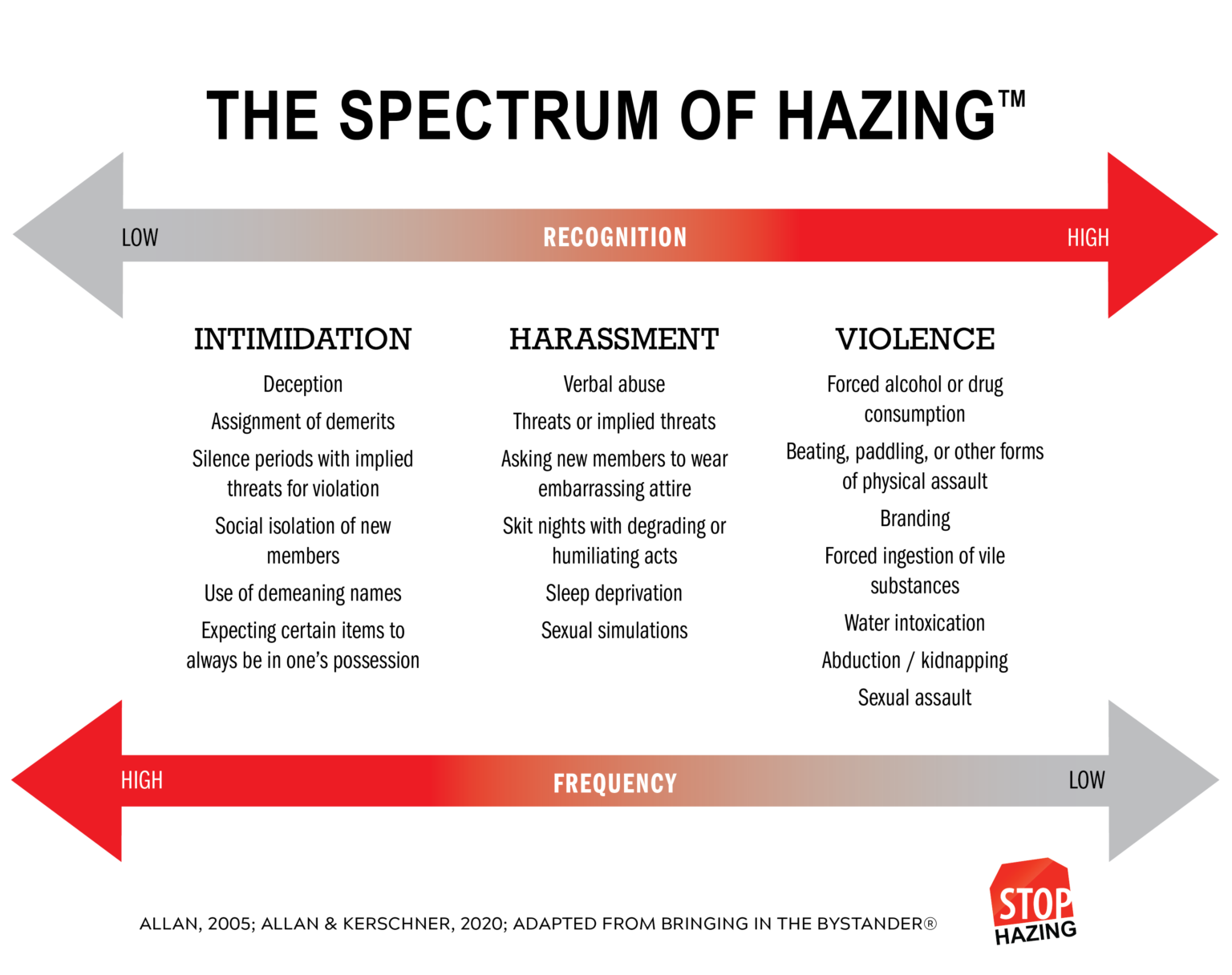
The "Spectrum" model, which evolved from a typology initially developed by Allan (2005) and later refined by Dr. Allan and Dr. Kerschner, illustrates that hazing activities are not limited to overt physical harm but span a broad range of behaviors with potential for psychological, emotional, and/or physical harm. While power dynamics are at play in all forms of hazing, the imbalance of power and its harmful impact can vary in visibility.
The Spectrum outlines three main categories of hazing behavior:
-
Intimidation (formerly "Subtle"): These behaviors are often less visible but still involve a power differential and can inflict psychological or emotional distress. They are characterized by less obvious abuses of power. Examples might include social isolation, demanding silence, or engaging in demeaning tasks.
-
Harassment: These behaviors are more readily identified as harmful or potentially harmful and are designed to cause emotional distress or discomfort. This category includes activities that are more clearly recognizable as damaging. Examples could involve yelling, sleep deprivation, forced consumption (non-alcoholic), or public humiliation.
-
Violence: These are the most readily recognized forms of hazing and typically involve overt physical force or activities that pose a clear risk of physical harm. Examples include physical brutality, kidnapping, blindfolding (sensory deprivation), or forced excessive alcohol consumption.
Key Characteristics and Dynamics of Hazing:
-
Secrecy: A core element of hazing, where participants are kept blind to the actual risks while perpetrators know what will occur. This secrecy, coupled with tactics like blindfolding or sensory deprivation, is misguidedly used to create anxiety and promote group loyalty, but it fundamentally undermines true consent.
-
Consent is Nearly Impossible: The psychology of hazing makes consent almost unachievable. Individuals cannot truly consent when details of an activity are purposefully hidden, nor can they make informed decisions about potential risks when intoxicated or under the influence of drugs.
-
Power Differential and Coercion: Coercing individuals to consume substances like alcohol significantly intensifies the power imbalance. This increases the likelihood that those being hazed will comply with unreasonable or dangerous requests. Even small amounts of intoxicating substances impair judgment, making students more prone to risky behaviors they would otherwise avoid.
Ultimately, addressing hazing involves not only raising awareness about its extensive range of behaviors but also fostering a culture where it is unacceptable. This requires strong anti-hazing policies, educational programs, guidance in healthy team building, and proactive bystander intervention, recognizing that even seemingly minor hazing can quickly escalate.
References:
- Hoover, N., & Pollard, N. (1999). National survey: Initiation rites and athletics for NCAA sports teams.
- NPR. (4 May, 2021). As Campus Life Resumes, So Does Concern Over Hazing.
- U.S. Hazing Deaths Database. (2023). https://www.hanknuwer.com.
- Allan, E.J., & Madden, M. (2008). Hazing in View: College Students at Risk.
- University of Virginia. (2022). Gordie Center.