Austin Peay to present special ‘Science on Tap: Huntsville Edition’ on March 24
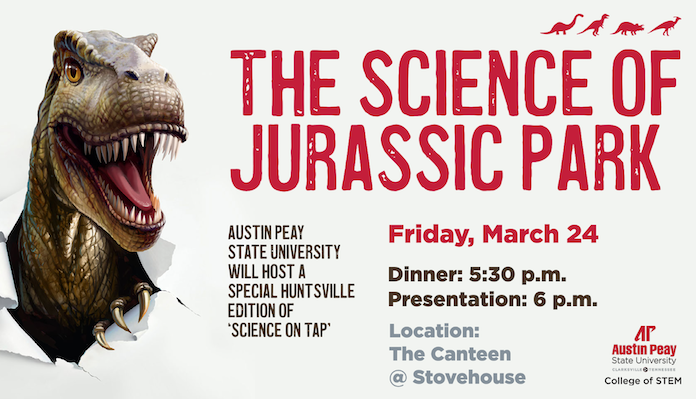
Austin Peay State University is hosting a special Science on Tap presentation on Friday, March 24 in Huntsville, Alabama, titled “Science in the Movies: Jurassic Park Edition.”
The event – an exploration of the science behind the classic 1993 film “Jurassic Park” – will discuss the science portrayed in the movie, including its inaccuracies, misconceptions about dinosaurs and the creative liberties taken by the filmmakers.
Dr. Kallina Dunkle of APSU’s Department of Earth and Environmental Sciences, and Dr.
Karen Meisch, dean of APSU's College of STEM, will answer the question, “Can you actually
create dinosaurs from million-year-old DNA?”
“We’ll talk about what’s wrong with that and what the reality would be,” Dunkle said.
“We know that DNA degrades – even if a mosquito did bite a dinosaur and got immediately
encapsulated in amber, which is astronomical odds to begin with, the degradation still
happens.”
The event is open to the public, especially high school students interested in Austin Peay and Austin Peay alumni in the Huntsville area.
Doors open for dinner at 5:30 p.m., and the presentation starts at 6 p.m. at The Canteen at Stovehouse.
Come and enjoy this free presentation, and don’t fret ... velociraptors can’t open the doors.
News Feed
View All News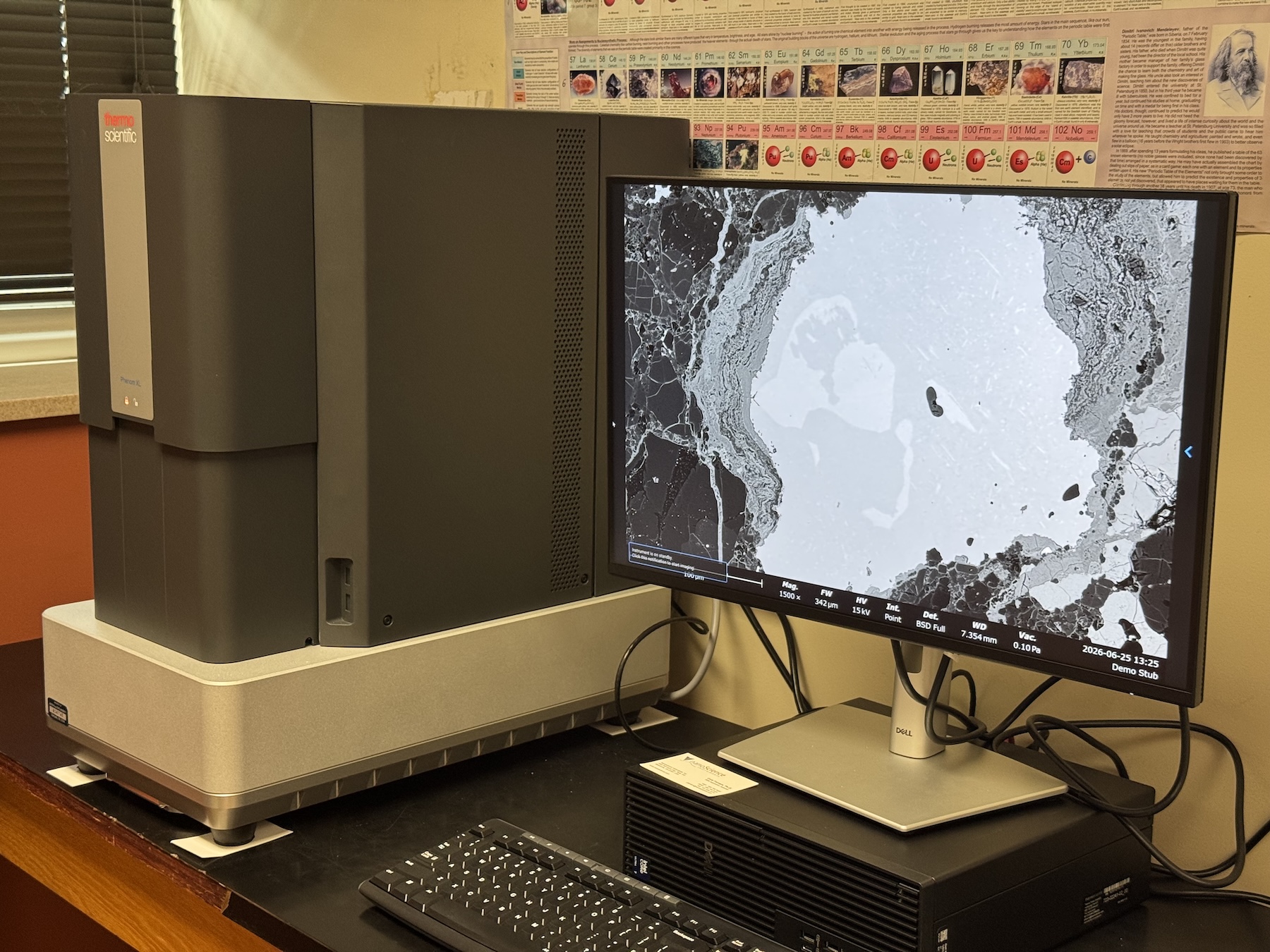
The Department of Earth and Environmental Sciences has acquired a new scanning electron microscope, giving students publication-quality imaging and chemical analysis capabilities -- including the chance to study meteorites -- previously accessible only at major research institutions.
Read More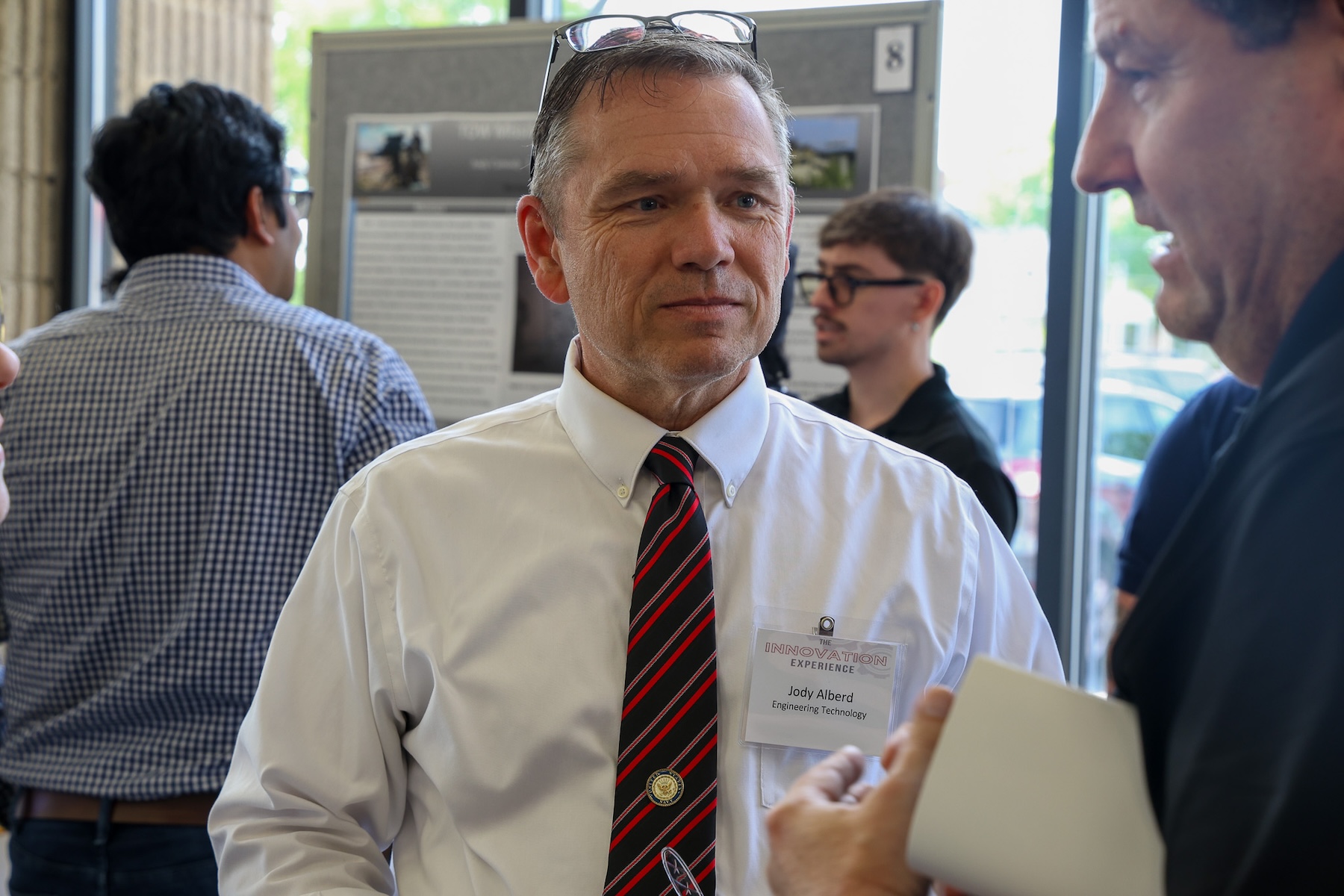
Jody Alberd, a Navy veteran and assistant professor in the Department of Engineering Technology, has earned his first National Science Foundation grant as principal investigator to study how student veterans develop their engineering identity during senior capstone design projects.
Read More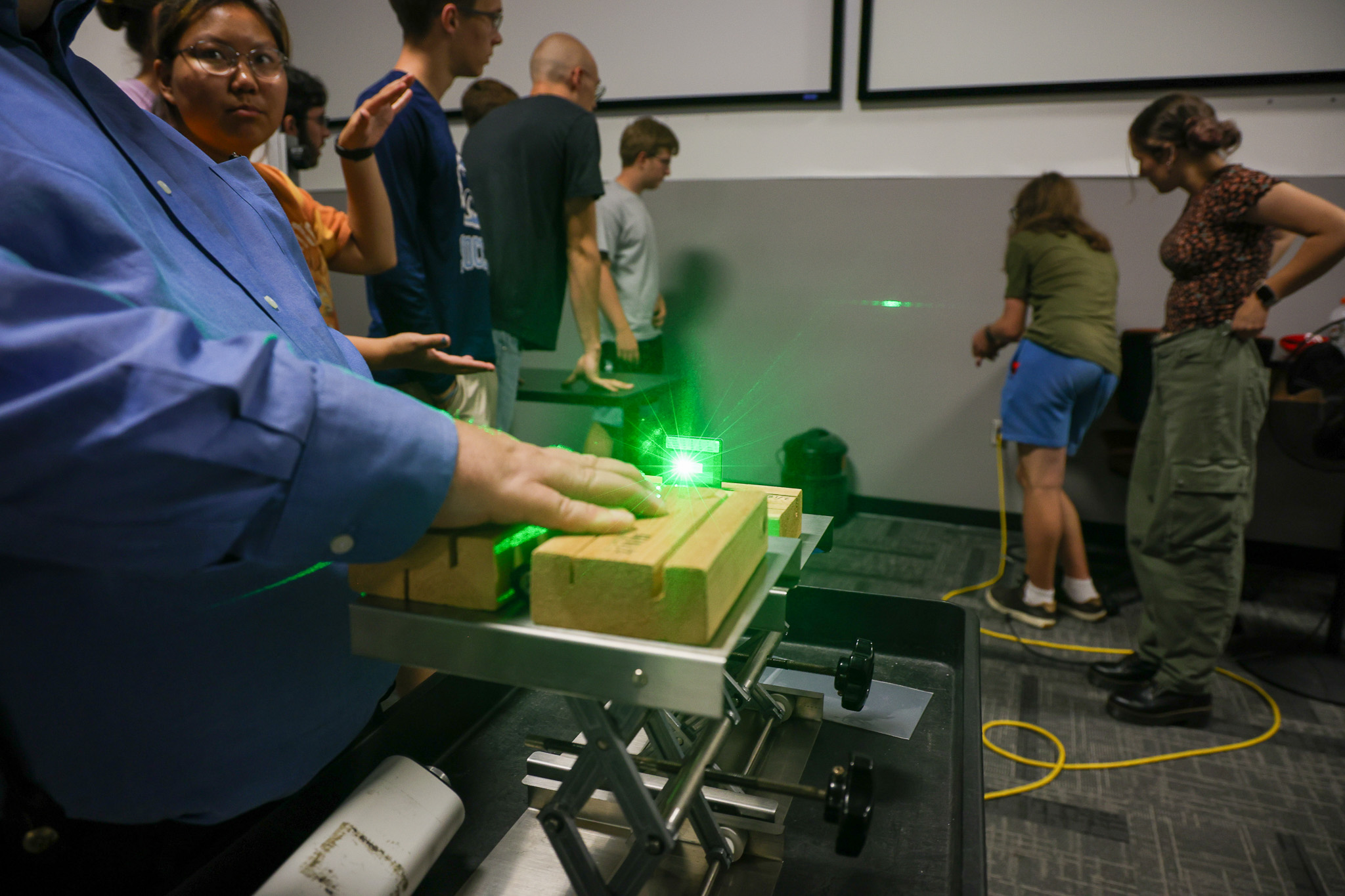
Austin Peay State University hosted some of Tennessee's brightest high school students this summer for the Governor's School for Computational Physics, a four-week residential program now in its 18th year that immerses rising seniors in physics, mathematics, and computational problem-solving.
Read More