


Govs venture to Alaska for wintermester work
By: Colby Wilson February 25, 2026
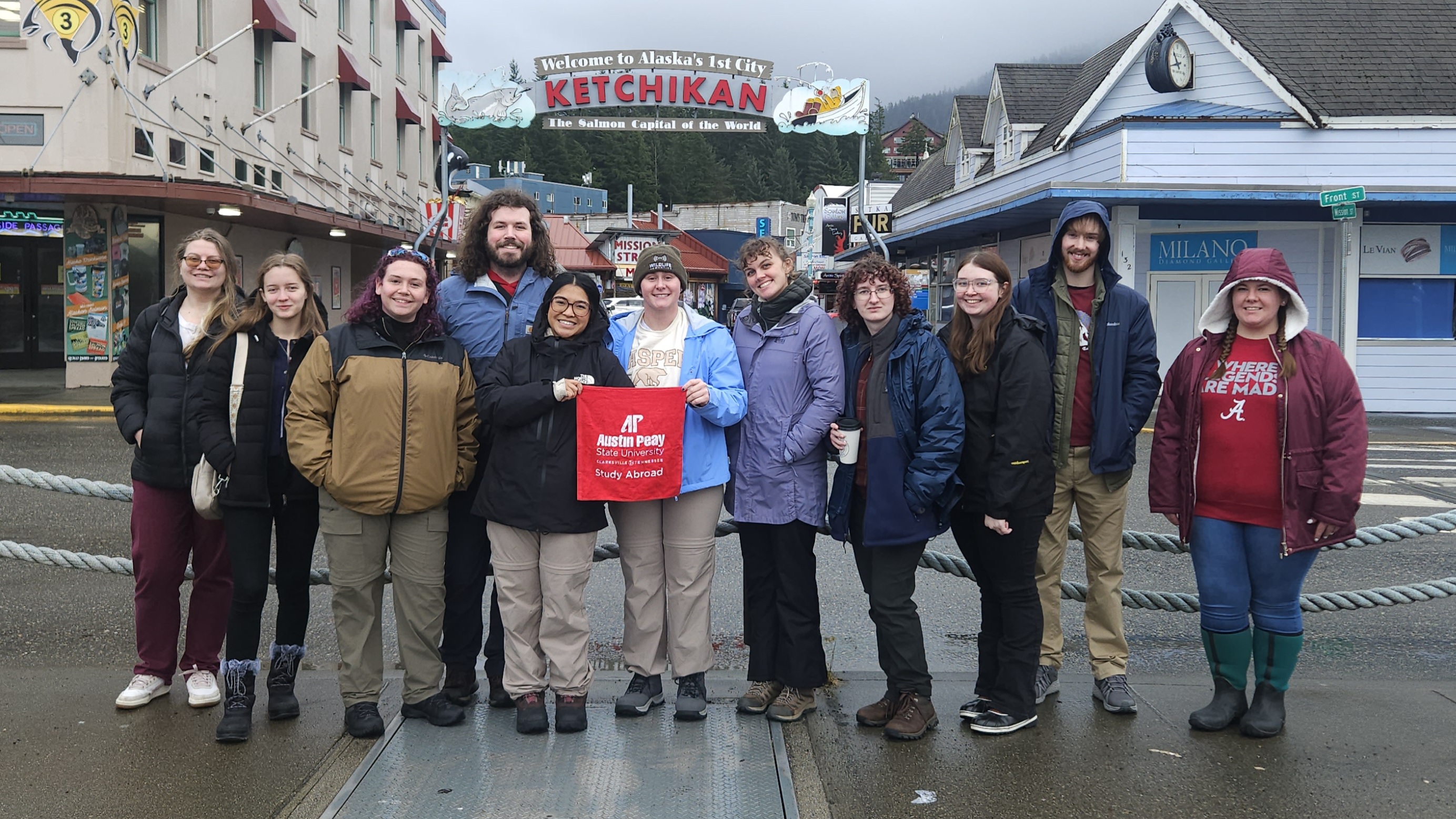
Austin Peay students and faculty in Alaska as part of the Wintermester Study Away program. | Photo contributed by Dr. Catherine Haase
CLARKSVILLE, Tenn. — While most students were still on winter break, several Austin Peay State University mathematics and biology majors were experiencing Alaska's unforgiving January weather—and loving every minute of it.
The interdisciplinary wintermester program, led by Dr. Jackie Vogel from the Department of Mathematics and Statistics and Dr. Catherine Haase from the Department of Biology, took a team of students to Ketchikan, Alaska, for a week of hands-on teaching and field research that exemplifies the undergraduate experience at Austin Peay but is rare at larger institutions.
The trip resulted from Vogel and Haase's previous scouting journey to Alaska, where they developed partnerships with local schools and researched opportunities for future student experiences.
"I never thought I would say that I want to go to Alaska or even to live there for a little bit," said Gabrielle Tomboc, a first-year graduate student in biology. "But after being there, I thought, this would be pretty cool because you get the best of both worlds for me—you get the marine life, but then you also get forests."
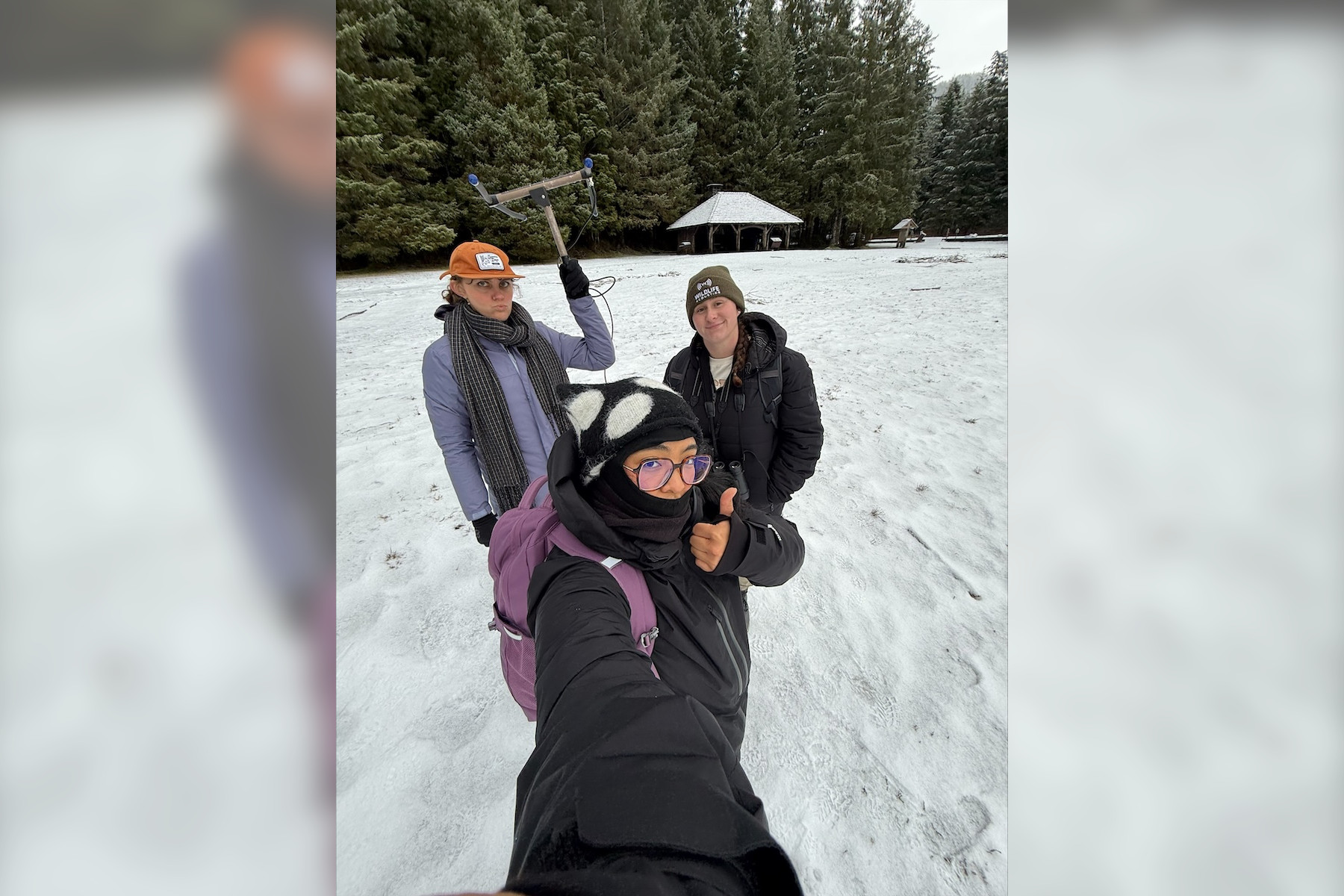
Alaska’s tundra climate proves to be an enjoyable part of the study away experience for students from APSU’s College of STEM. | Photo contributed by Gabrielle Tomboc
From Classroom to Tundra
The program required students to finish their course material before departure. Math students learned about numerical bases, probability theory, and cultural mathematics, including Kaktovic numerals, Mayan numerals, and traditional Alaskan chair dice games.
In Ketchikan, the math students spent their mornings teaching sixth to eighth graders at local schools, using probability games and cultural mathematics to engage children who might never have met Tennessee college students.
"The kids were a lot of fun, and I enjoyed myself a lot more than I thought I would," said Sam Whitaker, a mathematics major who had never taught before. "It allowed me to see the versatility of how math can be applied to different things."
Meanwhile, biology students ventured into Alaska's temperate rainforest for field research, facing conditions that tested their resolve. Cold temperatures and near-constant rain and snow made the outdoor work challenging even for seasoned researchers.
"There was a point during tide pooling when I got upset because of how much rain and hail was hitting us," Tomboc said. "But I learned something while we were there: 'It's not about trying to remain dry. It's about being comfortable with being wet.'"
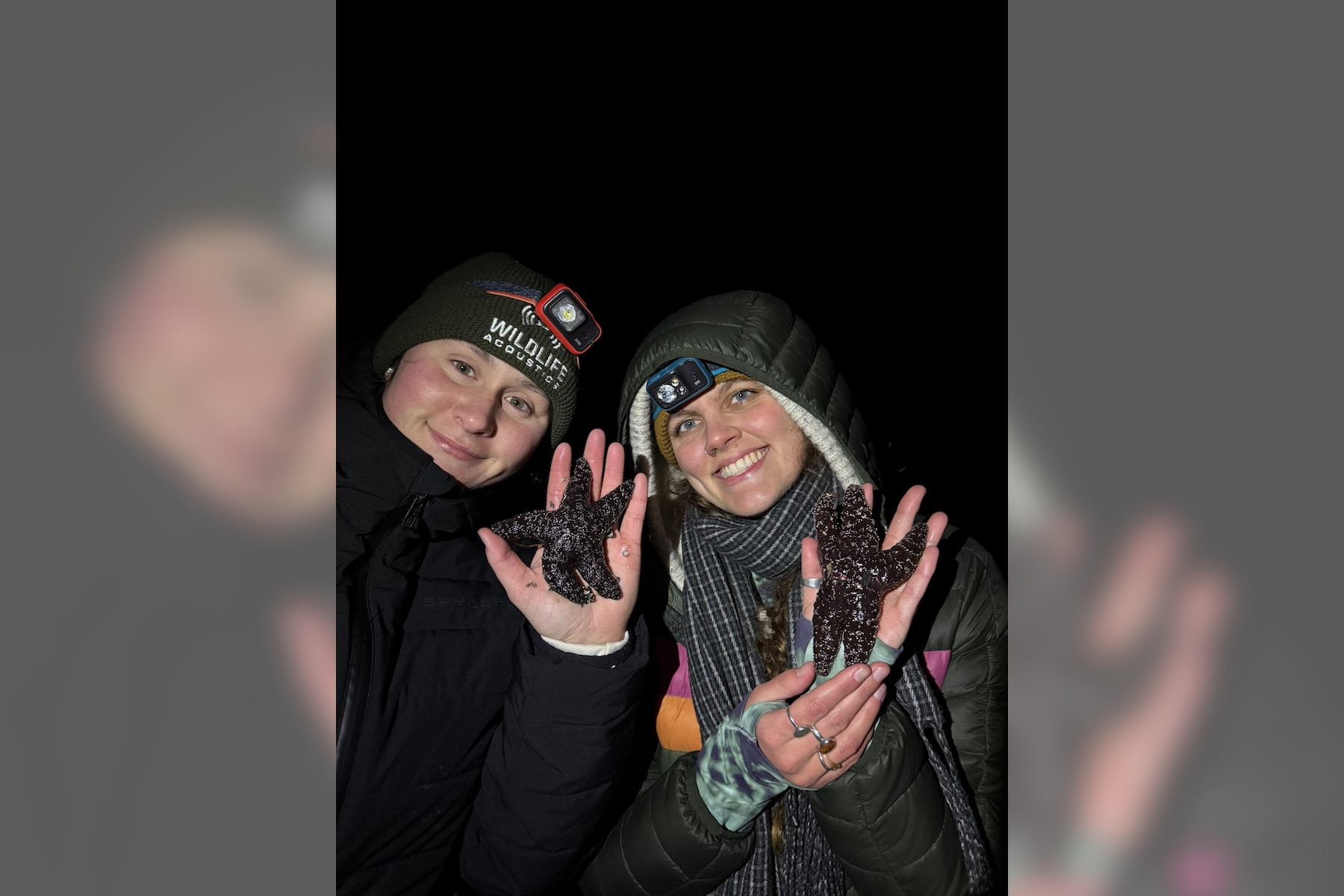
Austin Peay State University students go tide pooling on a study away trip to Alaska, finding starfish and other species in rocky areas created by low tides. | Photo contributed by Gabrielle Tomboc
A Rare Experience
The program is among the hands-on learning opportunities that come easily for undergraduate students at Austin Peay, but are nearly impossible at large research universities, where such experiences are often limited to advanced graduate researchers.
Austin Peay's student-centered approach allows faculty to take students at all levels directly into professional research environments—a significant advantage of the university's size and educational philosophy.
For many students, including Nevaeh Rogers, a math education major, the trip marked several firsts—first plane ride, first time teaching actual students, and certainly the first time in Alaska during winter.
"It was really beautiful," Rogers said. "All the snow and seeing it fall, especially being from Tennessee—I don't know how to describe it, but it was kind of like I was in the movie Frozen."
The experience proved transformative for students across disciplines. Whitaker, who does not plan to teach, found the classroom experience valuable for seeing math's real-world applications. For Tomboc, studying how animals adapt to extreme cold provided insights for her thesis on how heat affects bat stress hormones.
Building Connections Across Disciplines
The program's interdisciplinary nature created unique bonds among students from different majors who might not otherwise work together.
"The math students were really interested in what we were doing," Tomboc said. "They were very interested in tide pooling and just seeing what we were up to, and we interacted with them a good amount."
Their curiosity went both ways, with biology students equally fascinated by the mathematical concepts their peers were teaching in local classrooms.
"We all bonded really well," Whitaker said. "It was just a week of putting ourselves out there and getting a little uncomfortable, but it was very much worth it."
Despite luggage mishaps and weather that locals described as particularly harsh, even by Alaskan winter standards, students returned with expanded perspectives and strengthened academic relationships.
"This trip allowed me to have more open-mindedness," Whitaker said. "It definitely makes me want to pursue another study away option."
APSU students interested in upcoming study abroad, study away, and international exchange opportunities can learn more by visiting the Global Education Office. The university began offering study away programs last year, and so far, students have been able to visit Alaska, New Mexico, and Charleston, South Carolina.
About the Austin Peay College of STEM
The College of Science, Technology, Engineering & Mathematics (STEM) provides studies for students in the areas of agriculture, astronomy, aviation sciences, biology, chemistry, computer science, earth and environmental sciences, engineering physics, engineering technology, information technology, mathematics, medical laboratory sciences, radiologic sciences, and physics. Our outstanding, discipline-based programs are student-centered and designed to prepare students for responsible positions at all levels of research, industry, education, medicine, and government.