


APSU engineering physics major researches glass composition in Poland
By: Colby Wilson November 7, 2025
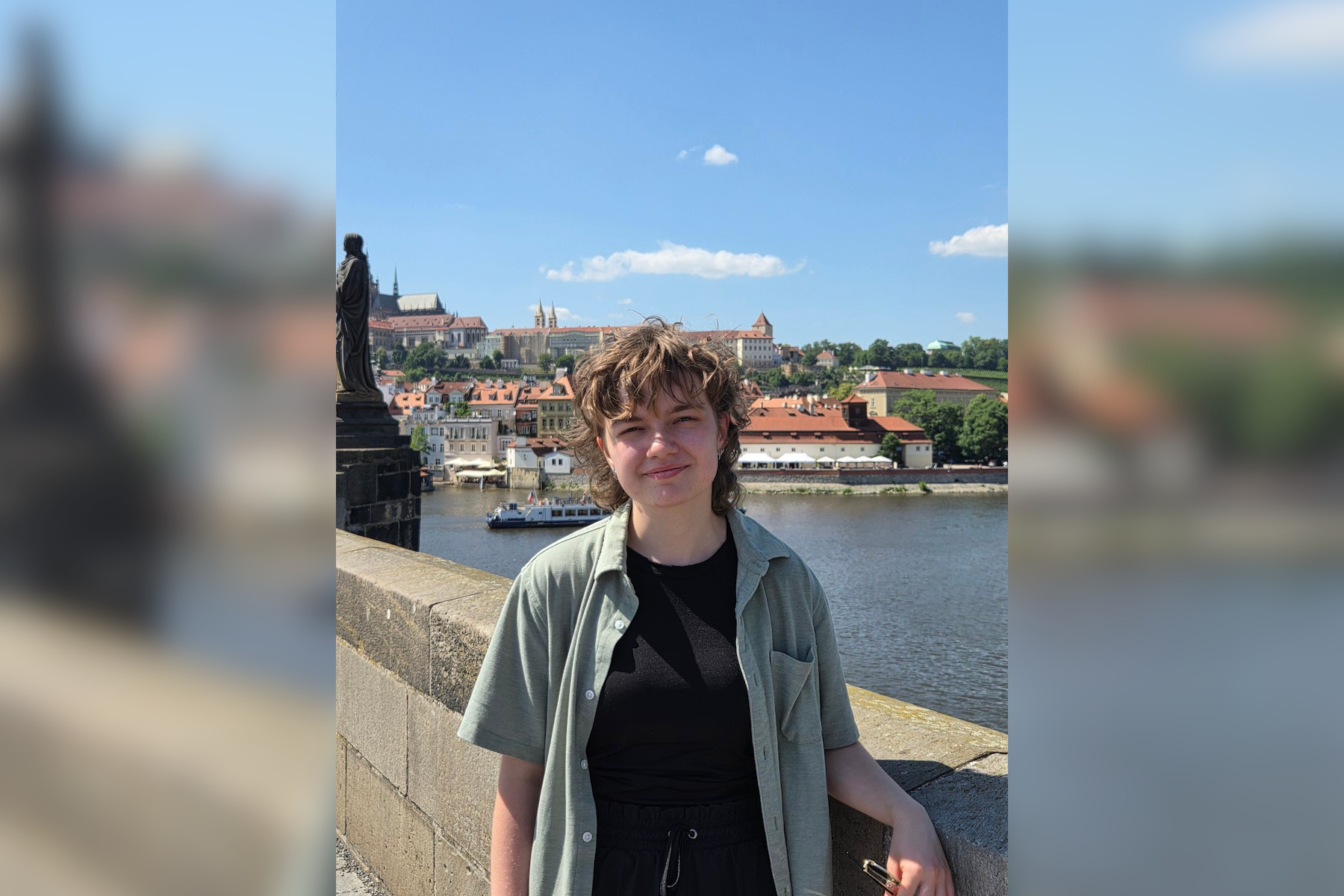
Calleway Schmidt, an engineering physics major at Austin Peay State University, vists Poland to conduct research through the IRES program. | Contributed photo
CLARKSVILLE, Tenn. — When Calleway Schmidt arrived in Rzeszów, Poland, for six weeks of antimicrobial research, he quickly discovered that Google Translate would become his best friend.
The Austin Peay State University engineering physics student was there to work alongside Ukrainian and Polish students, testing antimicrobial properties of different glass compositions. But first, he had to figure out how to buy groceries without being able to read a single label.
"It was pretty interesting because for me the first time that I’ve had to be really independent," Schmidt said. "But also, you get these moments where you're working in the lab and then you realize, oh, you and these two other people you’re working alongside are all counting in different languages. And I personally found that to be very interesting."
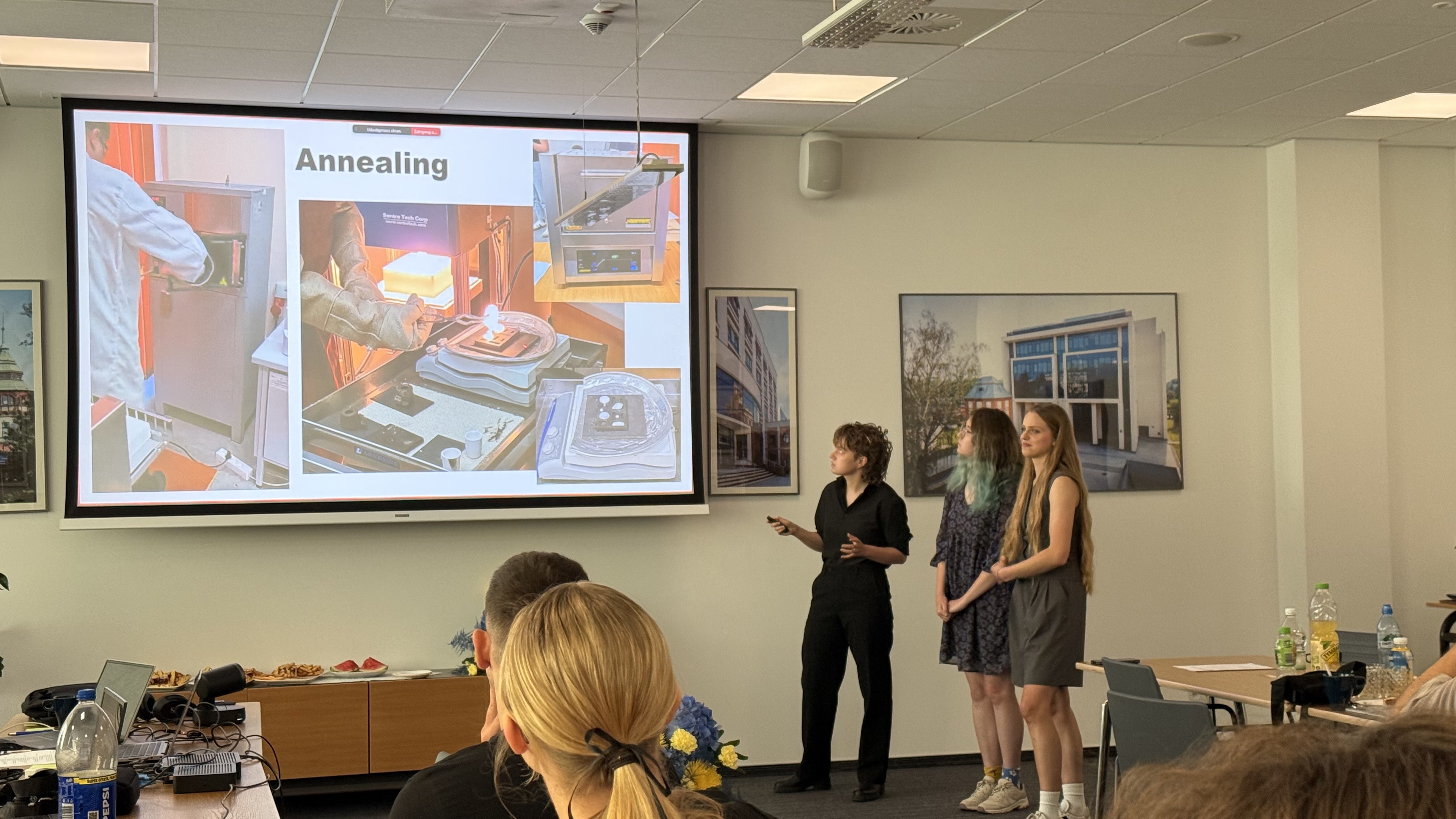
Calleway Schmidt presents research conducted through the IRES program, which has taken several APSU students overseas since 2022. | Contributed photo
International Scientific Collaboration
The International Research Experiences for Students (IRES) program supports international research and research-related activities for U.S. science and engineering students. The IRES program contributes to development of a diverse, globally engaged workforce with world-class skills. IRES focuses on active research participation by undergraduate and/or graduate students in high quality international research, education and professional development experiences in NSF-funded research areas.
Schmidt worked closely with a Ukrainian student and a Polish student, focusing primarily on sample preparation and antimicrobial testing. The research built on previous work by Austin Peay students that contributed to published papers, continuing a multi-year international partnership that has taken multiple Governors overseas each summer since 2022.
The team's work centered on preparing samples and testing the antimicrobial properties of different glass compositions, with Schmidt gaining direct experience in both preparation and testing procedures.
"We would meet at the university each day and be assigned our tasks," Schmidt said. "It was cool because we got to have a hands-on process for preparing the samples and then do the testing ourselves, which I found fulfilling."
The research structure was relatively autonomous, with guidance from a lead researcher and additional mentorship for the Polish student from biotechnology faculty.
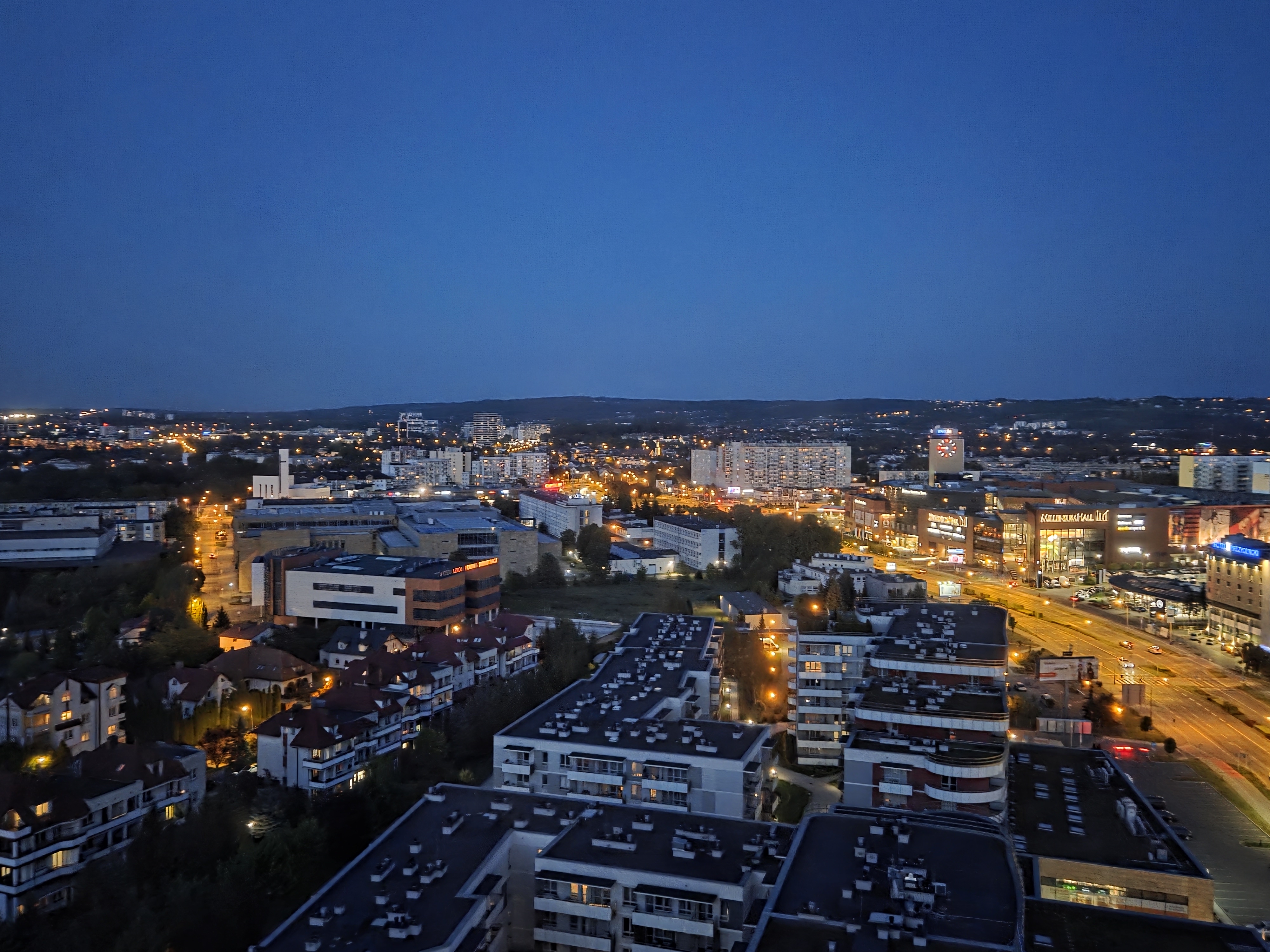
Rzeszów, the largest city in southeastern Poland, is known as an academic and cultural center with a well-preserved historic district. | Contributed photo
Cultural Navigation and Daily Life
Living in Rzeszów presented unique challenges for Schmidt, particularly grocery shopping and reading signs in Polish. Google Translate became his constant companion as he navigated daily tasks in an unfamiliar language.
One memorable incident involved purchasing what he thought was spaghetti sauce, only to discover after tasting it that he'd bought … salsa-style pasta sauce. Which is what it sounds like.
"I was really confused because it wasn't the consistency of salsa," he said. “[However,] it wasn't bad."
Despite language barriers, Schmidt found the cultural differences manageable.
"People are people everywhere," he said. "For example, crossing the street, you could be just a few feet from where you're about to cross. People would hard stop."
The politeness extended to everyday interactions. When Schmidt accidentally entered buildings without reading Polish signs indicating occupancy limits, waiting patrons remained patient rather than correcting him.
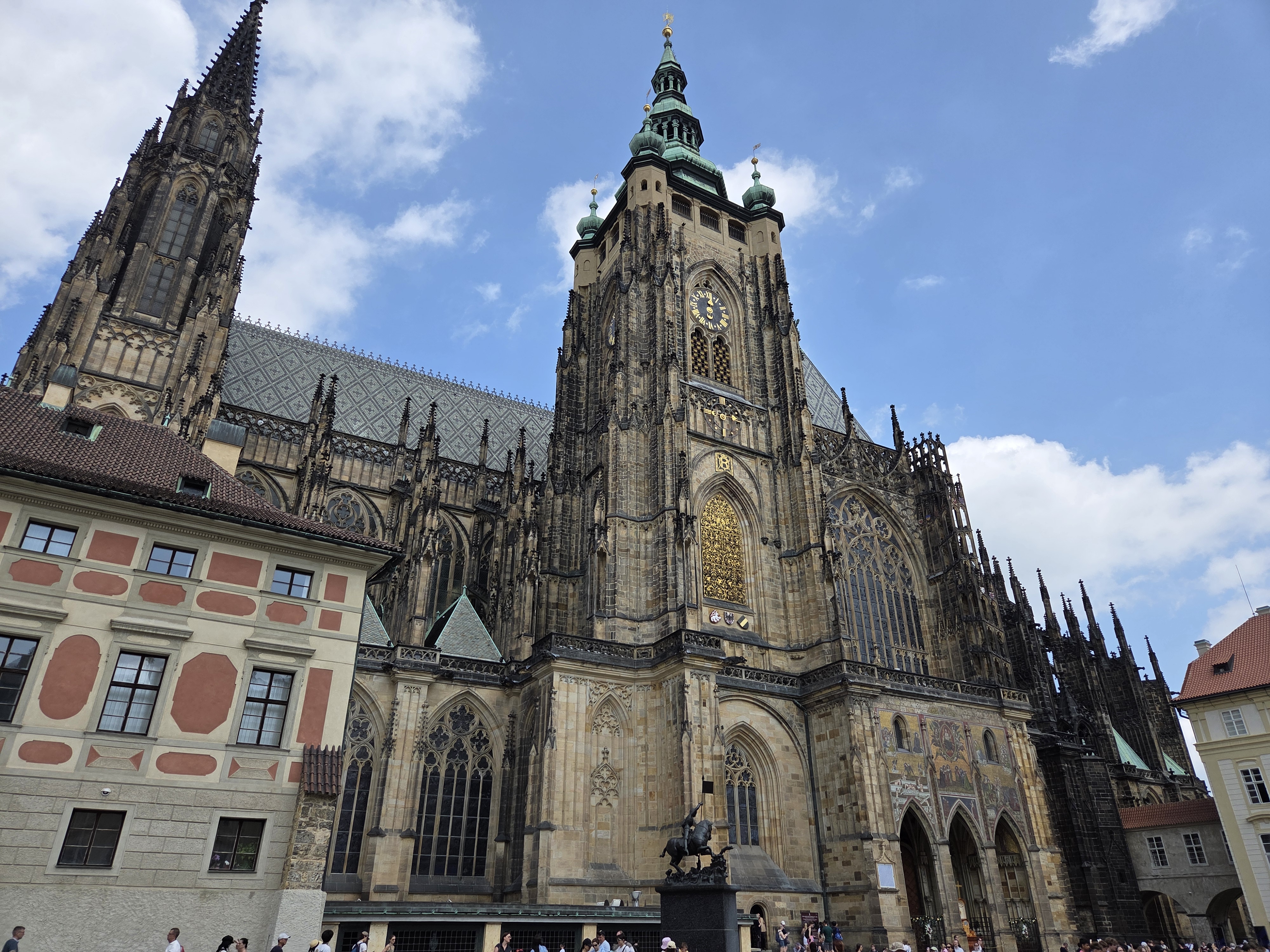
Rzeszów is home to several historic buildings dating back centuries, and its Old Town offers a look into the city’s past. | Contributed photo
Historical Perspective
Beyond laboratory work, Schmidt explored Rzeszów's rich history, visiting the Old Town and touring underground tunnels that revealed layers of the city's past. The contrast between historical architecture and modern development particularly impressed him.
"In these older historic cities, you get the Old Town and then you can see over the horizon past these historical buildings the skyscraper that's the sleekest, newest building, just finished construction," Schmidt said. "It’s a unique mesh of different times because Poland has gone through so many different eras."
Schmidt also traveled to Krakow to meet with another Austin Peay group conducting historical research in the region.
Lessons in Independence
The experience marked Schmidt's first extended period of true independence, requiring him to navigate not just scientific research but practical daily life in a foreign country. He learned to adapt to different cultural expectations and communication styles.
"You try, and people will give you that forgiveness," he said about Polish interactions with foreigners making an effort to communicate and follow local customs.
The research experience reinforced Schmidt's interest in hands-on laboratory work while providing valuable perspective on international scientific collaboration and cultural adaptability.
This material is based upon work supported by the National Science Foundation International Research for Students (IRES) grant (Project No. NSF OISE-2106457).
About the Austin Peay College of STEM
The College of Science, Technology, Engineering & Mathematics (STEM) provides studies for students in the areas of agriculture, astronomy, aviation sciences, biology, chemistry, computer science, earth and environmental sciences, engineering physics, engineering technology, information technology, mathematics, medical laboratory sciences, radiologic sciences and physics. Our outstanding, discipline-based programs are student-centered and designed to prepare students for responsible positions at all levels of research, industry, education, medicine and government.