


APSU’s College of STEM announces Spring 2026 observatory nights
By: Colby Wilson January 8, 2026
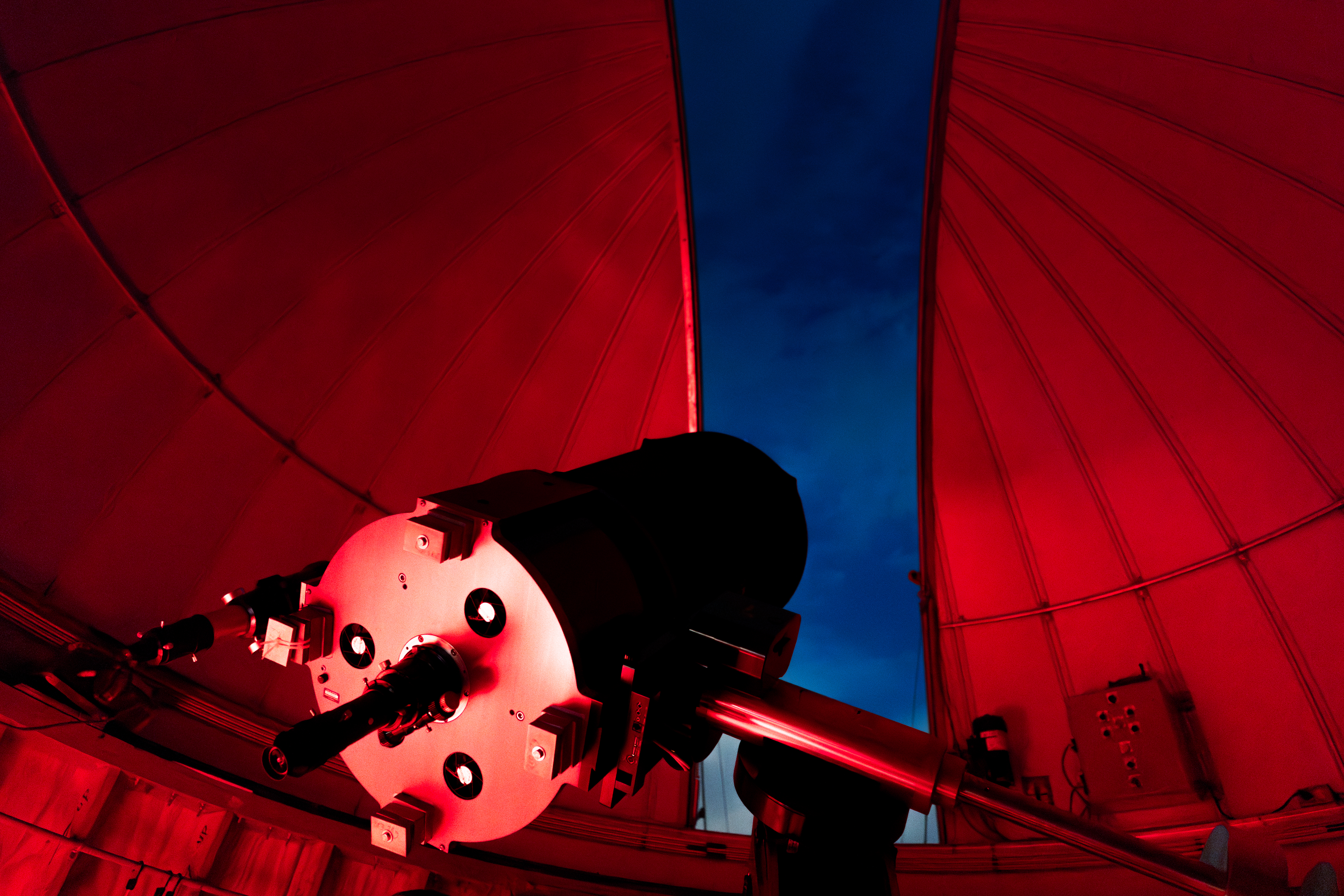
The observatory at APSU’s Coleman Tractor APSU Farm Powered by Kubota provides plenty of opportunities for astronomy enthusiasts to explore the skies. | Photo by Ralph Acosta
CLARKSVILLE, Tenn. — The Austin Peay State University (APSU) Department of Physics, Engineering and Astronomy has announced four dates for Public Observatory Nights this spring at the Coleman Tractor APSU Farm Powered by Kubota, located at 1991 Pickens Road.
Registration for this month’s event will open on Saturday, Jan. 10, with tickets available HERE. The semester’s first observatory night is scheduled for 5:30 p.m. on Saturday, Jan. 24.
APSU's Public Observatory Nights are a must-attend for astronomy enthusiasts of all ages, allowing visitors to immerse themselves in the wonders of the universe and explore celestial objects through state-of-the-art telescopes. Whether you're a seasoned stargazer or just curious about the cosmos, this event offers a unique opportunity to witness the beauty of the night sky. In the event of inclement weather, a presentation on current events of astronomical interest will take place in the Brock Blick Classroom, also located at 1991 Pickens Road.
With time changes looming, observation nights will start at different times. Temperatures drop after sunset, so please dress accordingly.
Austin Peay’s Spring 2026 Observatory Nights
-
Saturday, Jan. 24 (event starts at 5:30 p.m.)
-
Saturday, Feb. 21 (event starts at 5:45 p.m.)
-
Saturday, March 21 (event starts at 7:15 p.m.)
-
Saturday, April 25 (event starts at 7:45 p.m.)
Tickets are free but only available on a first-come, first-served basis, with a limit of 50 patrons per session. A waiting list will be compiled for those who miss out, giving them a chance to attend the next month’s observation night before general public tickets are available.
Event Notes
-
This is a rain or shine event.
-
Bathrooms are available.
-
Please drive slowly when on Austin Peay property.
-
Parking will be guided by Austin Peay students; you will be asked to park on the grass near the facility.
-
Patrons are welcome and encouraged to bring camp chairs, binoculars, jackets and blankets.
-
Patrons are discouraged from bringing flashlights or using their phone flashlights during the event.
-
Austin Peay, including the Coleman Tractor APSU Farm Powered by Kubota and the observatory, is a smoke- and vape-free facility.
-
Austin Peay State University is committed to ensuring that all facilities, including the observatory, are accessible to everyone. The observatory is equipped with ramps and handrails to provide access for individuals with mobility impairments. We strive to provide an inclusive and welcoming environment for all visitors and are happy to assist with any specific needs or requests.
For questions, please contact College of STEM Director of Communications Colby Wilson at wilsonrc@apsu.edu.
About the Austin Peay College of STEM
The College of Science, Technology, Engineering & Mathematics (STEM) provides studies for students in the areas of agriculture, astronomy, aviation sciences, biology, chemistry, computer science, earth and environmental sciences, engineering physics, engineering technology, information technology, mathematics, medical laboratory sciences, radiologic sciences and physics. Our outstanding, discipline-based programs are student-centered and designed to prepare students for responsible positions at all levels of research, industry, education, medicine and government positions.