Cycle of Deployment
Deployment doesn't begin when a service member ships out — and it doesn't end when they come home. The emotional experience of deployment follows a recognizable pattern that affects both the service member and their family. Understanding this cycle helps Green Zone allies recognize where a student or their loved ones may be in the process and respond with greater awareness and empathy.
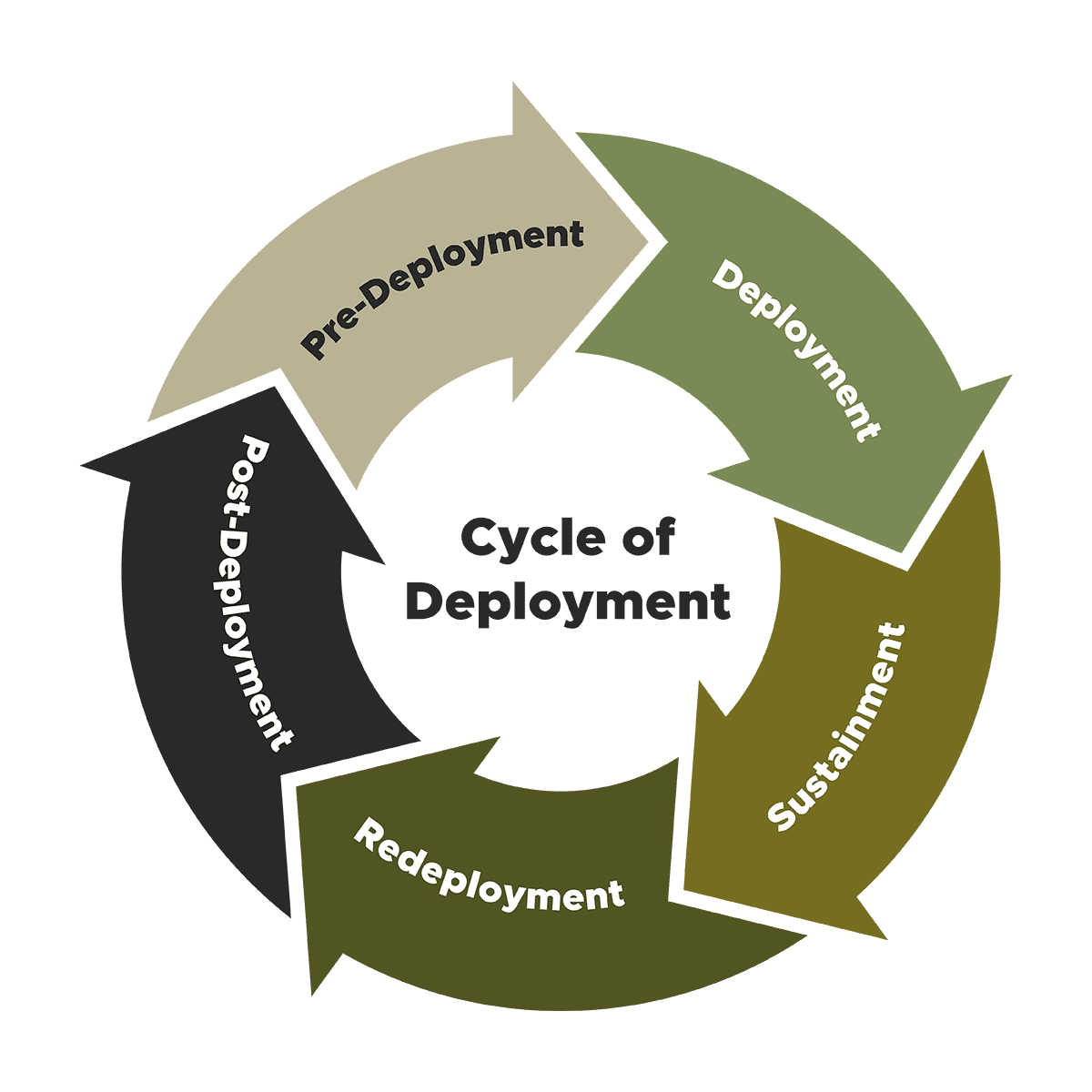
Pre-Deployment
The pre-deployment phase begins when orders are received and the reality of separation sets in. This period is often marked by emotional tension as service members and their families try to prepare — practically and emotionally — for what's ahead.
Common experiences during pre-deployment include:
-
Anticipation of loss, sometimes met with denial
-
Increased training demands and long hours away from home
-
A push to get financial, legal, and personal affairs in order
-
Growing mental and physical distance between the service member and family
-
Arguments and conflict as a way of coping with the coming separation
Deployment
When the service member departs, families often experience a wave of mixed emotions — grief and relief, fear and pride — sometimes all at once. The weeks immediately following departure can be among the most difficult.
Common experiences during deployment include:
-
Feeling disoriented or overwhelmed by new responsibilities
-
Numbness, sadness, or a sense of isolation
-
Sleep difficulties
-
Heightened concern for personal and family security
Sustainment
As time passes, many families find a new rhythm. The sustainment phase is characterized by growing confidence and stability as routines settle into place and new support networks form.
Common experiences during sustainment include:
-
Establishing new daily routines
-
Building new sources of support — friends, family, campus resources
-
A growing sense of control and independence
-
Increased confidence: "I can do this!"
Redeployment
As the service member's return approaches, excitement builds — but so does apprehension. The redeployment phase can bring a burst of nervous energy as families prepare for homecoming and begin to anticipate what life will look like once everyone is back together.
Common experiences during redeployment include:
-
Anticipation and excitement about homecoming
-
Apprehension about how roles and routines will shift
-
A burst of energy often channeled into preparation or "nesting"
-
Difficulty making decisions while waiting for the reunion
Post-Deployment
Homecoming is not automatically easy. The post-deployment phase often begins with a period of excitement and relief, but the process of reintegration—renegotiating roles, routines, and relationships—takes time, patience, and effort from everyone involved.
Common experiences during post-deployment include:
-
An initial honeymoon period followed by adjustment challenges
-
The returning service member's need for personal space and autonomy
-
Family members experiencing a loss of the independence they built during deployment
-
Renegotiating routines, responsibilities, and decision-making
-
Gradual reintegration into family life
How Green Zone Allies Can Help
Knowing where a student is in this cycle can help you ask better questions and point them toward the right support. A student who seems distracted or withdrawn during pre-deployment is experiencing something very different from one who is struggling with reintegration after a partner's return.
If a student appears to be navigating any stage of the deployment cycle, listen without judgment and connect them with resources that match their situation:
-
Newton Military Family Resource Center (NMFRC) — 931-221-1685 or NMFRC@apsu.edu
-
Boyd Health Services & Counseling — Primary care and mental health support
-
VetSuccess On Campus (VSOC) — On-site VA counselor: 615-983-4354
For more information, visit the Green Zone program page or contact the Newton Military Family Resource Center at 931-221-1685 or NMFRC@apsu.edu.