


"I just needed one person to believe in me": APSU social worker reflects on National Foster Care Month
By: Seth Riker May 11, 2026
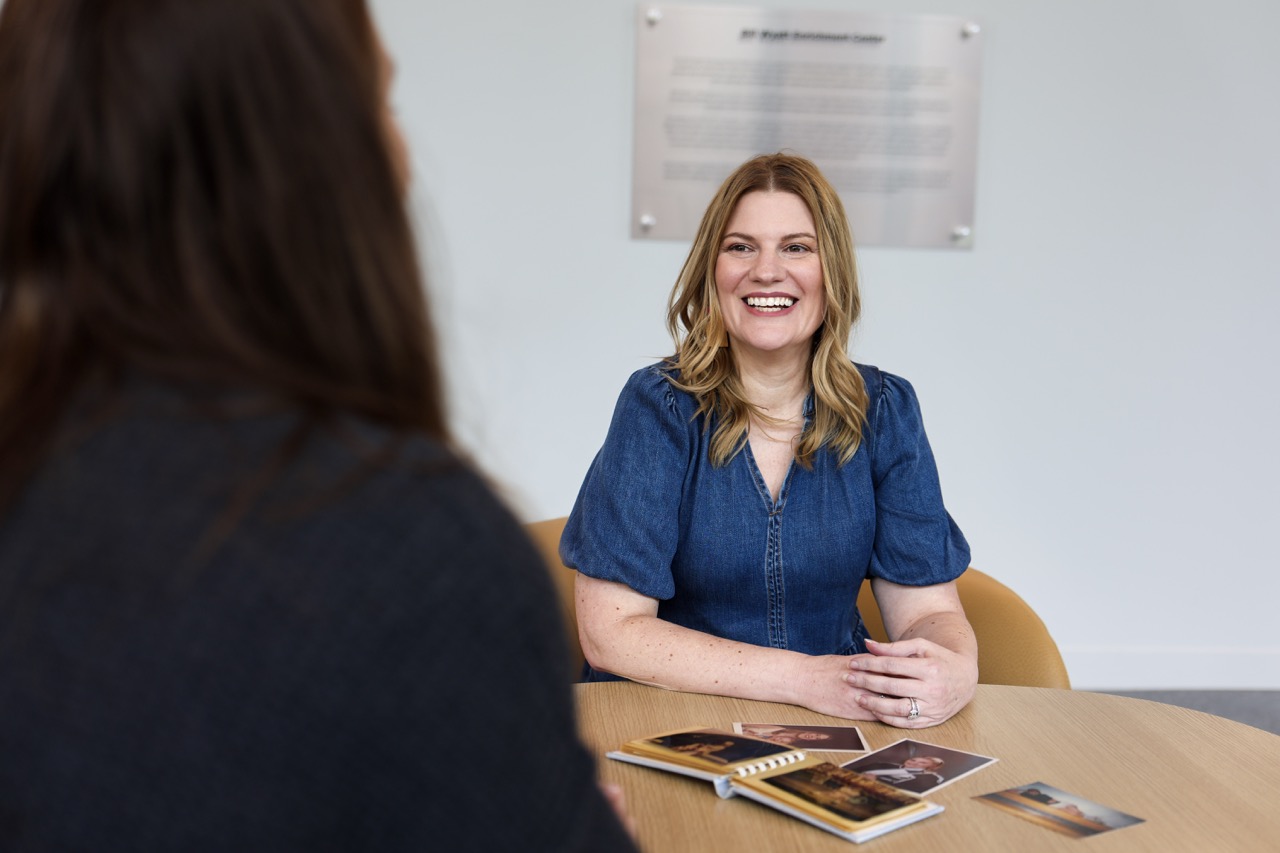
APSU social work instructor and field director Jessie Wiser reflects on her journey through Tennessee’s foster care system. After aging out of foster care at 19, Wiser returned to Austin Peay and now helps prepare future advocates through the Department of Social Work. Photo by Seth Riker.
Austin Peay State University social work instructor and field director Jessie Wiser still remembers the instability.
By the time she reached adulthood, Wiser had attended 10 different schools, lived in foster homes and group homes across Middle Tennessee, and spent years moving from placement to placement with little control over where life would take her next. At times, her belongings traveled in trash bags.
"You begin to feel discarded and move from home to home," Wiser said. "You no longer have trust, and you just assume that the next home will come and you'll pack your stuff up and go. There's no stability, and that's not really a way to grow up."
Now, during National Foster Care Month, Wiser is sharing her story not simply as someone who survived Tennessee’s foster care system, but as someone who returned to it professionally. Today, she helps prepare future social workers through the Department of Social Work at Austin Peay State University’s College of Behavioral and Health Sciences.
Her journey, she said, began changing because one person chose to care.
"I just needed one person to believe in me," Wiser said.
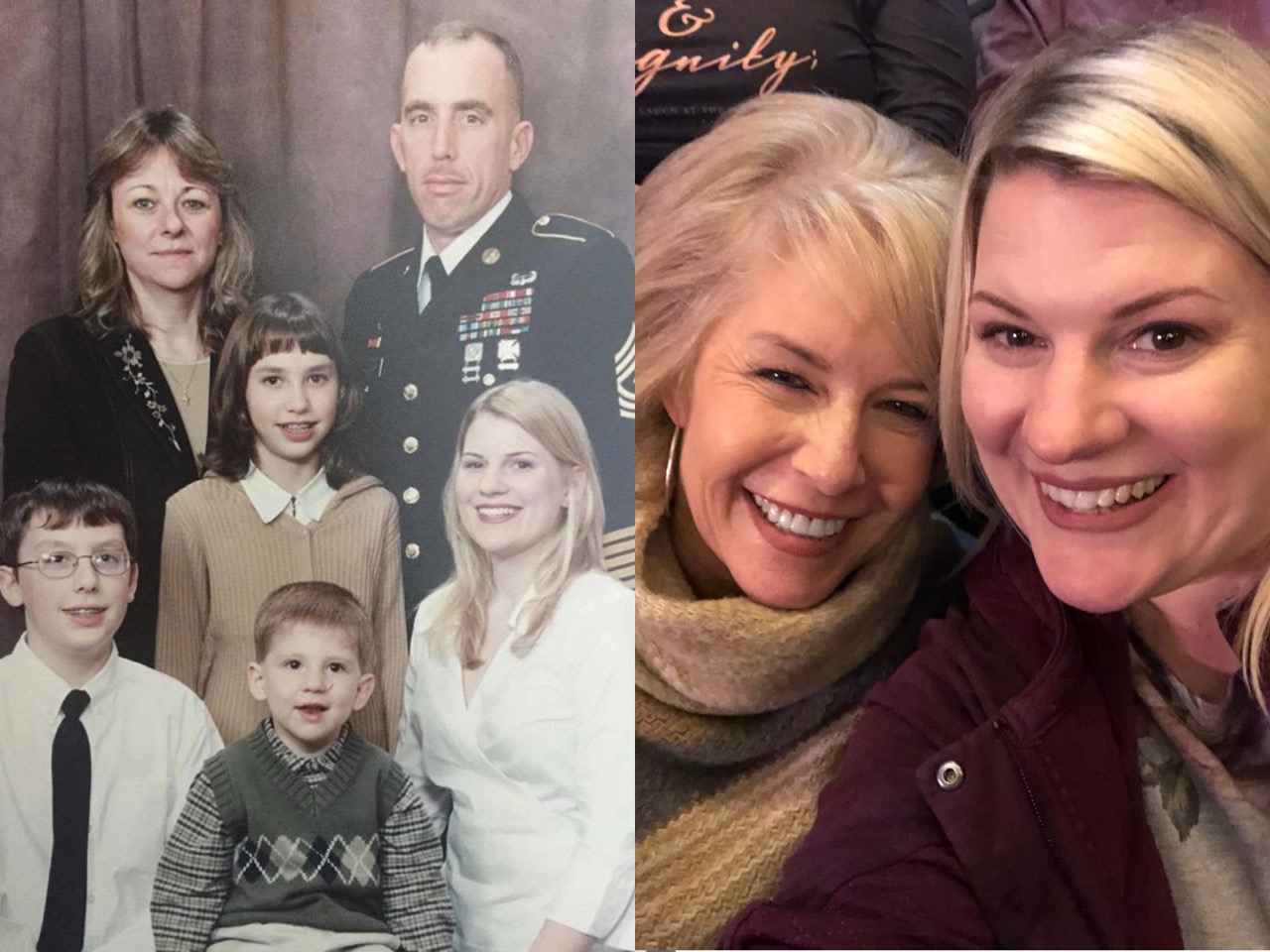
Left: Jessie Wiser (right) poses with the Williams family, who formally adopted her after she aged out of Tennessee’s foster care system. Right: Wiser (right) reunites with former social worker Danette Thigpen-Woodcock, whose support helped shape her journey into social work. Photos provided by Danette Thigpen-Woodcock.
Wiser entered Tennessee’s foster care system at age 10 after experiencing instability and abuse at home. Earlier in childhood, she had primarily been raised by a great-uncle after her father, a Vietnam veteran, struggled with mental health and substance use challenges. After her great-uncle died, there were no remaining relatives able to care for her long-term.
Over the next several years, Wiser moved through multiple placements across Middle Tennessee, including foster homes, group homes and facilities that have since closed or changed significantly under updated state regulations.
In 2023, approximately 8,000 children were in foster care in Tennessee, with roughly 1,000 aging out of the system each year. For many young people, the transition into adulthood comes without stable support systems, consistent mentorship, or permanent family connections.
Wiser said her own story is unfortunately not the norm.
"For the majority of people like me, they're incarcerated, they're unhoused," she said. "Mine is a small story, but that's not the reality for most kids in custody."
Everything began shifting when she met APSU alumna Danette Thigpen-Woodcock, a longtime social worker and former director of Montgomery County Juvenile Court who served as Wiser’s caseworker during her teenage years.
At the time, Wiser said she was exhausted by instability and ready to give up on school altogether.
"I wanted to drop out of high school," Wiser said. "I wanted to quit. I was tired of people telling me what to do, and I had no choices in my own life."
Thigpen-Woodcock saw something different.
"She had an old soul and a balance about her," Thigpen-Woodcock said. "She was solid the whole time. She made good grades. She made good choices. We just connected."
One memory still stays with her decades later.
"I remember her stuff was packed in a plastic bag on the porch," Thigpen-Woodcock said. "And it changed my life right then. I thought, 'I will never let this happen to somebody ever again.'"
Eventually, Thigpen-Woodcock convinced one final foster family in Clarksville, Tenn., to accept Wiser into their home for what was initially supposed to be a temporary stay.
"One night," she recalled asking them. "We'll do one night."
That one night became something much bigger.
Wiser turned 18 in that home, gave birth to her oldest child while living there, and remained close with the family long after aging out of the foster care system at 19. Later, they formally adopted her as an adult.
"He gave me away at my wedding," Wiser said of her adoptive father. "When I talk about my parents, that's who I'm referring to."
The experience reshaped her understanding of what permanency and belonging could look like.

Personal photographs shared by APSU social work instructor Jessie Wiser document her childhood, teenage years, and early motherhood during and after her time in Tennessee’s foster care system.
Still, the road ahead was difficult. Wiser initially enrolled at APSU at 18 but struggled to balance academics, child care, work and the overwhelming transition to college life without a strong support network or understanding of campus resources.
"I came into college and didn't really know anything," she said. "Nobody had been to college either, so they didn't really know how to advise me or help me."
She eventually returned years later as a nontraditional student, inspired in part by Danette’s continued encouragement and by APSU faculty members who recognized her potential.
At first, Wiser resisted the idea of pursuing social work professionally.
"I didn't want anything to do with that system," she said. "And I certainly didn't want to work with kids."
That changed once she began studying social work at APSU and better understood the realities, limitations, and human complexities social workers navigate every day.
"What if I could make a difference?" she recalled thinking. "What if I could do it differently?"
After completing her internship with the Tennessee Department of Children’s Services, Wiser accepted a position there and began working with youth transitioning out of foster care — young people whose fears and frustrations she intimately understood.
"What does it feel like to have no control of your life? To have no self-determination? No autonomy?" Wiser said. "You just live in a system that tells you what to do."
Today, those lived experiences shape both her teaching philosophy and her advocacy work.
Wiser frequently encourages community members to think beyond traditional ideas of foster care support, emphasizing that meaningful impact does not always require becoming a foster parent.
"It's a big ask to let people into your home," she said. "But there are so many ways people can help."
She points to simple but meaningful acts:
- donating new suitcases instead of used trash bags for belongings
- organizing quality, name-brand holiday gifts for teenagers in care
- providing respite support for foster parents
- mentoring youth aging out of the system
- helping foster youth secure jobs and stable housing
- identifying students on college campuses who may lack family support systems
"Teenagers want the same things other people want," Wiser said. "They want dignity. They want to feel like they matter."
For Thigpen-Woodcock, Jessie's journey reflects the power of relationships built through trust and consistency.
"You don't find that very often in life," she said. "She's authentic, genuine and trustworthy. And now she just keeps giving."
As National Foster Care Month continues, Wiser hopes her story encourages others to see foster care not as somebody else’s issue, but as a community responsibility.
"You don't have to be an important city official or the mayor to make an impact in a child's life," Wiser said. "It's simply going and asking, 'What's the need? How can I help?'"
About APSU Department of Social Work
Part of the College of Behavioral and Health Sciences, the Austin Peay State University Department of Social Work prepares compassionate, ethical and knowledgeable social workers committed to serving vulnerable populations and advancing social justice. Through its accredited BSW and MSW programs, the department combines classroom learning with hands-on field experience to equip students for impactful careers in child welfare, mental health, healthcare, advocacy and community service.
News Feed
View All News
Nearly 150 Austin Peay State University students took on the roles of families experiencing financial hardship during an immersive poverty simulation on Oct. 5, exploring how limited resources can affect access to housing, transportation, healthcare, and more.
Read More
The exhibition will run from Oct. 30 to Jan. 7 at the Customs House, along with a Nov. 7 reception. It features the work of exemplary APSU students alongside faculty, showcasing the range, development, and skill within the Department of Art + Design.
Read More
Under the direction of Dr. Zack Barnes, the Center for Literacy will serve as a hub for K-12 educators, teacher candidates, and researchers committed to improving student outcomes through proven instructional strategies.
Read More