


Austin Peay’s SGI picks up $800,000 federal grant for Alabama seed collection
By: Colby Wilson February 16, 2026
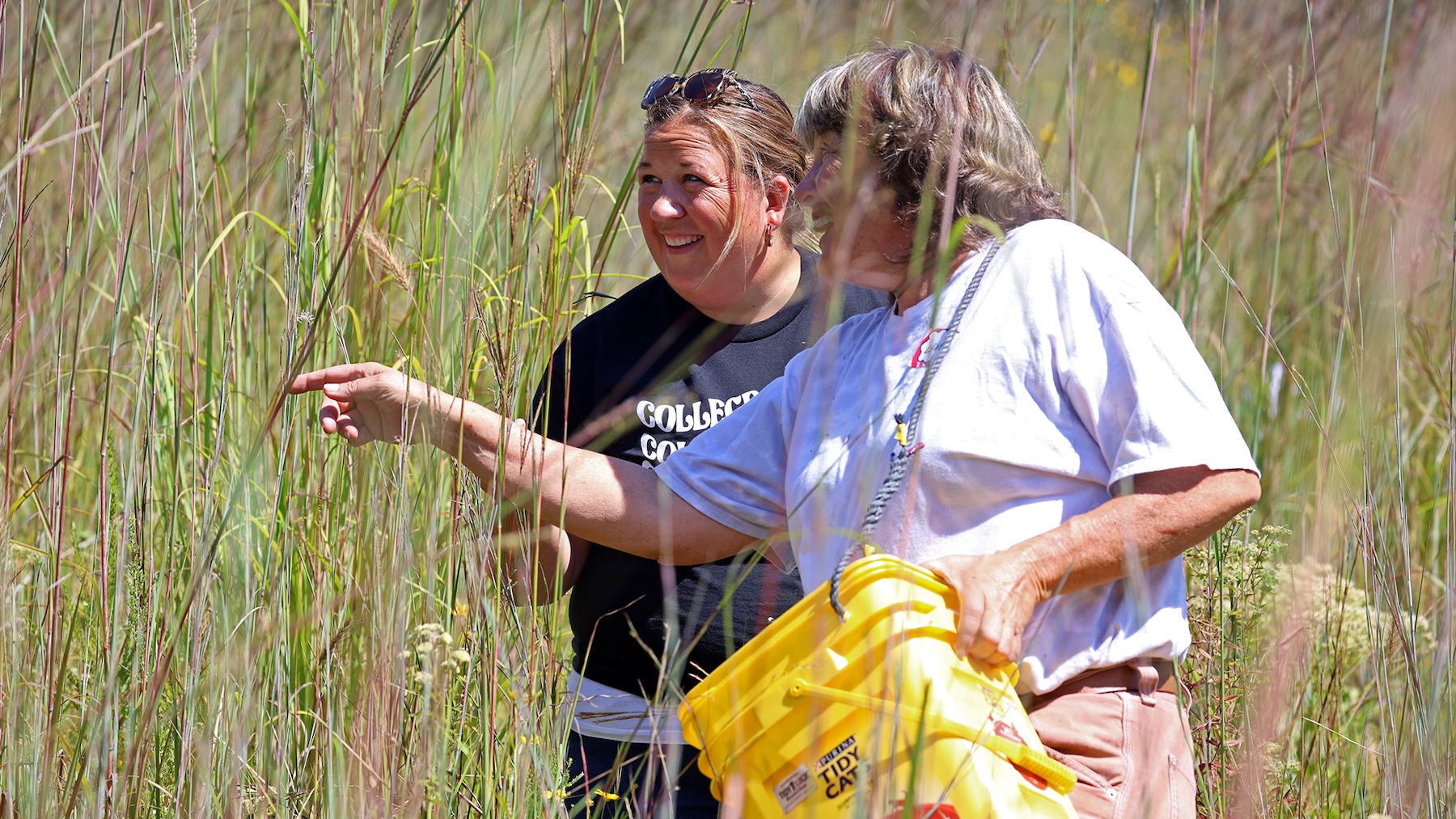
Native seed collections carried out by the Southeastern Grasslands Institute act as a safeguard for biodiversity, ensuring locally adapted seeds are available for restoration projects as needed. | Photo by Colby Wilson
CLARKSVILLE, Tenn. — The Southeastern Grasslands Institute (SGI) at Austin Peay State University has received an $800,000 grant from the United States Fish and Wildlife Service (USFWS) to establish a comprehensive native seed collection program across Alabama, addressing critical gaps in restoration readiness throughout the state's grassland and open woodland ecosystems.
The two-year initiative will conduct 200 native seed collections statewide from 2026 through September 2027, creating a proactive conservation approach to ensure locally adapted seeds are available for restoration projects. The grant funding will support field crews, equipment, processing facilities, and long-term storage necessary to execute collections across Alabama's diverse ecosystems.
"Restoration efforts are often delayed because appropriate native seed isn't available when it's needed most," said Dr. Dwayne Estes, executive director and co-founder of SGI. "This project addresses that critical gap by building our seed inventory before disturbances occur, whether from wildfire, controlled burns, or other management activities."
The competitive grant award recognizes SGI's expertise in grassland restoration and its strong partnerships with federal agencies, including the Bureau of Land Management's Seeds of Success program. This funding builds on SGI's successful seed collection and restoration work across the Southeast, expanding the organization's conservation footprint in Alabama.
The initiative will hire Alabama-based seed collection technicians to work across the state's most important landscapes, including the Black Belt and Jackson Prairie complex, the Coosa Valley and Ketona Glades, the Moulton Valley, and surrounding upland pine-oak open woodlands. Collections will extend into adjacent portions of Mississippi and Georgia, where ecosystems cross state boundaries.
Additional collections will follow SGI protocols, with a subset conducted in partnership with tribal programs to support culturally significant species for tribal-led seed banking efforts.
Grant funds will be distributed across the two-year project timeline, with the first year focused on infrastructure development and primary collection activities. The second year will support targeted collection efforts and final processing to meet federal deliverable requirements.
"This approach not only safeguards wild populations from over-harvesting but also allows us to develop future production crops from wild-collected seed," Estes said. "By increasing our seed inventory from specific regions, we're creating a more resilient foundation for restoration practitioners across Alabama and beyond."
For more information about the Southeastern Grasslands Institute, visit https://www.segrasslands.org.
About the Austin Peay College of STEM
The College of Science, Technology, Engineering & Mathematics (STEM) provides studies for students in the areas of agriculture, astronomy, aviation sciences, biology, chemistry, computer science, earth and environmental sciences, engineering physics, engineering technology, information technology, mathematics, medical laboratory sciences, radiologic sciences and physics. Our outstanding, discipline-based programs are student-centered and designed to prepare students for responsible positions at all levels of research, industry, education, medicine and government positions.