


APSU poverty simulation helps students understand barriers facing local families
By: Ellie Forrest and Ethan Steinquest October 20, 2026
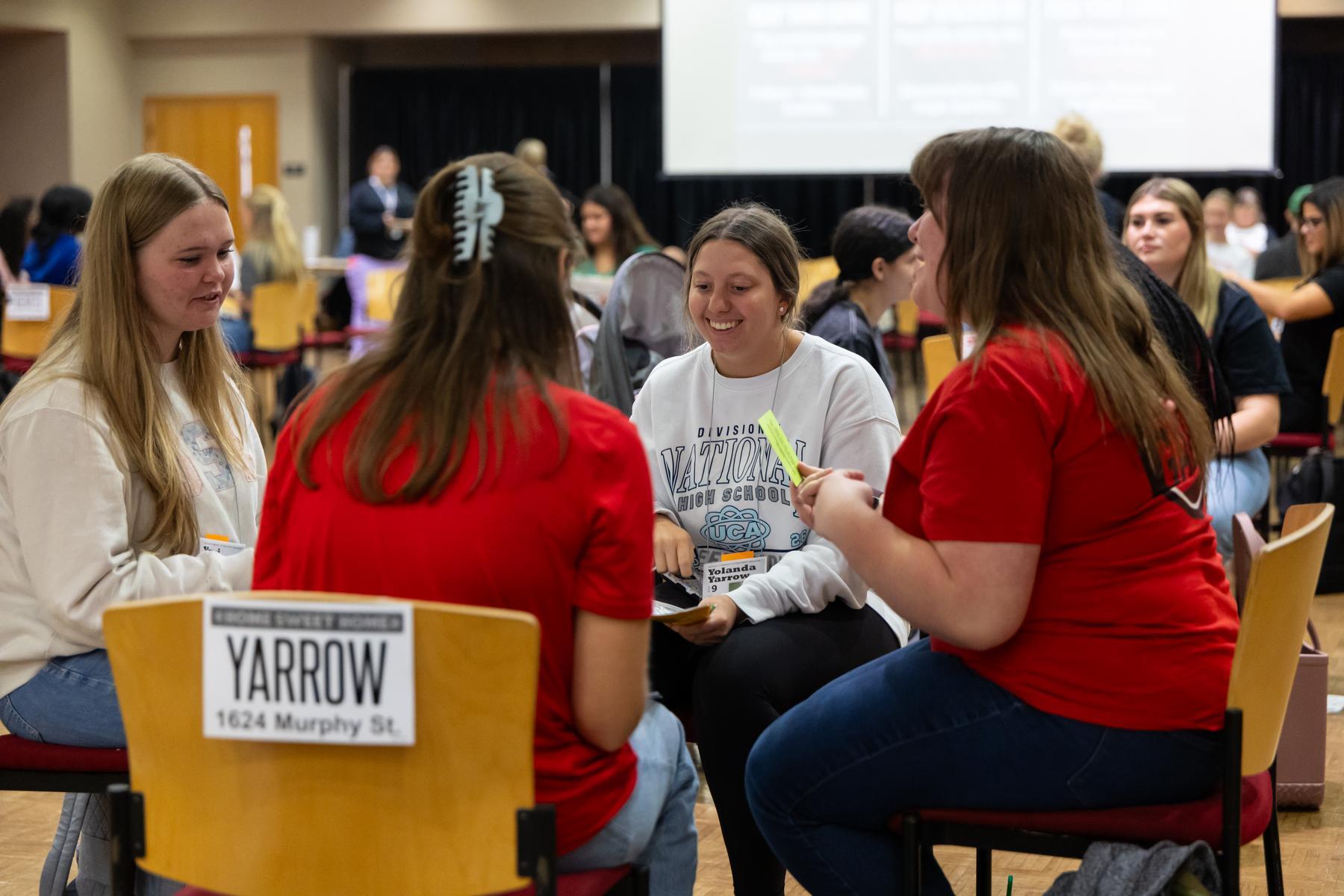
A group of APSU students discusses how they will spend their time and money during a poverty simulation hosted on Oct. 5, in the Morgan University Center Ballroom. | Photo by Sean McCully
CLARKSVILLE, Tenn. — Nearly 150 Austin Peay State University students took on the roles of families experiencing financial hardship during an immersive poverty simulation on Oct. 5, exploring how limited resources can affect access to housing, transportation, healthcare, and more.
The simulation brought together nursing, public health, social work, and sociology students. Dr. Adrienne Wilk, assistant professor and simulation coordinator for APSU’s School of Nursing, said the goal was to highlight the relationship between nonmedical issues and health outcomes.
“A patient who misses an appointment so they won’t be late to work or a person who chooses to pay their rent over buying insulin to manage their diabetes is making a very difficult choice,” Wilk said. “Unfortunately, a lot of individuals within our community have to make those choices, and we wanted to put the students in their shoes.”
Participants were assigned roles within family units and went through four simulated weeks of everyday decisions. APSU employees and community volunteers staffed more than 20 stations, which represented resources like grocery stores and social services.
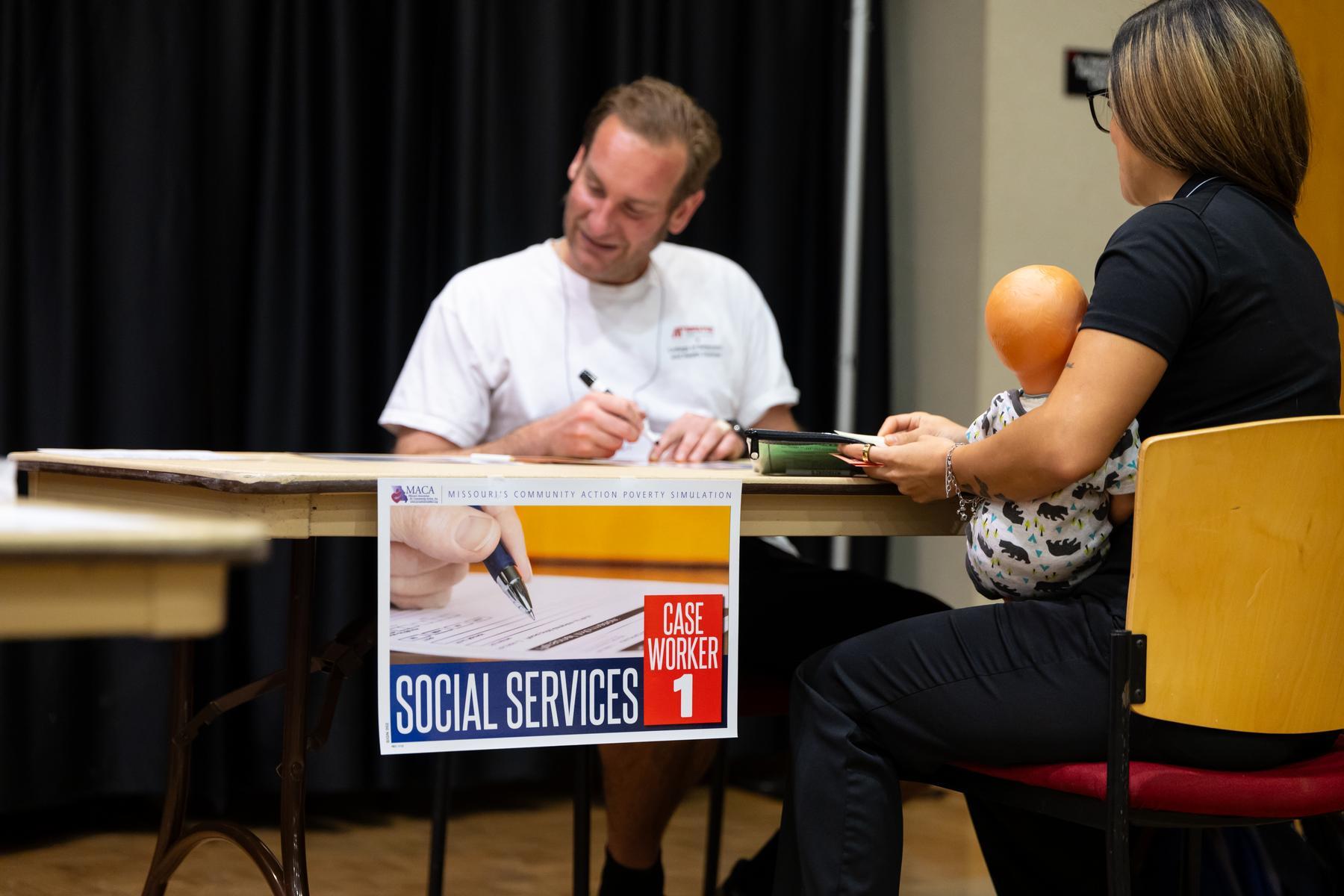
An APSU student assigned the role of a parent in the simulation visits social services to connect with helpful resources. Baby dolls were used to represent infants, and families had to make sure they were being cared for throughout the exercise. | Photo by Sean McCully
Following the simulation, faculty offered students a debriefing to discuss their experiences, emotional responses, and observations. Students considered barriers they encountered during the simulation, resources that helped their families, and ways the system can either make services easier to access or unintentionally create additional obstacles.
Some students were not encountering those barriers for the first time. Senior nursing major Amber Warns has experienced some of the problems highlighted in this simulation and hopes this experience can help other students recognize the obstacles that poverty creates.
“I grew up in poverty,” Warns said. “That’s why I’m 35 in nursing school. So, it was more of a reminder about where I’ve come from... I think [this simulation] opens a lot of people’s eyes to how quickly stuff can get hard, especially when you don’t have the resources that you need, and it shows how healthcare can take a back seat when you’re just fighting to survive every day.”
Freshman early childhood education major Elizabeth Highfield participated in the simulation through a sociology class, and although she is not considering a healthcare career, it provided her with communication skills and familiarity with the subject that will help her in a future career.
“As an education major, I'm going to be working with children whose parents or siblings might be in this scenario, and you truly don't know what's going on until they tell you,” Highfield said. “I think it's my job to give them a positive interaction with the school system and let them know the resources are available, that I am a resource for these children, and that I am open to working with their children and with them to make sure that their children succeed.”
Behind the scenes, community involvement was key to making those experiences feel real.
“I think a big part of the simulation was recruiting the members of the community to staff the stations around the perimeter,” Wilk said. “We can simulate as much as we want, but if we have real individuals with that experience who can speak to those things and imitate that in this simulation, there's no better substitute for that.”
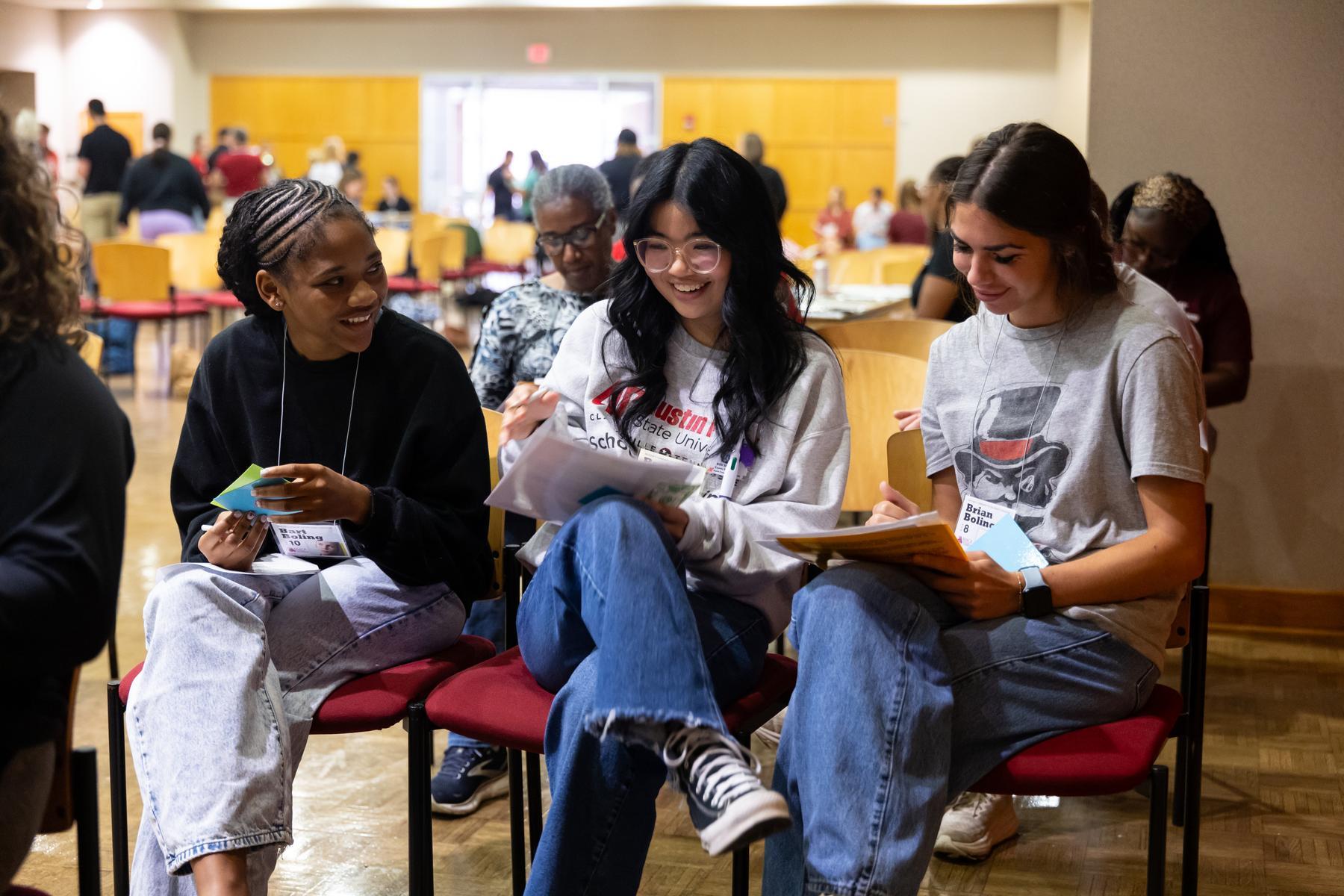
APSU students who were assigned the roles of children for the simulation spend their day in a space designated as the local school system. | Photo by Sean McCully
Among the volunteers were Selena Wilson, Families in Transition (FIT) service navigator for the Clarksville-Montgomery County School System (CMCSS), and Hayley Stoebner, CMCSS’s FIT liaison. They represented the school system during the simulation, and their jobs are centered on providing resources for families in crisis.
“One of the things that was really good for them to see is that it’s not just a ‘pull yourself up by your bootstraps and figure it out’ situation,” Stoebner said. “They see the way that different systems have wait times or requirements they may not be eligible for, and they can’t just go there to instantly fix the problem. So, having that empathy and understanding that sometimes there are barriers put out there for families that are not self-imposed is important for them as well.”
The cross-disciplinary design was intentional, and it reflects the university’s investment in preparing students to serve the community they live in.
“Our simulation team is looking at creative ways to influence health,” Wilk said. “We do a lot of out-of-the-box stuff, but it was really important for us to not do the simulation in silos. We were strategic in building the families with students from different disciplines so that they could learn from one another and gain different perspectives and contexts ... seeing the students assume those roles and really feel some of the emotions that members of our community feel, that was the best thing to see.”