APSU history department has strong showing at Ohio Valley History Conference
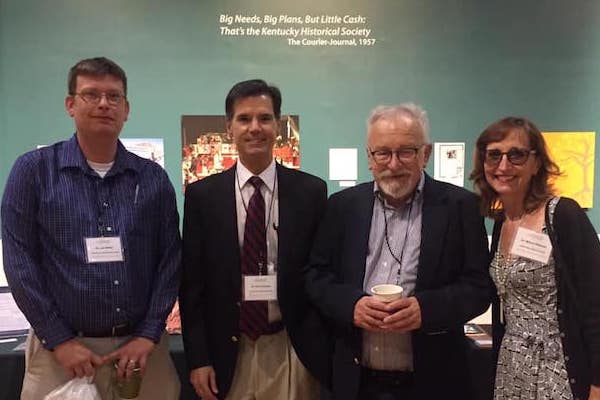
CLARKSVILLE, Tenn. – Several members of the Austin Peay State University Department of History and Philosophy headed about four hours north last weekend to present their research and expertise at the 35th annual Ohio Valley History Conference. Hosted by the Kentucky Historical Society in the town of Frankfort, this year's conference featured presentations from four APSU professors and two APSU graduate students.
The faculty members and the topics they presented included:
- C. Wallace Cross, professor of history, “From Fort Heiman to Johnsonville: The Tennessee River Campaign of Nathan Bedford Forrest”
- Kevin Tanner, associate professor of history, “The April Fool's Day Party: The Liberty Party and Its Founding”
- Timothy L. Wesley, associate professor of history, “Music, Minstrelsy, and the Memory of a Nation”
- Gregory Zieren, professor of history, “Thirty Years as the Fall of the Berlin Wall: A Commemoration of Gisela Blumhagen of East Berlin”
The APSU graduate students and the topics they presented included:
- Joseph Bailey, “‘If you Build It, They Will Come:’ Economic Revitalization and Fort Donelson National Military Park”
- Zacharie W. Kinslow, “Stooped So Low: Elias Polk and the Complexity of Nineteenth Century Southern Race Relations”
Dr. Minoa Uffelman, professor of history, and Dr. David Snyder, professor of history, served as moderators for conference sessions. Dr. Soma Banerjee, assistant professor of history, also attended the event.
Austin Peay will host the Ohio Valley History Conference in the fall of 2021.
News Feed
View All News
Austin Peay has set a new all-time enrollment record for the second consecutive year, with 11,338 students registered for Fall 2026. The growth is led by the university's largest incoming freshman class since 2018, with 1,918 first-time students, and by the highest proportion of military-affiliated students in Austin Peay's history. Active-duty service members, veterans, and military family members represent 35% of the student body.
Read More
The College of Business and Legends Bank will bring Mark Blaze, president and CEO of the Greater Nashville Technology Council, and Janet Wilson, vice president for urban development for the Clarksville-Montgomery County Economic Development Council, to campus this fall for the Legends of Business speaker series.
Read More
AEP has announced four new hires and five promotions as the team prepares for the university's centennial in 2027 and its accompanying Centennial Campaign.
Read More