


NASA launches rocket with Austin Peay’s first-ever space payload
(Published June 20, 2019)
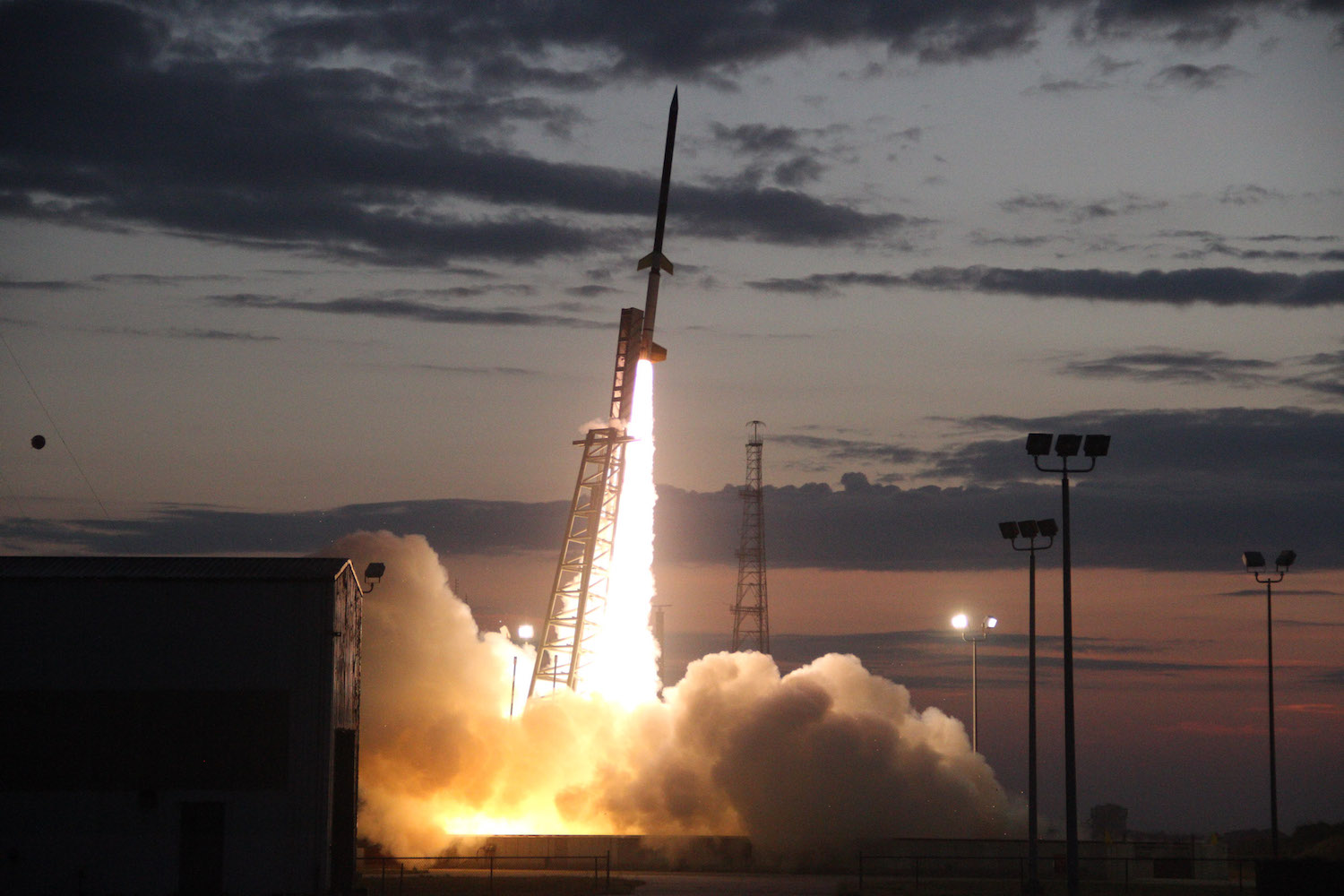
At about 4:30 a.m. CDT Thursday, June 20, Austin Peay State University’s first-ever space payload launched.
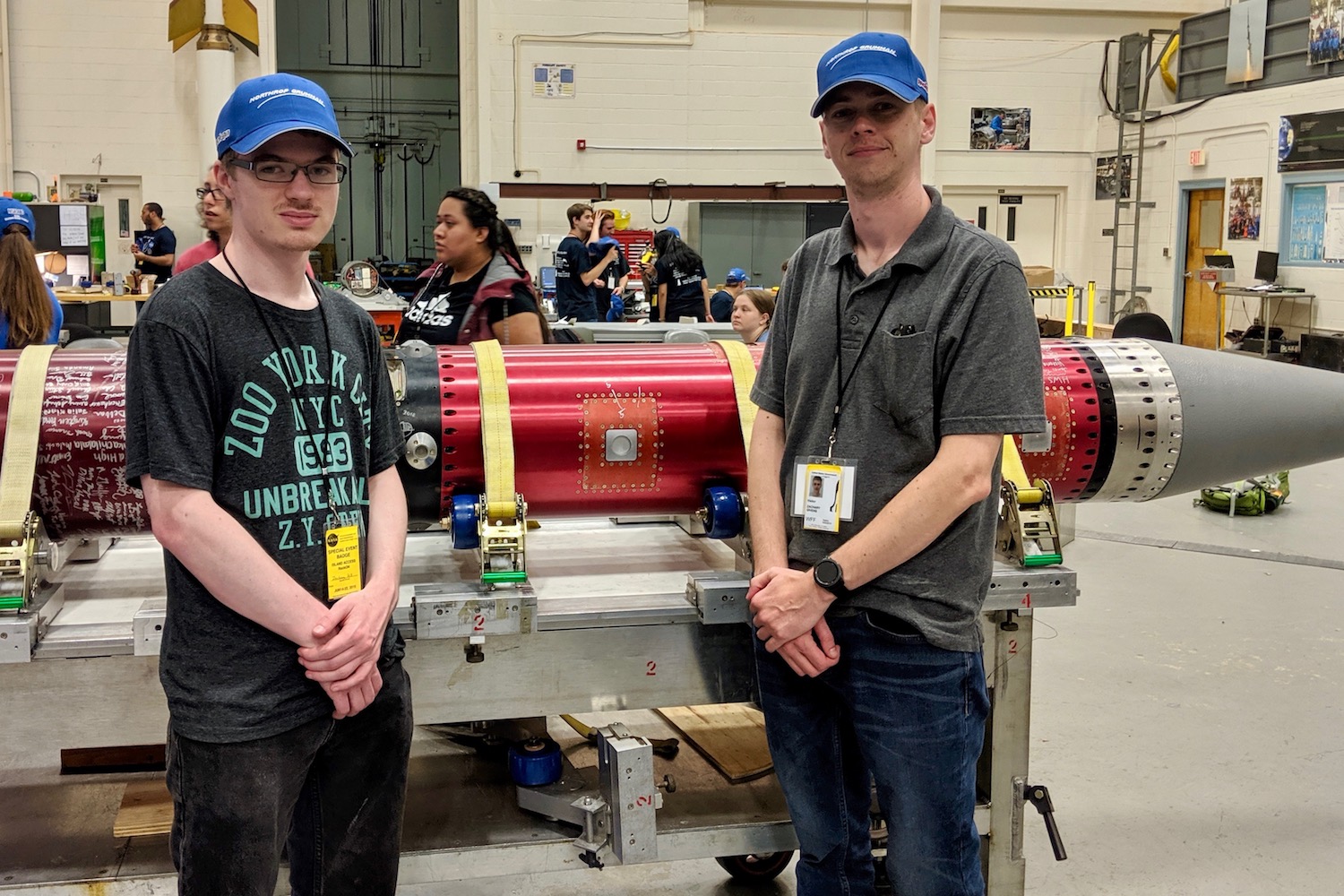
Austin Peay physics professor Dr. Justin Oelgoetz and two APSU physics students – Zach Hill and Zach Givens – built the predesigned payload during Rocket Week at NASA’s Wallops Flight Facility in Virginia.
A NASA Terrier-Improved Orion suborbital sounding rocket carried the payload to space Thursday morning.
“All I can say is that was really awesome to see,” Hill said. “Something I helped build get launched into space.”
LAUNCH PART OF ‘ROCKON!’ WORKSHOP
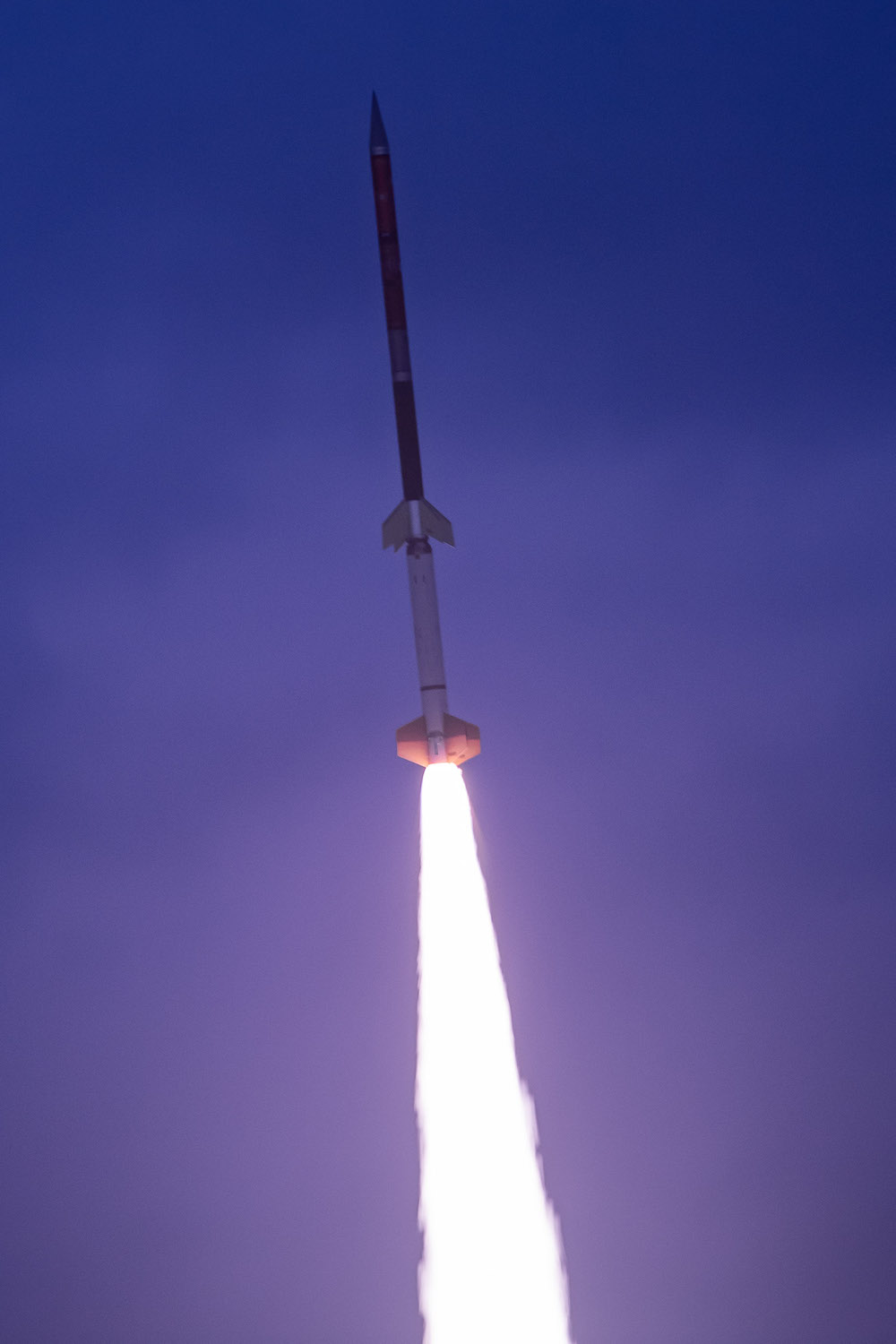
The rocket carried 28 student experiments – including Austin Peay’s – to nearly 73 miles altitude. The experiments landed via parachute in the Atlantic Ocean and a boat team retrieved the rocket and its payload by 9 a.m. CDT.
The students – from colleges across the country – then examined their data. All the payloads took the same measurements: acceleration, humidity, pressure, temperature and radiation.
Their efforts were part of RockOn!, a workshop that introduces participants to the basics of developing a scientific payload for flight on a suborbital rocket.
According to a NASA news release, after students learn the basics at RockOn!, they can participate in RockSat-C, where during the school year, they design and build a more complicated experiment for rocket flight.
“The idea is to learn so we can design our own payloads in future years,” Oelgoetz said. “We hope and intend this workshop to be the beginning of an Austin Peay space ‘program,’ not a degree but a fountain of student projects and opportunities.”
Hill said he learned several things at RockOn! “that will help me with the high-altitude balloon project as well.”
“For example, on the ground, air acts as a pretty good insulator between exposed components, but at high altitudes and in space there is very little air so there are steps that should be taken to make sure high-voltage components don’t arc elsewhere on the board.”
RockOn! is supported by the Colorado and Virginia Space Grant Consortia, NASA’s Office of STEM Engagement and NASA’s National Space Grant College and Fellowship Program.
Austin Peay’s trip is supported by the Tennessee NASA Space Grant Consortium, of which APSU is a member.
TO LEARN MORE
- For more about Rocket Week and the launch, go to nasa.gov/feature/wallops/2019/students-boosting-technical-skills-at-nasa-wallops-rocket-week.
- For more about RockOn! 2019, visit https://spacegrant.colorado.edu/rockon-home/rockon-2019-home.
- For morea bout the APSU Department of Physics, Engineering and Astronomy, go to apsu.edu/physics.
News Feed
View All News
Austin Peay State University alumnus Larry Carroll ('76) has made a gift to establish the Carroll Entrepreneurship Center, a university-wide hub based at The Press in downtown Clarksville that will support new venture creation for students and entrepreneurs throughout the region.
Read More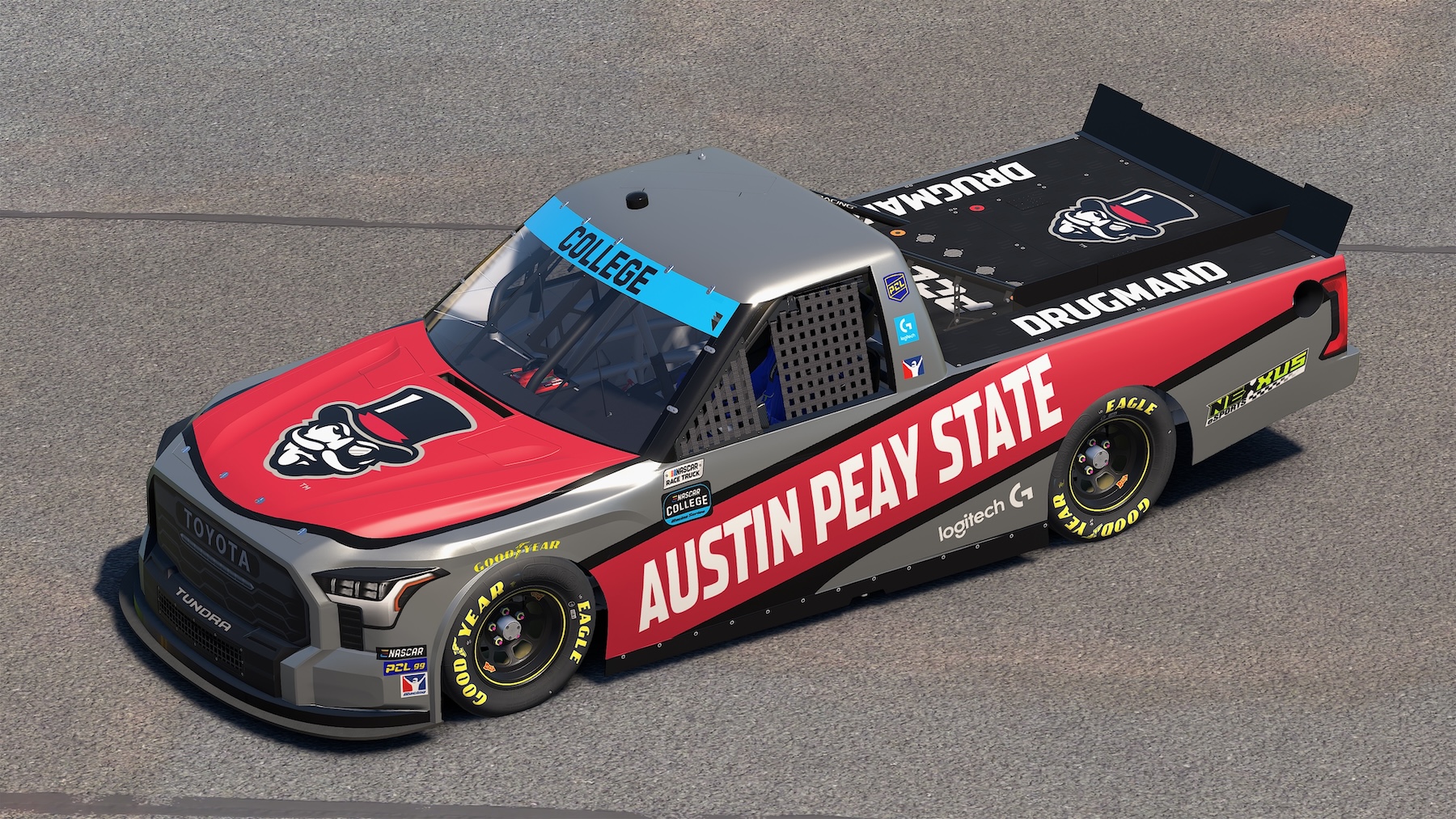
Freshman sports communication major Van Drugmand is representing the Govs in the 2026-27 eNASCAR College iRacing Series and will make his next appearance in the Peachtree Pursuit on Sept. 30.
Read More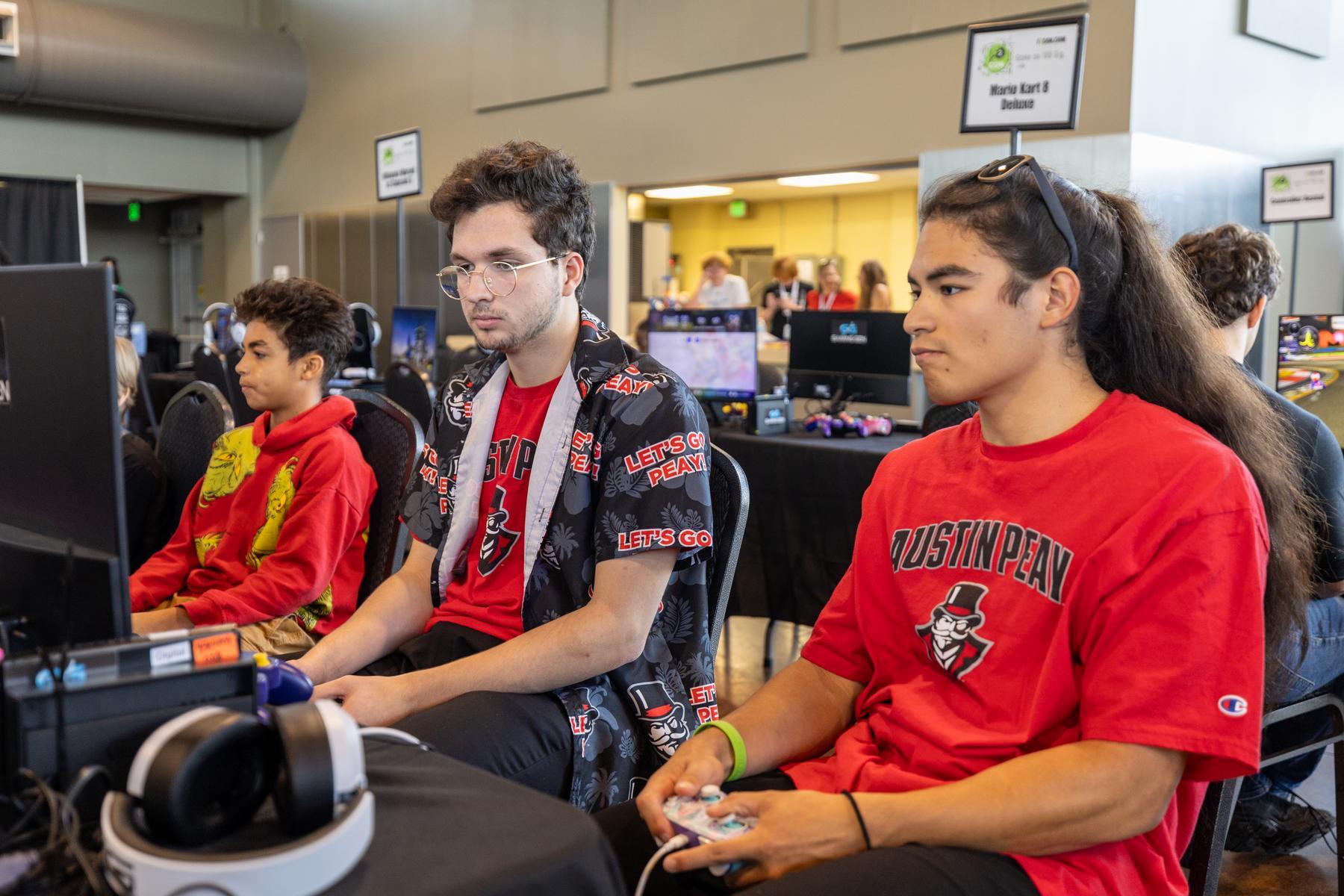
Austin Peay State University's Govs Gaming esports club returned to CDE Lightband's F2CON this month for the Tennessee Valley Invitational, facing established programs from Middle Tennessee State University and Murray State University in a Super Smash Bros. Ultimate tournament that drew more than 2,200 livestream viewers.
Read More