


At 24, APSU social work alum joins national juvenile justice leadership board
By: Seth Riker June 25, 2026
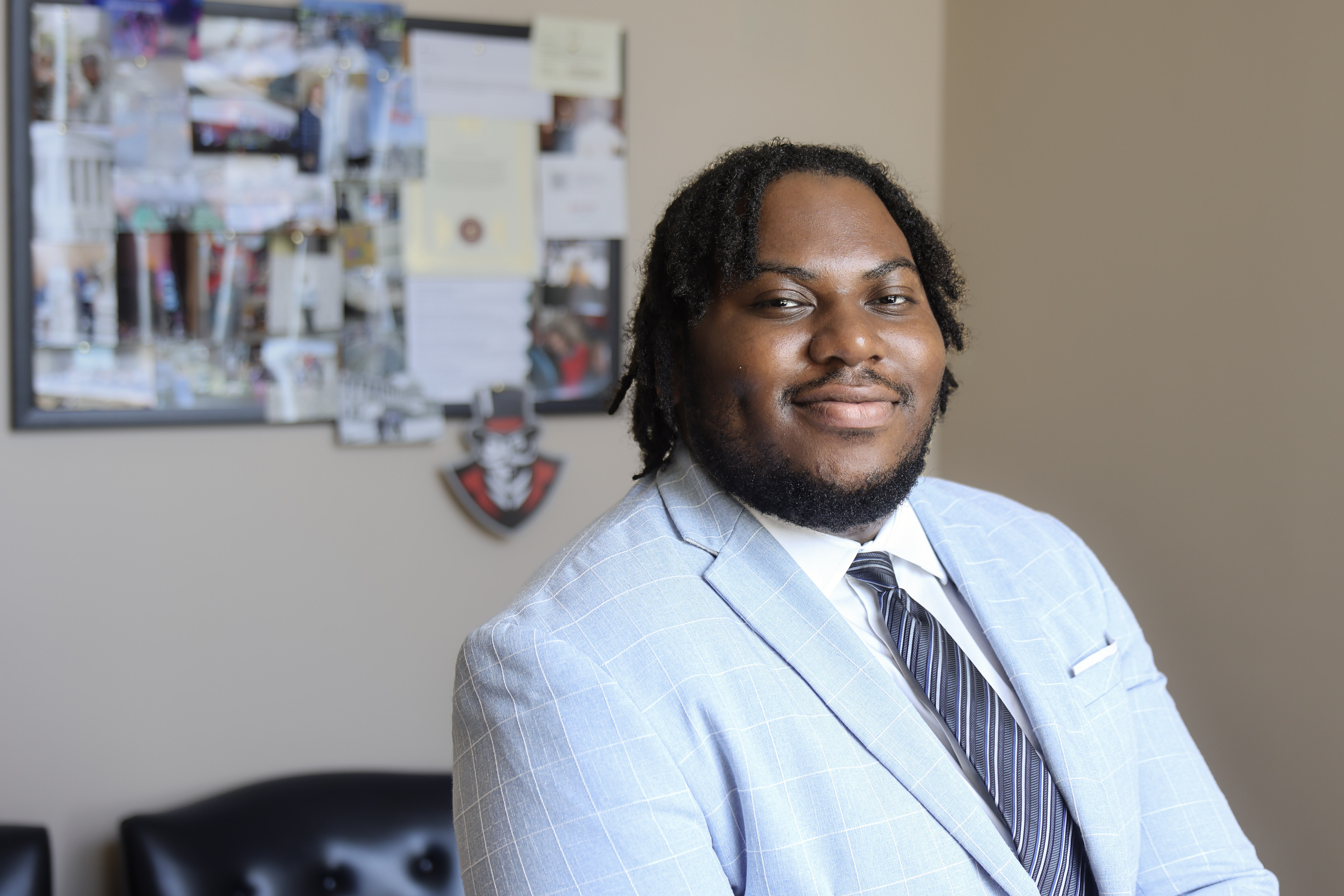
Isaiah Polk, a 24-year-old juvenile probation officer with Montgomery County Juvenile Court and APSU alumnus, was recently named chair of the Coalition for Juvenile Justice Emerging Leaders Committee and appointed to the organization's executive board. | Photo by Seth Riker
CLARKSVILLE, Tenn. - When Isaiah Polk walks into national policy meetings, he is often the youngest person in the room.
At just 24 years old, the Austin Peay State University social work alumnus has built a career advocating for young people in Montgomery County's juvenile justice system. Now, he is bringing that perspective to the national stage.
Polk, a juvenile probation officer with Montgomery County Juvenile Court, was recently named chair of the Emerging Leaders Committee for the Coalition for Juvenile Justice (CJJ), a national organization that brings together policymakers, practitioners, advocates, and youth leaders to improve the country’s juvenile justice systems. The appointment also earned him a seat on the organization's executive board.
For Polk, the opportunity is about more than professional recognition.
"I knew the work that I was doing was important beyond these four walls," he said. "Being a part of this committee allows me to bring insight from what we're seeing here in Tennessee and Montgomery County and help create effective change across the board."
The Coalition for Juvenile Justice created the Emerging Leaders Committee to ensure young voices are actively involved in policy conversations. As chair, Polk will lead a national group of emerging leaders from several states and territories, including Kentucky, Hawaii, Minnesota, and Guam.
One of his primary goals is strengthening youth engagement opportunities and ensuring young people have meaningful representation in conversations that directly affect their lives.
"They believe that young people's voices shouldn't just be tokenized," Polk said. "They should be listened to."
The role comes at a pivotal moment for juvenile justice programs nationwide. According to the Coalition for Juvenile Justice, Tennessee's federal juvenile justice grant allocation declined by over $3.3 million between fiscal years 2002 and 2022. When adjusted for inflation, the organization estimates Tennessee's allocation has decreased by 87.5%.
Polk sees the effects of those challenges firsthand.
During the Coalition's annual conference in Washington, D.C., he met with congressional staff and juvenile justice leaders from across the country to discuss funding, prevention programs, and strategies for supporting young people before they enter deeper levels of the justice system.
For Polk, many of those conversations led back to the same question.
"If we have a lack of mentorship programs and a lack of community engagement, what can we do?" he said. "How can we get the community involved in what we're trying to do to help reduce recidivism and help young people know there are adults who care about them?"
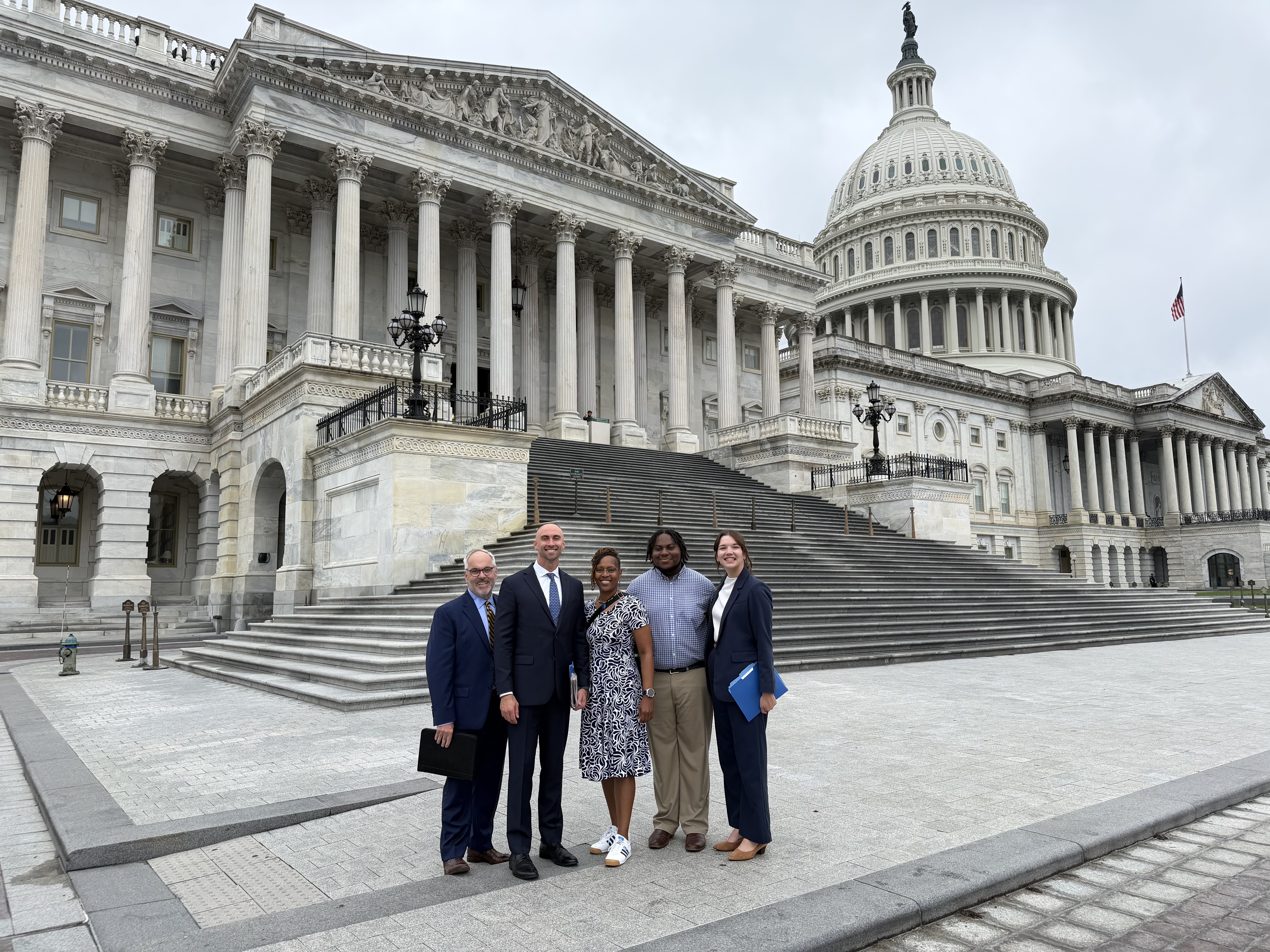
Isaiah Polk with members of the Tennessee Commission on Children and Youth (TCCY) at the Capitol Building, from left: Richard Kennedy, TCCY executive director; Brandon Smith, TCCY state advisory commission member; Linda Copeland, TCCY youth justice director; Polk; and Kylie Graves, TCCY director of data, policy, and communications. | Contributed photo
Polk’s focus on mentorship is rooted in his own experience.
A first-generation college student whose parents did not graduate high school, Polk credits mentors, youth leadership programs, and caring adults with helping him recognize opportunities beyond his circumstances.
"I had people around me who pushed me," he said. "People who said, 'You're more than your circumstance. You're more than your environment.'"
At APSU, Polk found mentors in the Department of Social Work who guided him toward an internship with Montgomery County Juvenile Court, which ultimately led to his current full-time position.
APSU Social Work Field Director Jessie Wiser said Polk's interest in juvenile justice was apparent early in his academic career.
"As we explored his interests and professional goals, he seemed like a great fit for a field of social work I love: juvenile justice," Wiser said.
During his internship, Polk balanced coursework, field placement responsibilities, and overnight work shifts to support his family. When Wiser noticed him struggling, she reached out.
"I believe in relationship building, and it's a core value of social work," Wiser said. "A professor once told me, 'Given enough information, all human behavior is explainable,' and I teach that to students."
After learning more about Polk's circumstances, Wiser worked with him to develop a plan for his academic success and well-being. Polk later received a job offer from Montgomery County Juvenile Court at the end of his practicum, allowing him to turn his internship into a career.
Wiser believes the experience reinforced an important lesson that shapes Polk's work today.
"It taught him to ask about future client behavior in a way that doesn't ask, 'Why are you doing this?' but instead, 'Tell me about what's going on with you,'" she said. "It also taught him a lesson in self-care."
That perspective aligns closely with Polk’s approach to juvenile justice.
"We have to get back to a village mentality," he said. "So many young people need somebody to show up for them and say, 'I care about you. I care about your future.'"
Today, Polk credits APSU’s support for helping him trust his own expertise and recognize that he belongs in rooms where policy decisions are made.
"I don't have imposter syndrome anymore," he said. "I'm confident in the spaces that I walk in. A lot of times, I'm the youngest person in the room. But I know I'm supposed to be here. My voice matters, and what I'm saying matters."
As he begins his two-year term as chair, Polk hopes to create stronger connections between young people, communities, and juvenile justice professionals across the country while expanding opportunities for youth leadership and advocacy.
He also hopes to encourage the next generation of leaders to speak up, even when they feel outnumbered or overlooked.
"Passion always leads to greatness," Polk said. "Get involved with people who are going to push you to the next level."
For a leader who is often the youngest person in the room, Polk is now helping ensure more young voices have a seat at the table.
About APSU Department of Social Work
Part of the College of Behavioral and Health Sciences, the Austin Peay State University Department of Social Work prepares compassionate, ethical and knowledgeable social workers committed to serving vulnerable populations and advancing social justice. Through its accredited BSW and MSW programs, the department combines classroom learning with hands-on field experience to equip students for impactful careers in child welfare, mental health, healthcare, advocacy and community service.