


APSU nursing faculty explore COVID-19’s lasting mental health impact in new book
By: Christy Bastin November 12, 2026
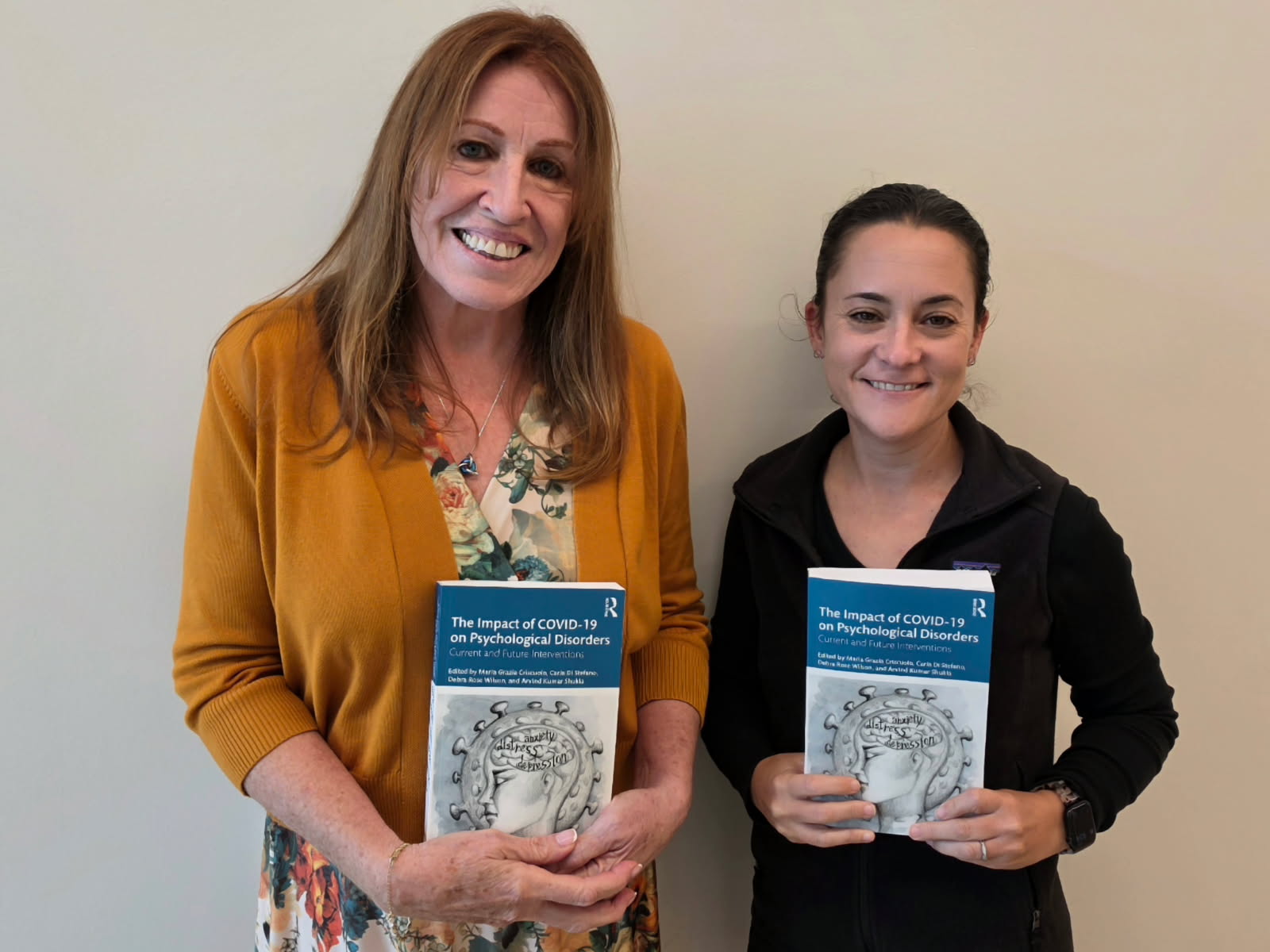 Dr. Debra Rose Wilson and Dr. Leslie Binford hold copies of a book examining COVID-19’s
impact on psychological disorders. | Photo courtesy of Debra Wilson
CLARKSVILLE, Tenn. – The immediate crisis of COVID-19 may have passed, but its mental health effects continue to shape patient care. Two Austin Peay State University nursing faculty members contributed to a new book examining those effects and how healthcare professionals can respond.
Dr. Debra Rose Wilson and Dr. Leslie Binford, faculty members in the College of Behavioral and Health Sciences’ School of Nursing, brought their perspectives as educators and healthcare professionals to The Impact of COVID-19 on Psychological Disorders: Current and Future Interventions, published by Routledge.
Wilson, professor and Lenora C. Reuther Chair of Excellence, co-edited the book. She also co-authored a chapter with Binford, associate professor and psychiatric mental health nurse practitioner, and colleagues from Chile and Mozambique.
“We cannot forget the long-term consequences of this pandemic because there are people still suffering from it,” Wilson said. “To be part of sharing their experiences and bringing their suffering to light feels really impactful and very important.”
Their chapter examines the pandemic’s global psychological impact, including psychiatric disorders, cognitive complications, and the burden on healthcare workers. It also considers differences in access to mental healthcare and the importance of including those services in future public health responses.
Wilson described the book as a global effort, bringing together chapters from scholars around the world. For Binford, that international perspective is important to understanding why the pandemic’s effects have not been experienced equally.
“We are still learning about its long-term effects on mental health, including depression, substance use, and cognitive functioning,” Binford said. “What may surprise people is how differently these effects are experienced across the world, particularly in countries where mental health resources were already limited.”
The work also connects faculty scholarship with student learning. As an educator and practicing nurse practitioner, Binford prepares future nurses to consider both a patient’s symptoms and the circumstances surrounding them.
“In my teaching, I emphasize that psychiatric symptoms don't occur in isolation,” Binford said. “Social determinants of health, access to care, cultural influences, and major life events all affect mental well-being.”
The pandemic illustrated how those factors intersect, she said, reinforcing the need to prepare nurses to recognize mental health concerns early, provide compassionate, evidence-based care and advocate for patients who face barriers to treatment.
Binford hopes the chapter encourages patients, families, and healthcare professionals to recognize that recovery from a public health crisis includes psychological well-being. She emphasized the need to reduce stigma and make mental healthcare more accessible, with responsibility shared across healthcare professions.
“For healthcare professionals especially, I hope this reinforces that addressing mental health isn't just the responsibility of psychiatric specialists,” Binford said. “It's an essential part of caring for the whole person.”