


Austin Peay State University’s teacher candidates achieve record-high edTPA scores
By: Ethan Steinquest December 12, 2025
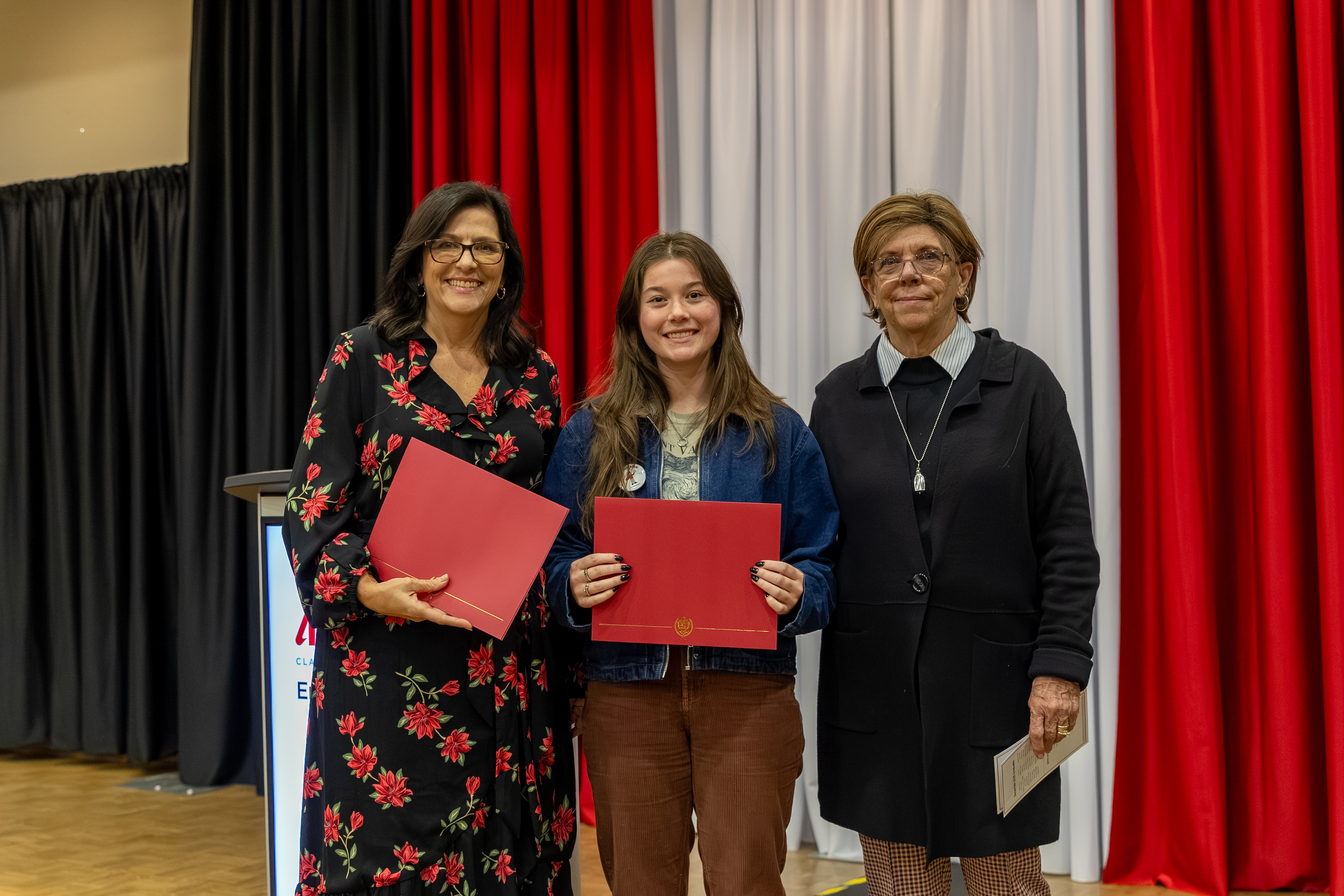
From left: Angela Stone, Austin Peay State University’s edTPA coordinator; Chanel Hunter, a graduating art education major; and Judith Castleberry, a master clinician with the Eriksson College of Education. Hunter was among three recipients of the edTPA Scholar Award during the CoE Undergraduate Awards Ceremony hosted Dec 9. | Photo by Kaos Armstrong
CLARKSVILLE, Tenn. - Graduating seniors from Austin Peay State University’s Eriksson College of Education achieved the program’s highest edTPA passing rate and scores since the university adopted the assessment in 2013, positioning these newly licensed teachers to succeed in Tennessee’s classrooms.
The edTPA (Educative Teacher Performance Assessment) is a nationally recognized three-part portfolio that evaluates teacher candidates’ lesson planning, instruction, and assessment capabilities. Tennessee requires teachers to pass the edTPA to receive their state license and will transition to updated clinical practice requirements next year, making this semester’s cohort the last to complete the assessment.
“We were very excited about the results,” said Angela Stone, Austin Peay’s edTPA coordinator. “We haven’t had this level of success since I joined the program, and it was fulfilling to go out on such a high note during our last semester using the edTPA. I’m so proud of what these students have accomplished.”
Stone said teacher candidates typically spend 40 hours on the edTPA, which involves writing lesson plans, recording video footage of their teaching, and analyzing student work, along with writing commentaries to provide a strong rationale for instructional decisions and next steps.
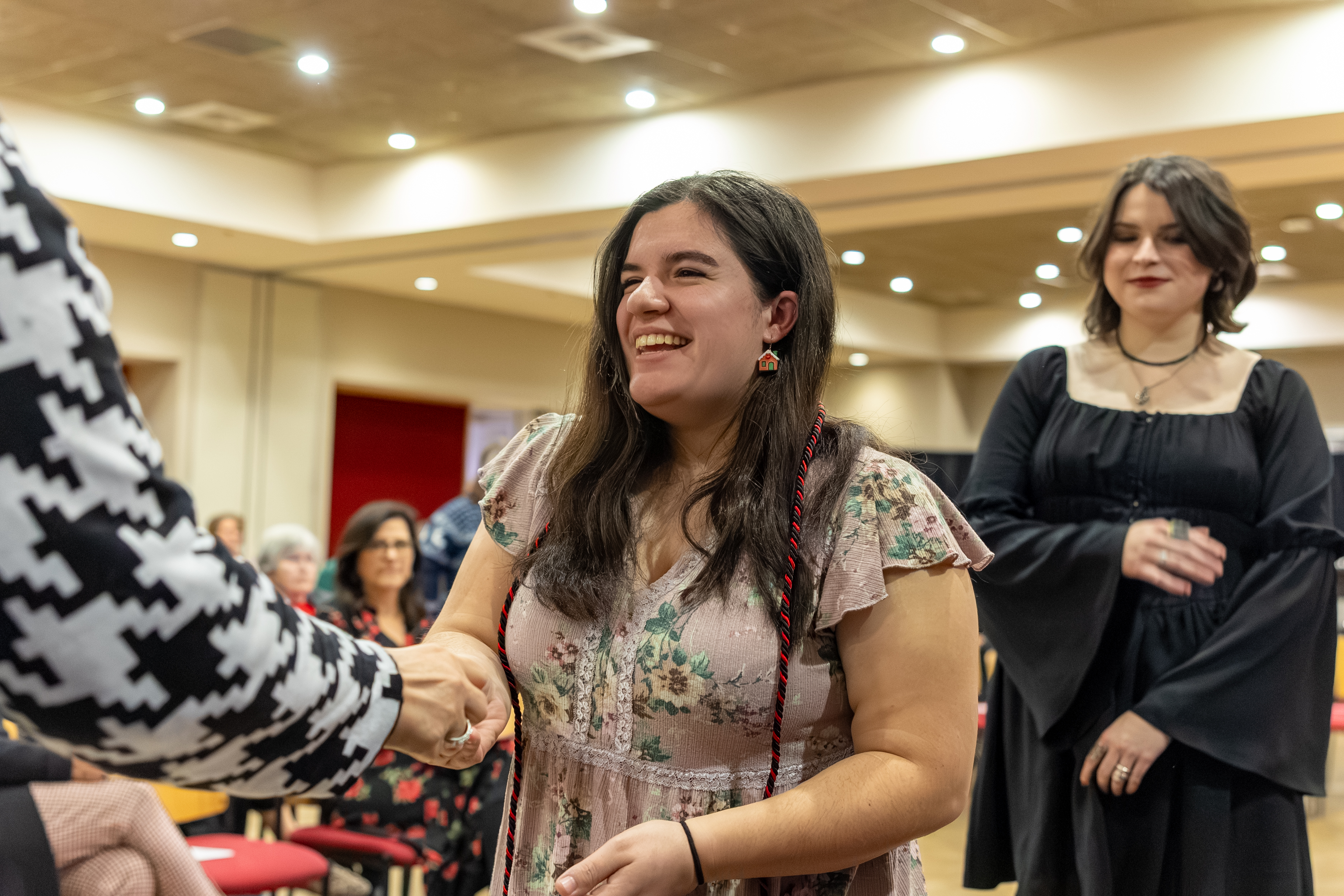
Gabriella Emrey, an APSU graduating senior and K-5 education major, at the CoE Undergraduate Awards Ceremony hosted Dec. 9. | Photo by Kaos Armstrong
“The edTPA helped me understand students’ thought processes because it encourages you to think about your students at every step,” said Gabriella Emrey, a senior K-5 education major. “From the beginning, you’re figuring out what they need to know and how to help them. Once you’re actually teaching, that helps you adapt to your classroom.”
Emrey taught math at Barksdale Elementary this semester, and after graduation, she hopes to work there as a long-term substitute before joining the full-time staff next year. She planned to go into culinary arts, but a teaching assistant role at a preschool inspired her to change careers.
“I love working with younger kids because you get to see them grow and have those aha moments when they figure something out,” she said. “It’s like you’re the parent in the classroom, because you’re the person they look up to, go to for safety, and share their excitement with.”
The high-performing cohort represented multiple disciplines, from history and chemistry to music and physical education. Dr. Jennifer Snyder, an associate professor of art education who has supported her students’ edTPA preparation at APSU since 2013, is excited to see this year’s graduates starting their careers.
“It’s always great to see the students succeed, because that’s ultimately what you want as an educator,” she said. “I’ve been fortunate to have good students throughout my time here, and I’m proud to see them working hard in the profession … [because] having a good experience with art stays with you for your entire life.”
Chanel Hunter, a senior art education major who completed her assessment at Ellis Middle School in Hendersonville, said the process helped her feel more comfortable in her role as a teacher.
“One of the biggest benefits for me was gaining confidence and figuring out how to speak to the students,” she said. “I learned that being more relatable with them will really help them open up and be encouraged to create art.”
Hunter plans to work as a substitute teacher in Sumner County before taking a full-time middle or high school position. Her high school art teacher inspired her to become an educator, and she quickly discovered a passion for the work.
“During my student teaching, I’ve been waking up excited to go to school,” she said. “Middle school is a difficult time and kids can be nervous or insecure about themselves, so seeing them take pride in something they’ve made is very heartwarming.”
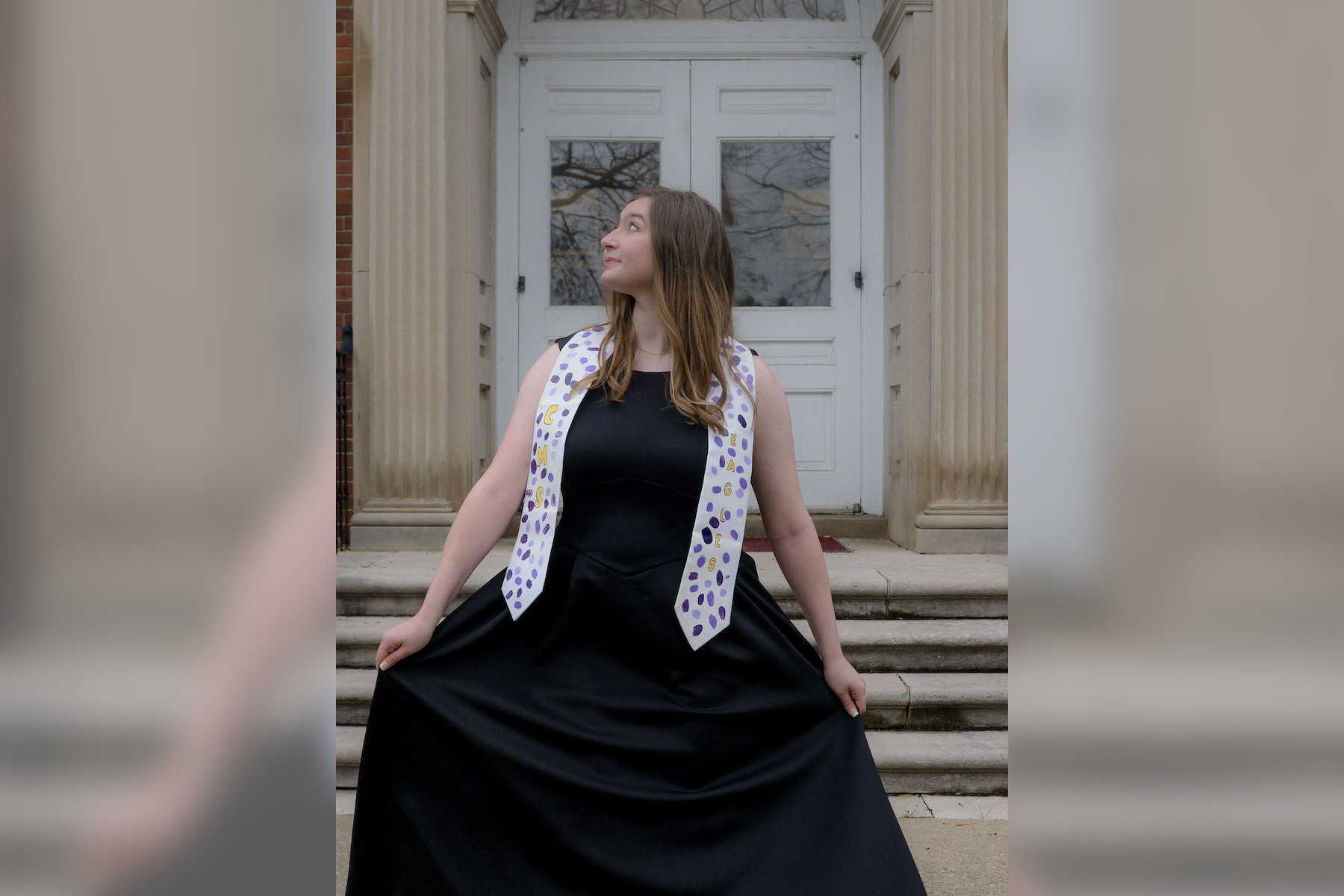
Graduating senior art education major Casey Grubbs with her stole, which features fingerprints from her students. Grubbs spent the semester working as a job-embeded clinical teacher at Coopertown Middle School, where she is continuing to teach. | Contributed photo
Senior art education major Casey Grubbs had a similar experience as a job-embedded clinical teacher at Coopertown Middle School. Completing the edTPA helped her recognize her strengths and identify areas for growth.
Senior art education major Casey Grubbs had a similar experience as a job-embedded clinical teacher at Coopertown Middle School. Completing the edTPA helped her recognize her strengths and identify areas for growth.
“When you’re working on the assessment section, you’re basically writing about giving feedback to your students,” she said. “That’s when I realized I hadn’t been doing that as much as I needed. I’ve grown a lot in helping students reflect on their learning, and I’ll use writing prompts and fill-in-the-blank exercises for art history to help them remember more.”
Grubbs’ path to art education began when she volunteered to teach the special education class at her high school about drawing, which helped her realize her calling. She currently works full-time at Coopertown and plans to continue teaching there after graduation.
“My teaching philosophy is about building a student-centered environment and classroom culture,” she said. “At Coopertown, I’ve realized many students respond better to positive reinforcement than you telling them to stop something because they’ll get written up. Giving individual awards and reaching out to parents when their kids are doing great can make a big difference, as some kids don’t get that at home.”
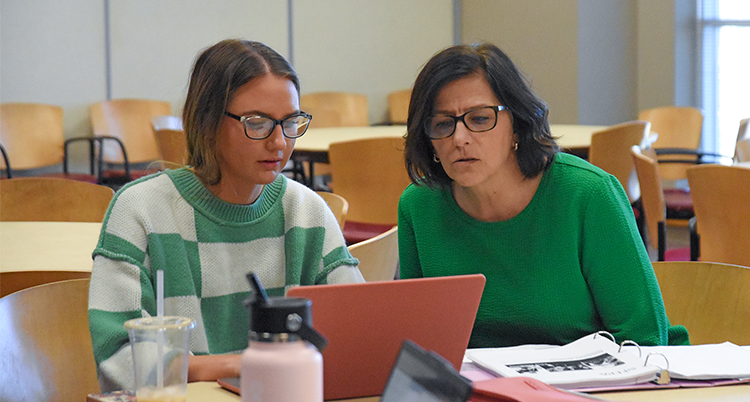
Angela Stone, Austin Peay State University’s edTPA coordinator, assists a student with their portfolio.
Emrey, Hunter, and Grubbs each felt supported by APSU, whether they were working with content area mentors or the university’s edTPA team.
“There are three tasks on the edTPA, and we do a seminar on each one,” said Judith Castleberry, a master clinician with the Eriksson College of Education who led the assessment’s implementation at APSU. “We talk about what it takes to be successful and give them [hypothetical] examples of people who did and didn’t score well so they can evaluate it for themselves.”
Dr. Bing Xiao, an associate professor of education and Pearson reviewer, also hosted seminars to help candidates with their portfolios. Meanwhile, Castleberry and Stone worked one-on-one with students to ensure they were on track.
As Tennessee prepares to implement its new clinical practice requirements next year, Stone is optimistic about the benefits for future teacher candidates.
“The new model will provide the same evidence and evaluation criteria, but with added real-time classroom observation and conversations with aspiring teachers,” she said. “Feedback from someone who has watched them interact with students and knows their objectives is going to be very helpful.”
Despite the changing assessment model, this semester’s graduates demonstrated strong readiness for classroom teaching through their record-breaking performance.
“The group we had this time will be amazing in the classroom,” Castleberry said. “When I was the principal at Clarksville High School, my favorite thing was to see a teacher succeed because it helps their students along the way. That’s how this group will be - good for our school system, resourceful, and willing to work hard.”