


New routes opening for Austin Peay research
By: Charlie Reed September 23, 2026
Mike Wilson has spent 21 years learning how Austin Peay works: where expertise lives, who knows what, and which people need to find one another.

Now, as Austin Peay becomes the newest member of the Tennessee Technology Advancement Consortium (TTAC), that knowledge has a new purpose.
A Launch Tennessee initiative, TTAC helps universities across the state move promising research toward commercial use. Wilson’s role as Austin Peay’s first commercialization counselor is one part of what the partnership makes possible.
Wilson is meeting with faculty across campus, learning what they’re working on, and identifying projects that may have applications beyond the university. He can also draw on TTAC, Launch Tennessee, and partners across the state to help APSU faculty assess their ideas and decide how, or whether, to pursue a commercial path.
“A lot of things we’re going to have to do here at Austin Peay are look at building cross-departmental, cross-college relationships,” said Wilson, director of APSU’s GIS Center, one of several research centers and innovation hubs across campus.
The opportunities created through Wilson’s work and TTAC extend beyond connecting individual researchers or departments.
“I think the real potential is found when our faculty’s expertise and passions for innovation are matched with marketplace opportunities,” said Dr. Chad Brooks, vice provost for research and dean of the College of Graduate Studies.
New connections across Tennessee

Clarksville’s growth has expanded APSU’s role in the region, Brooks said, while its proximity to Fort Campbell has also opened a distinct set of research possibilities.
“Fort Campbell changes the kinds of questions we can help answer,” he said.
In July 2026, Launch Tennessee awarded APSU a TTAC grant to support a National Security Innovation Commercialization Convening. The event will bring researchers together with military stakeholders, startups, and industry leaders working in defense and dual-use technology.
The university already has research to bring to the table. Through APSU’s collaboration with EagleWerx at Fort Campbell, students and faculty have responded to problems identified by the military.
One result is P.R.I.S.E.M., a 3D-printed backup sight developed by undergraduate manufacturing engineering technology students.
But national security is only one part of a university growing in size and research capacity.
APSU has doubled its enrollment over the past 20 years, and grant funding reached nearly $17.8 million in fiscal year 2026, a university record.
“As Austin Peay has grown, we’ve attracted faculty with talents and research experience from across the country,” Brooks said. “Fort Campbell gives us a close view of what can happen when researchers work alongside people who need a problem solved. The exciting part is wondering where else that could happen. Some of our strongest commercial possibilities may come from faculty who have never thought of their work that way.”
A path beyond discovery
Promising research can stall for surprisingly ordinary reasons on the path to market. A faculty member may not know whether to file a patent, how to pay for the next test, or which company might care.
Few universities have all the answers on campus. TTAC is built around that reality, giving its members a statewide network of commercialization expertise, funding, and industry connections.
“The research is already happening at Austin Peay. What hasn’t always existed is the infrastructure to support a promising idea after the grant or publication,” said Jennifer Skjellum, vice president of commercialization and director of TTAC at Launch Tennessee, the state’s public-private partnership for startups and innovation.
“TTAC’s shared-resources model and one-on-one guidance enable emerging research institutions to tap into commercialization tools that, until now, typically only R1 campuses could sustain,” she said.
But no two projects arrive with the same needs.
One may require an intellectual-property strategy; another, funding for a prototype, market research, or validation. TTAC supports those different stages through commercial assessment, proof-of-concept grants, and technology-maturation funding, she said.
That continuity matters because the people and questions surrounding an idea change as the work develops.
“The handoffs are where promising ideas can get lost,” Skjellum said. “A researcher shouldn’t have to start over every time the work reaches a new stage.”
But an idea can survive every handoff and still remain invisible to the people who could use it.
The Tennessee Innovation Exchange, or TNIX, addresses that problem at a statewide scale.
Companies can search faculty expertise, research assets, and technologies across participating universities.
A business looking for a researcher, specialized facility, or licensable technology no longer has to know which campus to search first.
TTAC gives Austin Peay a route into that system. TNIX can place APSU’s capabilities before companies, investors, public agencies, and researchers who may never have known where to find them.
“Austin Peay sits in a part of the state where research and real-world need are especially close together, with Fort Campbell right next door,” said Deputy Governor and Tennessee Department of Economic and Community Development (TNECD) Commissioner Stuart McWhorter. “Their addition to the TTAC network helps turn that proximity into opportunity for faculty and for Tennessee.”
Research through a business lens
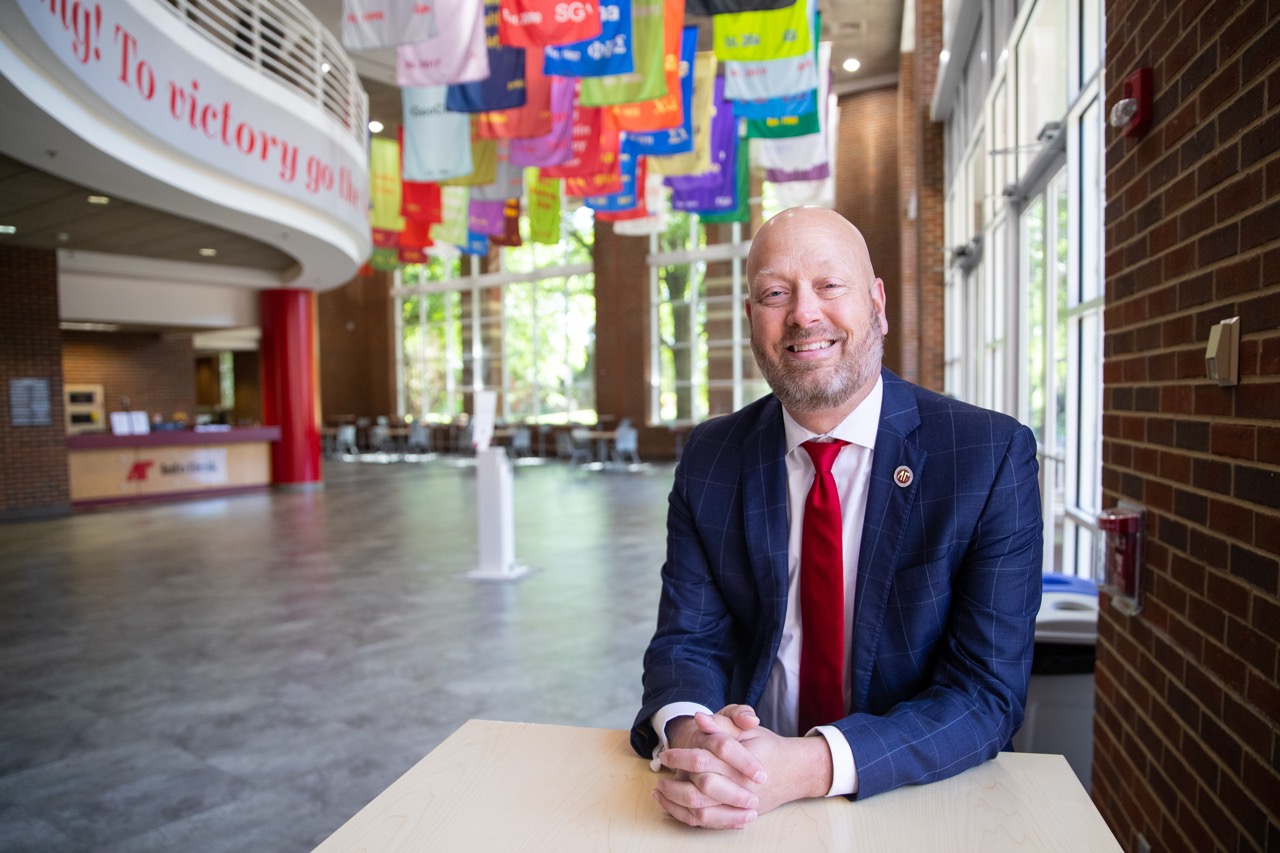
As its statewide connections grow, APSU is bringing more of the campus into its commercialization effort.
The College of Business is developing the Larry W. Carroll Entrepreneurship Center, where faculty commercialization will sit alongside student entrepreneurship and support for veterans and aspiring business owners.Dean Mickey Hepner intends the center to serve the university as a whole. Its advisory board will include representatives from STEM and other areas, and he expects it to work closely with Wilson’s centralized commercialization effort.
For Hepner, that connection matters because researchers and entrepreneurs are trained to recognize value differently.
“They’re thinking about the next discovery, the next journal publication, the next grant,” Hepner said.
An entrepreneurial perspective asks where the work could be applied, who might use it, and whether a market exists.
“It’s more like here’s the idea, and here’s the market,” Hepner said.
The next question for “Grasslandia”
Dr. Dwayne Estes has already shown how far university research can travel.
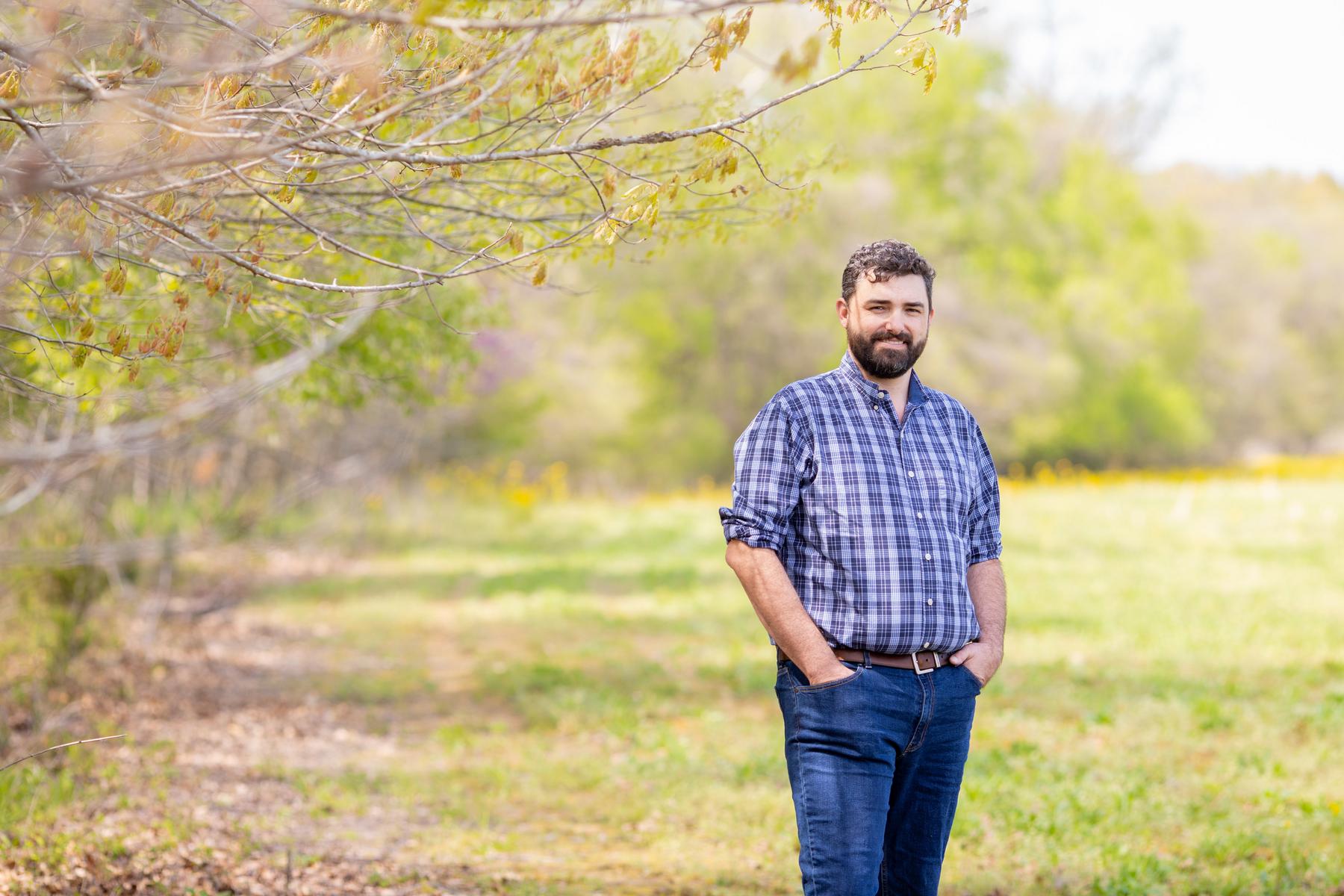
Estes, a biology professor and co-founder of the Southeastern Grasslands Institute, came to Austin Peay nearly two decades ago to study plants, teach, and train botanists. As his research revealed the disappearance of southeastern grasslands, he began questioning whether the traditional academic path was enough.
“I was becoming somewhat disillusioned with academia,” Estes said. “I didn’t feel like my publications alone, or the teaching of students alone, would solve the problem.”
He wanted to continue both while building something capable of addressing the problem on a larger scale.
What began with a $20,000 grant grew into an institute that Estes said has raised $45 million and now employs 60 people.
The experience taught him how to build partnerships, attract funding, and extend research well beyond campus. It did not teach him how to commercialize an idea.
That challenge has hit Estes’ Grasslandia project. Backed by $4 million from the U.S. Department of Agriculture and built with geospatial technology company Esri, the digital platform brings maps, historical records, biodiversity data, and ecological information about southeastern grasslands into one system.
Farmers, government agencies, corporations, and others will be able to use it.
One Grasslandia database contains roughly 18 million cells of information, Estes said, much of it drawn from scientists across the field and around the world.
“I won’t be here forever, and these other people won’t,” he said. “We need a system that helps transfer this knowledge.”
Estes sees commercial possibilities in Grasslandia, a name meant to evoke a “world of grasslands.”
He’s less certain about what form they could take.
“I do think there’s a lot of potential for commercialization in that,” he said. “It’s just I haven’t quite wrapped my head around it yet.”
He has never patented anything and doesn’t know how to approach that part of the process.
“I just don’t even know how to go about that next level,” Estes said. “But I think
we’d like to
explore, for sure.”
For Austin Peay, that may be the point.
The research, ideas, and ambition are already there.
The university is now building the connections to help faculty recognize where those ideas might lead and give them someone to call when they’re ready to find out.
News Feed
View All NewsNo items to display