


Journal leadership, PsyD concentration and new hires mark APSU’s growing impact in military psychology
By: Seth Riker November 4, 2025
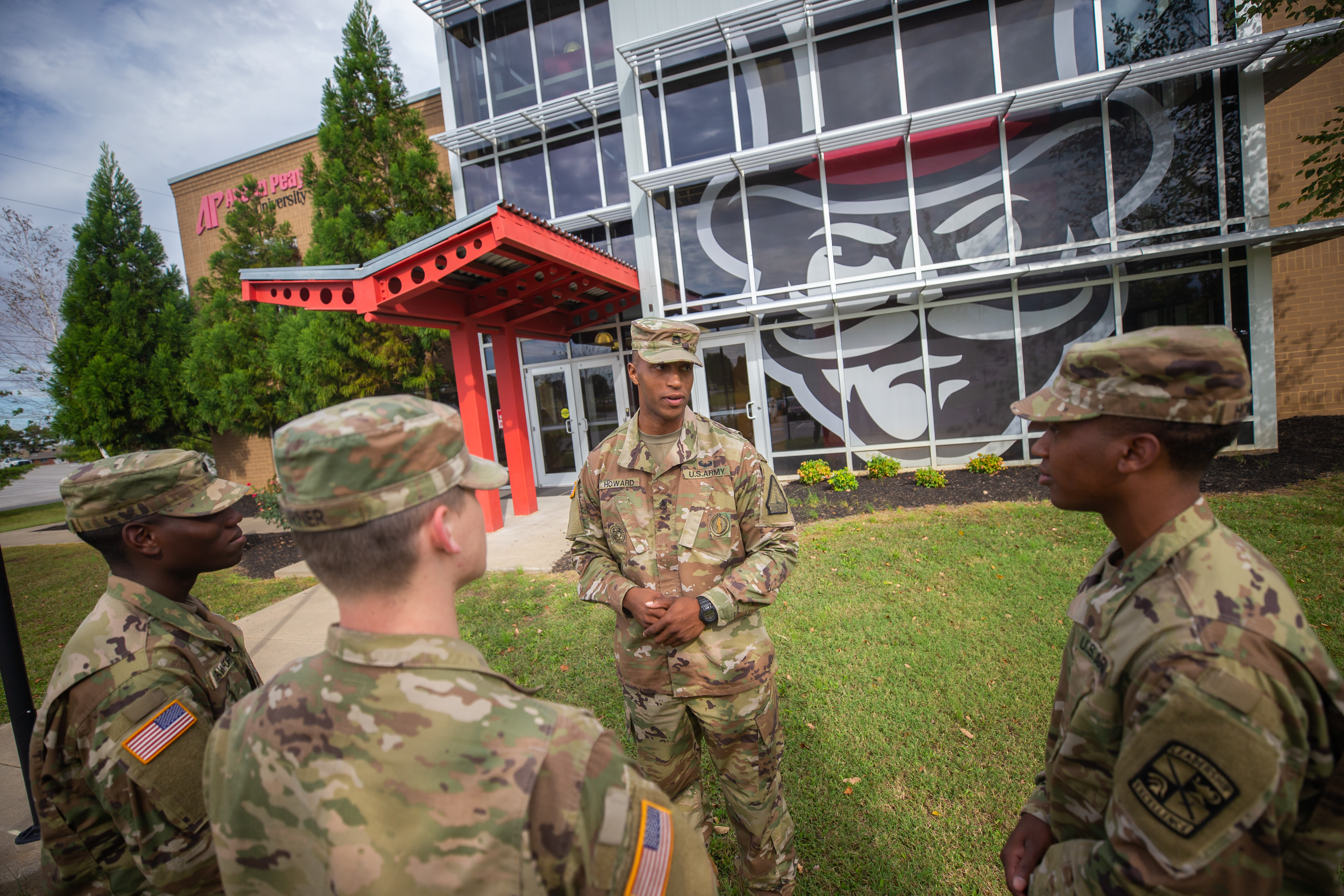
Military psychology courses were first offered at the Austin Peay Center at Fort Campbell nearly two decades ago, and the university is strengthening its support for the field. | Photo by Taylor Slifko
CLARKSVILLE, Tenn. - When Military Psychology, the premier academic journal for research on defense and service populations, updated its masthead this fall, Austin Peay State University had reason to celebrate. Among its newest consulting editors is Dr. Stephen Truhon, professor emeritus in the Department of Psychological Science and Counseling.
In this role, Truhon advises the editorial board, reviews high-impact studies and helps set the direction for new research in the field. The honor marks a milestone not only for Truhon, but for Austin Peay’s growing influence in a discipline he helped bring to campus nearly two decades ago.
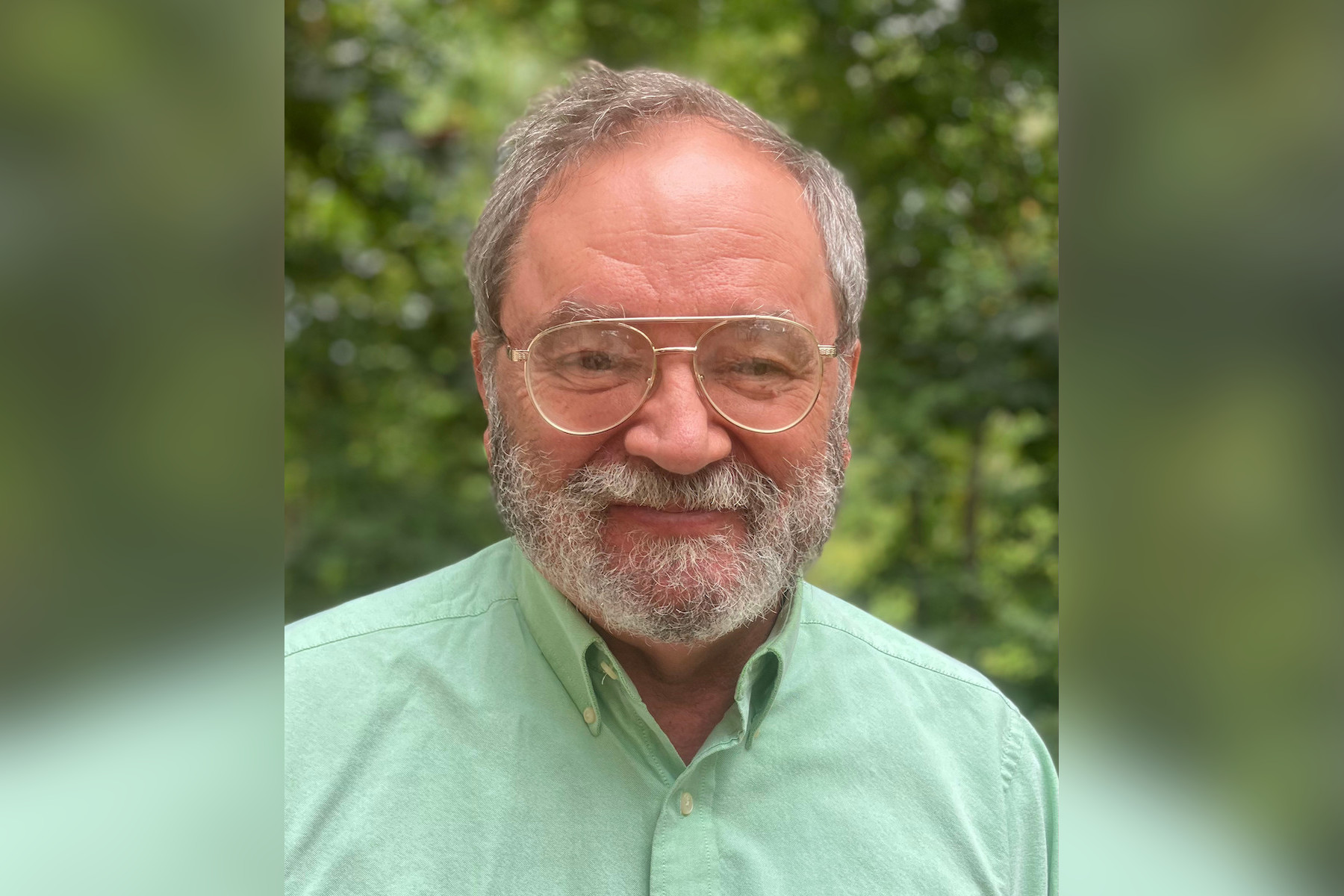
Dr. Stephen Truhon, professor emeritus in APSU’s Department of Psychological Science and Counseling and a consulting editor for Military Psychology. | Contributed photo
“I was trained in developmental psychology,” Truhon said, “but after doing work for the military at Brooks and Patrick Air Force Bases, I found myself more and more interested in military psychology. When I came to Austin Peay in 2005, they were actually looking for someone with that background.”
At the time, APSU’s ties to nearby Fort Campbell were already strong, but coursework in military psychology was still new territory. Truhon proposed and developed the first course in the subject, initially offered at Fort Campbell before moving to the Clarksville campus.
“Once a year, I’d teach it, usually drawing more than 20 students,” he said. “It’s a popular course, and I think people are fascinated by the intersection between psychology and military life.”
Over the years, that intersection has continued to expand. Truhon’s own research bridged industrial-organizational (I-O) and counseling psychology, exploring topics such as leadership, test construction and the ethical complexities of service settings.
“I came from the I-O side,” he said, “looking at things like leadership, training and selection. But to teach the course effectively, I had to learn the clinical and counseling aspects … PTSD, TBI, depression, substance use. It’s really the application of psychology to military matters in all their dimensions.”
As Military Psychology has evolved, so has the field itself. Truhon now reviews manuscripts from across the world—Germany, Italy, France—and sees the journal embracing increasingly interdisciplinary and international perspectives.
“It’s not just about trauma or treatment anymore,” he said. “You’re seeing research on families, on performance, even on military dogs and their handlers. It’s grown tremendously.”
A new chapter for a growing program
That growth is mirrored on campus, where APSU’s newly accredited Doctor of Psychology (PsyD) program now offers a concentration in serving military populations. The program’s faculty include clinicians, veterans and researchers dedicated to addressing the unique mental-health needs of service members and their families.
Among them is Dr. Erica Adkins, who joined Austin Peay this fall after serving as faculty director of military psychology at the University of Denver and as an active-duty officer at Fort Leavenworth.
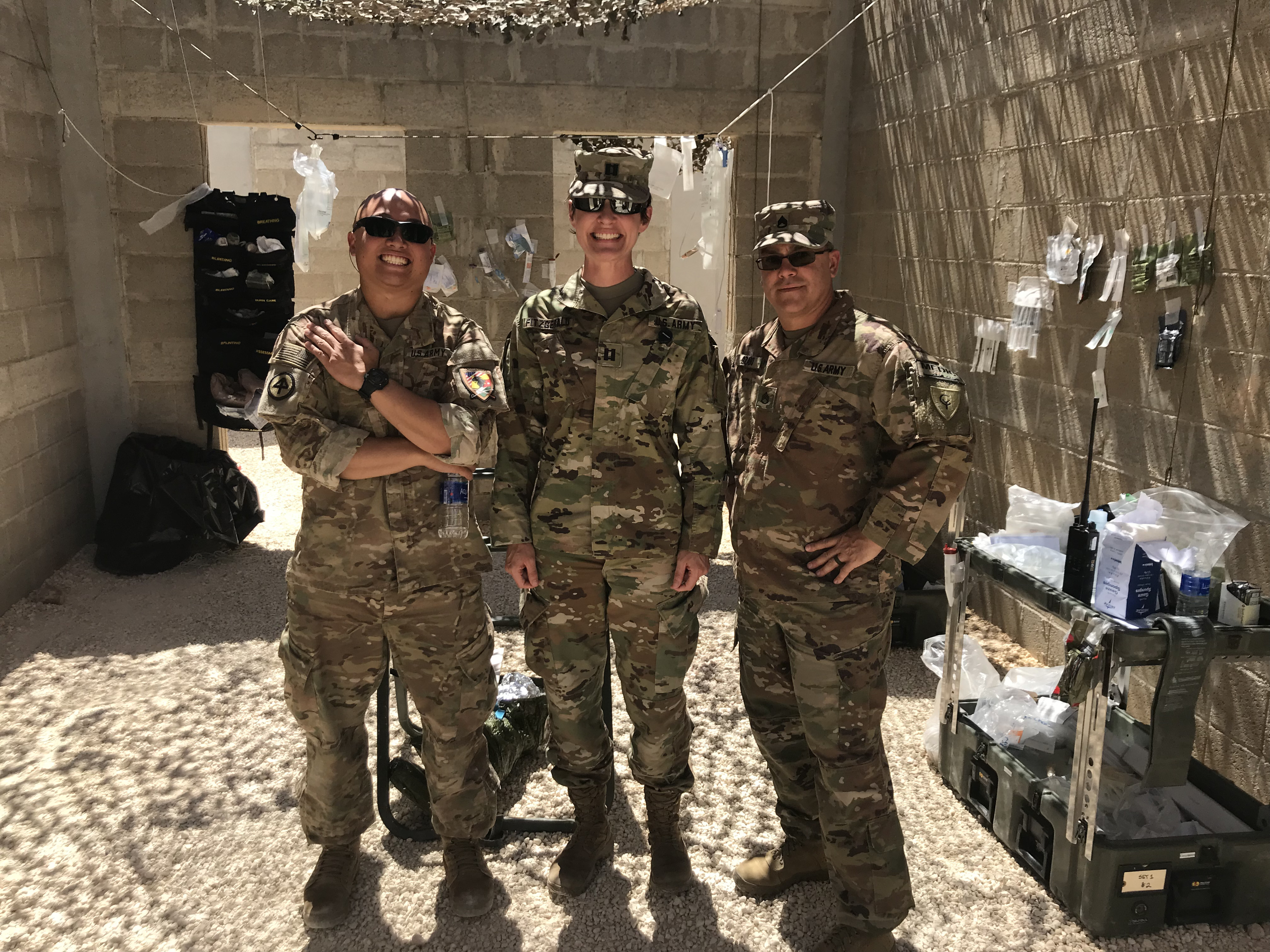
Maj. Erica Adkins, at center, with her medic comrades in the Middle East during the summer of 2019, when she served as the behavioral health officer engaging in battlefield circulation to check on U.S. service members. | Contributed photo
“There are only five PsyD programs in the U.S. with a military concentration,” Adkins said. “When I saw that APSU was hiring for one, I was excited—it’s closer to my family, but more importantly, it’s in such a military-friendly community. With Fort Campbell right here, our students can get incredible training opportunities.”
That commitment to the military community is exactly what brought Adkins to Austin Peay. As a veteran and reservist, she said it was clear the university understood how deeply military culture shapes lives—and how vital it is to train practitioners who understand that world.
“The culture is unlike any other,” she said. “Service members and their families live with constant transitions and unique stressors. To provide effective care, you have to understand that experience and earn their trust.”
She described moments in her own clinical practice when revealing her service background changed the dynamic entirely.
“When I tell a veteran that I’m also a veteran, you can see it in their body language—it’s like they melt a little,” she said. “There’s this instant rapport. They know you get it.”
Building collaboration across disciplines
Adkins also sees opportunities for collaboration that extend far beyond psychology and said the environment inside APSU’s Health Professions Building is primed for interdisciplinary education.
“Because this building brings together so many health professions, we can learn from one another,” she said. “In the military and VA systems, behavioral health is integrated into primary care. We can model that here—training students to collaborate the way real teams do.”
She is also eager to partner with programs like ROTC, envisioning projects where psychology students consult with cadets and military science faculty on performance, leadership and human behavior.
“Psychologists bring such a wealth of knowledge about human behavior,” Adkins said. “Our students could partner with cadets who are just beginning their leadership journeys. It’s a natural connection.”
From legacy to leadership
For Truhon, seeing the field expand in these directions is gratifying. What began as a one-course experiment has grown into an accredited doctoral program with a specialized concentration and a faculty network that continues to build on his foundation.
“Austin Peay is rare,” he said. “Most military psychologists work for consulting firms or the government. You rarely see this kind of expertise in a university setting. And we’ve had it here for years.”
Adkins agrees, noting that APSU is uniquely positioned to become a leader in military psychology.
“Our program is young, but it has an outstanding foundation,” she said. “Because we’re in the heart of one of the largest military-adjacent populations in the Southeast, we have the ability to become the go-to program for military psychology.”
As she looks to the future, Adkins envisions expanded research on the experiences of military families—spouses, children and others often overlooked in traditional studies—and a growing number of students drawn to APSU’s mission.
“Many of our PsyD students are military-affiliated themselves,” she said. “They know what this life looks like. We’re training them not just to treat, but to lead, to collaborate and to serve. And I think that’s exactly what Austin Peay does best.”
About the Department of Psychological Science and Counseling
Austin Peay State University’s Department of Psychological Science and Counseling prepares students to serve others through evidence-based practice, research and advocacy. Part of the College of Behavioral and Health Sciences, the department offers a bachelor’s degree in psychological science, graduate degrees in counseling and industrial-organizational psychology, and one doctoral degree - Tennessee’s first and only accredited PsyD program. Learn more at apsu.edu/psychology.