From spring break to global perspective: APSU students study national security in Serbia
By: Seth Riker March 27, 2026
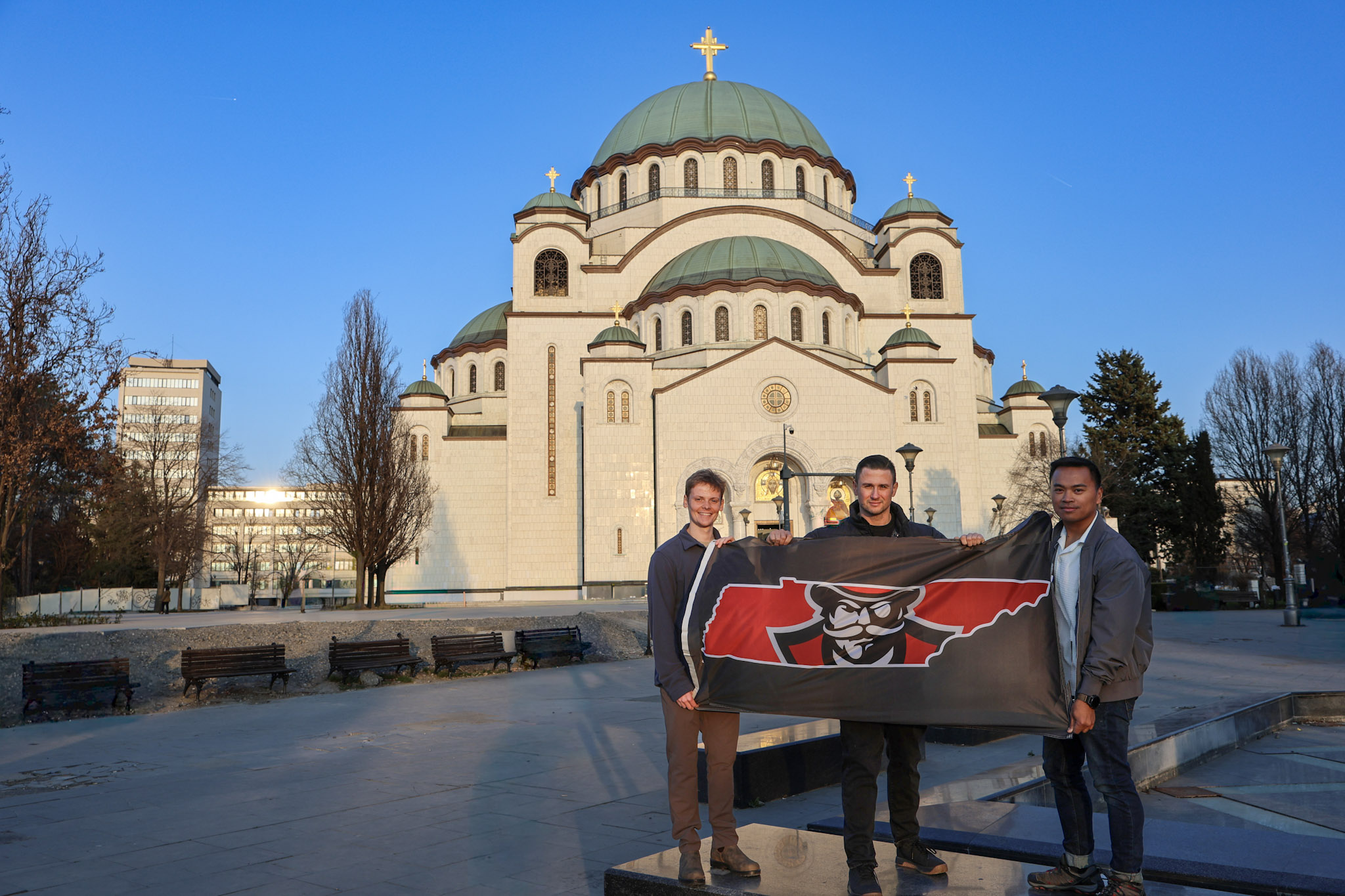
Capt. Randall Miller, center, along with ROTC Cadets Trevor Johnson and Romar Rabara, outside the Church of Saint Sava in Belgrade, Serbia. | Photo by Seth Riker
BELGRADE, Serbia - While most American college students spent spring break stepping away from the world, a group of Austin Peay State University students stepped directly into it — traveling to Belgrade, Serbia, to study national security where it is actively being shaped.
"There is simply no substitute for this kind of cultural exchange," said Dr. Richard Mifsud, INSMS director. "Students can study national security concepts all semester, but being here — engaging directly with people and perspectives shaped by these events — gives them a level of understanding that cannot be replicated in a traditional classroom."
The spring break program, held through the Institute of International Politics and Economics' Winter School of International Relations, connected APSU students with leading Serbian scholars and policymakers. Throughout the week, students attended lectures and discussions with internationally recognized voices, including journalist and researcher Dr. Aleksandar Mitić, former Serbian ambassador to the United States Dr. Ivan Vujačić, and researcher Dr. Mladen Lišanin, whose work focuses on great-power dynamics and Serbia's foreign policy.
But the moments that hit hardest happened outside the seminar room.
APSU students stayed after lectures to keep talking. They shared meals with Serbian university students, traded perspectives, and built lasting friendships that don't fit neatly into a course syllabus — but stay with you long after graduation.
Those interactions unfolded in a country still carefully navigating its global position — pursuing European Union membership while maintaining military neutrality and strong relationships with both Western nations and longtime partners such as Russia and China.
Cristobal Ruiz knows conflict. As an active-duty soldier enrolled in national security studies, he thought he had a handle on what Belgrade would feel like. He didn't.
"At first, it felt familiar," Ruiz said. "But once you spend time in the city and talk to people, you start to see how much history is layered into everything — the buildings, the streets, the conversations."
That immersion, he said, reinforced one of the program's biggest academic takeaways.
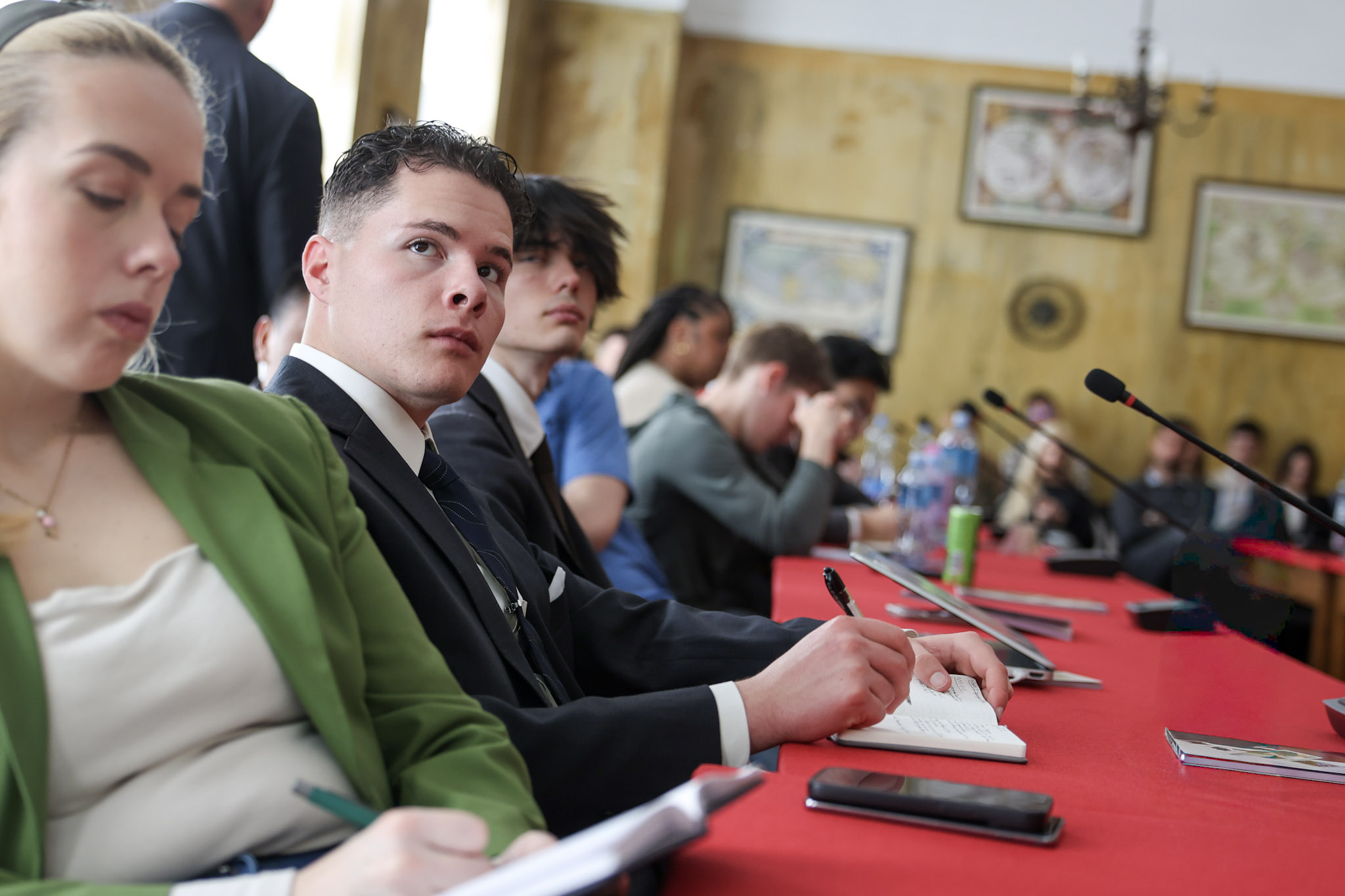
Ruiz Cristobal takes notes during a presentation at IIPE Belgrade. | Photo by Seth Riker
"The biggest lesson is that it's complicated," Ruiz said. "And that's why it works. You're not starting with something simple. You're seeing multiple factors and perspectives all at once, and how they actually play out."
Ruiz said his experience shifted his understanding of international relations.
"It gives you perspective," he said. "You can't reduce countries to simple ideas. Being here, talking with people, hearing how they understand their history… it changes how you think."
That openness wasn't limited to national security majors. Dr. Rudy Baker, APSU assistant professor of national security studies, watched students from across disciplines throw themselves into the experience.
"One of the most encouraging parts of this program was seeing students from a range of disciplines engage with Serbian history and culture," Baker said. "It showed that there is real interest in understanding parts of the world that students may not encounter in their coursework. And once they are here, the learning goes far beyond what any textbook can provide."
Stevey Townsend is a communications major with a focus in public relations and a pre-law minor. She didn't expect Serbia to have much to teach her about her field. She was wrong.
"I wanted the opportunity to study abroad before graduating, but also to better understand foreign policy and law," Townsend said. "What I did not expect was how much I would be able to apply what I have learned in communications."
Sitting in on lectures and talking with Serbian students and media professionals, she started recognizing something familiar: the same fundamental questions about trust, transparency, and public communication that she studies daily in Clarksville.
"We talk a lot in public relations about corporate social responsibility and how organizations present themselves to their communities," she said. "Seeing those same ideas in practice here — especially in healthcare and public-facing institutions — made it clear that these concepts are global. It helped me understand communication on a much broader level."
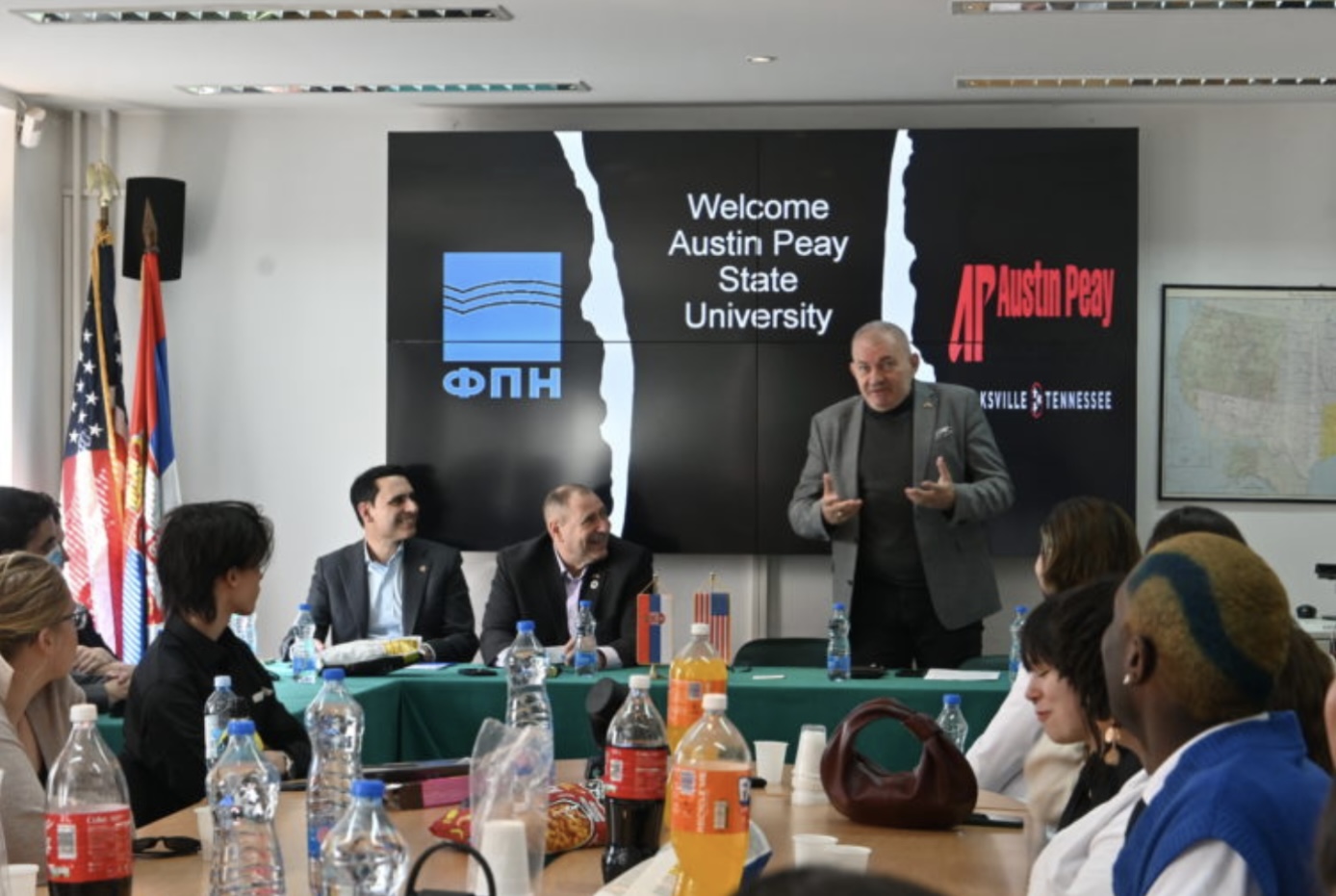
Dr. Rudy Baker, Dr. Rich Mifsud, and Dr. Dragan V. Simić during a discussion with faculty and students at the University of Belgrade. | Photo provided by University of Belgrade
As the week progressed, APSU students engaged academically and built relationships that continue to shape the university's presence in the region. Faculty and program leaders used the visit to strengthen partnerships in Belgrade, including continued collaboration with the Institute of International Politics and Economics and ongoing conversations with the University of Belgrade about future exchanges, research opportunities, and expanded student engagement.
Those connections are no accident. They reflect APSU's commitment to graduating students who don't just understand the world — they're ready to navigate it.
"There is no better time to develop globally engaged citizens who have a first-hand understanding of how complex the world really is," Baker said. "Experiences like this remind us that understanding is built through connection — through conversation, through shared experiences, through seeing one another clearly. That kind of exchange doesn't just shape students, it helps create a world better equipped to navigate conflict."
About the Institute for National Security and Military Studies
The Institute for National Security and Military Studies (INSMS) at Austin Peay State University was established in 2021 with support from the Tennessee State Legislature to expand education, research, and outreach in national security and military studies. Its creation builds on APSU's proximity to Fort Campbell and the university's long-standing role in serving military-affiliated students.
Part of the College of Behavioral and Health Sciences, INSMS focuses on interdisciplinary study and research in areas such as national security, intelligence, and military strategy, while providing students with experiential learning and global engagement opportunities. The institute also collaborates with domestic and international partners to connect classroom learning with real-world application. For more information about INSMS and its initiatives, visit apsu.edu/insms.