


GED to doctorate: Two APSU professors remind students there is no such thing as a hard stop
By: Seth Riker August 4, 2026
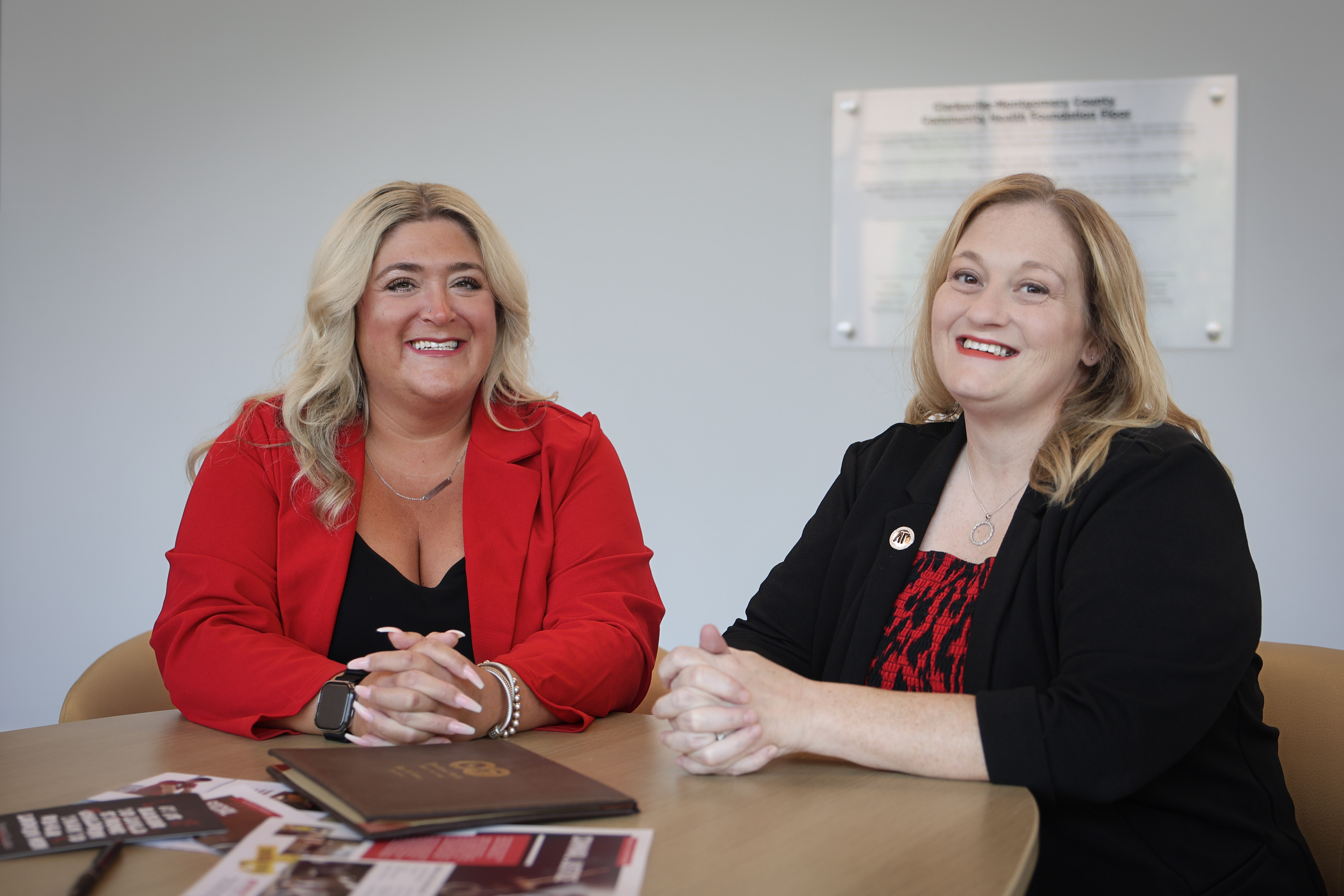
Dr. Anna Leimberg, assistant professor of criminal justice, and Dr. Dava Wilson, assistant professor of social work. The two have earned both General Educational Development (GED) diplomas and doctoral degrees. | Photo by Seth Riker
CLARKSVILLE, Tenn. — The letters behind a professor's name can be intimidating.
Ph.D.
Ed.D.
They speak to years of scholarship, research and expertise. To students just beginning college, they can feel like a destination impossibly far away.
But for two Austin Peay State University professors, three different letters came first.
GED.
For some, those letters carry an unfair stigma. For Dr. Dava Wilson and Dr. Anna Leimberg, they marked the beginning of journeys that prove where you begin has very little to do with where you can go.
Dr. Dava Wilson, assistant professor of social work, and Dr. Anna Leimberg, assistant professor of criminal justice, both earned General Educational Development (GED) diplomas after leaving high school through nontraditional circumstances. Today, each holds a doctorate. More importantly, each brings an uncommon perspective to the classroom shaped by resilience, second chances and a belief that no student's future should be determined by their past.
For Wilson, that philosophy developed over years of life's unexpected turns.
Her educational journey didn't follow a straight line. It unfolded through seasons when family responsibilities, financial realities and life itself demanded more attention than school. Rather than seeing those pauses as failures, she now views them as proof that progress doesn't have to happen on anyone else's timeline.
"I want students to know that even if they got here in a nontraditional way, it's still possible," Wilson said.
That perspective naturally found a home in social work, a profession centered on seeing people beyond circumstance, beyond stigma and beyond labels.
"We're not standardized people," she said. "So there shouldn't be standardized expectations."
Wilson encourages students to resist measuring themselves against someone else's definition of success.
"Don't check other people's boxes," she said. "Don't reach for the bar other people have set for you because that is theirs, not yours. Set your own bar.”

A GED certificate sits alongside materials representing Austin Peay's social work and criminal justice programs, disciplines rooted in understanding people beyond their circumstances. | Photo by Seth Riker
Leimberg's journey arrived at many of the same conclusions through a different road.
After leaving high school because of behavioral issues, she earned her GED while slowly finding her footing in community college. Years later, she transferred to a four-year university, discovered criminology almost by accident and eventually pursued graduate school and a doctorate.
Looking back, she jokes that she simply "took the scenic route."
That scenic route now shapes every aspect of how she teaches. Rather than seeing students as grades or transcripts, Leimberg tries to understand the circumstances behind their performance.
"My goal is to figure out what barriers they're facing," she said. "How can I help them? How can I influence them to move forward in a positive way?"
That mindset mirrors the very discipline she teaches.
Criminology asks why people make the choices they do, how environments influence behavior and what creates opportunities for rehabilitation. Those same questions guide the way Leimberg mentors students.
"I always tell my students that success is so subjective," she said. "We tend to celebrate the typical path, but many students don't have that path."
A two-time Austin Peay Student Organization Advisor of the Year, Leimberg believes some of the most important lessons students learn happen outside the classroom, where leadership, confidence and resilience are built through experience rather than lectures.
She also believes justice itself must be balanced with humanity.
"Fairness requires both accountability and compassion and empathy," she said.
For both professors, empathetic mentors played a pivotal role in changing the trajectory of their lives. Today, they see mentorship not as an added responsibility of teaching, but as one of its highest callings. Every student who walks into their classroom brings a story, and neither believes that story has already been written.
As thousands of new students prepare to begin their first semester of college this fall, some will arrive with confidence. Others will carry doubts, detours or mistakes they fear will define them.
Wilson and Leimberg hope those students understand something they once had to learn themselves: success isn't measured by how closely your path resembles someone else's. It's measured by the courage to keep moving toward the person you're becoming.
And if there is one lesson both professors hope students carry with them into the new academic year, it's this:
"There is no such thing as a hard stop."