APSU police increasing traffic enforcement to protect pedestrians
By: Ethan Steinquest March 17, 2026
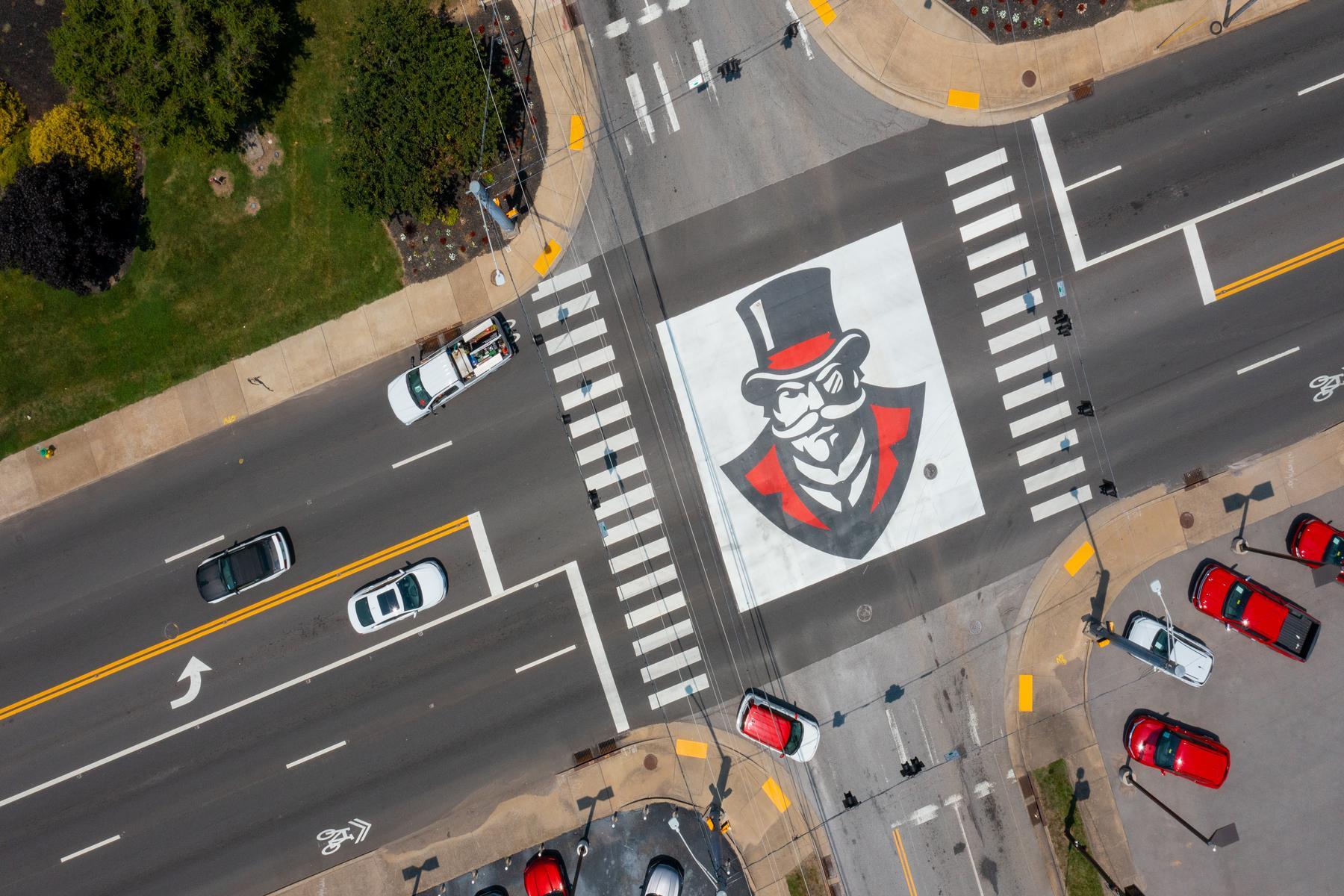
The intersection of College Street and Eighth Street is among several campus locations with high pedestrian traffic where the APSU Police Department plans to increase enforcement. | Photo by Sean McCully
CLARKSVILLE, Tenn. - The Austin Peay State University Police Department is reinforcing its ongoing traffic enforcement efforts on and around campus, targeting speeding, distracted driving, and other behaviors that put pedestrians at risk.
The effort will concentrate on areas with heavy foot traffic between classes, and the department says enforcement and visibility will remain ongoing priorities.
“With record enrollment and continued growth in the surrounding community, we are seeing increased traffic congestion around campus,” APSU Chief of Police Kristie Winters said. “As pedestrian activity continues to grow, it is important that drivers remain attentive and follow traffic laws to ensure the safety of students, employees, and visitors.”
Additional focus areas are located on and around the Clarksville campus, where Winters said officers have seen a rise in dangerous driving behaviors, including:
-
Speeding
-
Failure to stop at stop signs
-
Failure to yield to pedestrians at crosswalks
-
Distracted driving
-
Turning against posted traffic signs
“Our goal is to create a safer environment for everyone who walks, drives, or bikes around campus,” Winters said. “Increased visibility and enforcement help encourage safer driving habits and remind the community to be mindful of pedestrian safety.”
APSU is conducting this initiative independently from the Clarksville Police Department, but maintains strong working relationships with local law enforcement and will continue to collaborate as needed.
“We encourage everyone traveling through campus to slow down, stay alert, obey posted traffic signs, and yield to pedestrians, no matter the time of day,” Winters said. “Small actions such as reducing speed and staying attentive behind the wheel can make a significant difference in keeping our campus community safe.”