


National Science Foundation grant aims to streamline APSU’s engineering pathways
By: Colby Wilson September 16, 2025
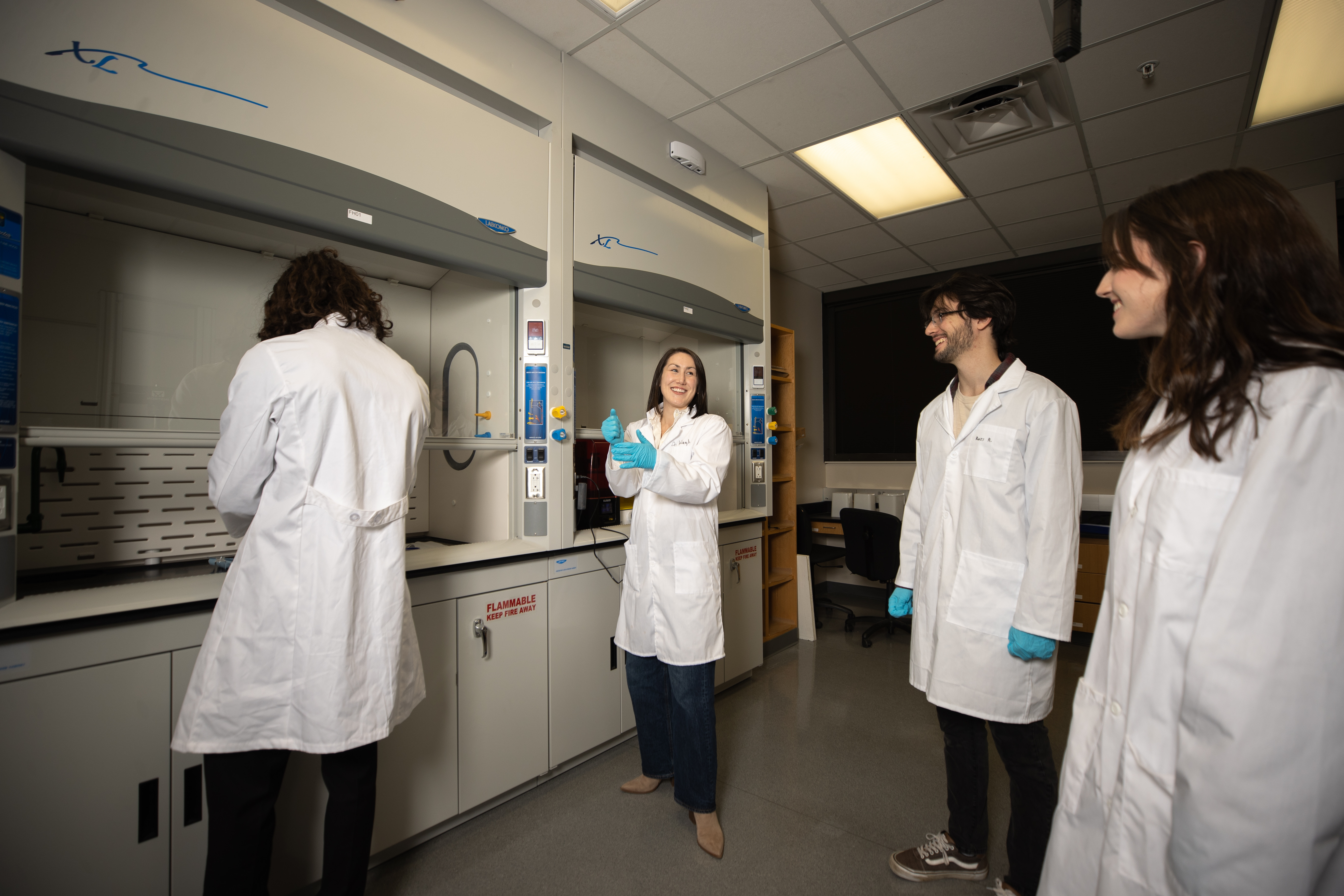
Dr. Emmabeth Vaughn, an assistant professor in the Department of Physics, Engineering and Astronomy, works with students in the lab. Vaughn is the first woman in APSU history to have two simultaneously running NSF grants. | Photo by Ally Shemwell
CLARKSVILLE, Tenn. — Austin Peay State University has received a National Science Foundation planning grant to enhance student success by ensuring engineering physics and engineering technology students find their ideal academic path from day one.
The two-year RED (Revolutionizing Engineering Departments) planning grant brings together faculty from both programs. While Dr. Alex King serves as principal investigator in his role as chair of the Department of Physics, Engineering and Astronomy, the grant emerged from collaborative work with Dr. Emmabeth Vaughn from engineering physics and Ravi Manimaran and Jody Alberd from engineering technology.
With this grant, Vaughn, who also holds another active NSF grant with Dr. Bobette Bouton in the College of Education for engineering empathy research, becomes the first woman in Austin Peay history to have two NSF grants running simultaneously.
"Last year alone, I had four students who had been at least a semester, if not a year, in engineering technology, switch to engineering physics," Vaughn said. "This showed us there is a need to help students make more informed decisions earlier in their academic journey."
The grant aims to raise awareness of how Austin Peay offers distinct engineering pathways, each designed to prepare graduates for different but equally valuable career trajectories.

Jody Alberd, an assistant professor in the Department of Engineering Technology, delivers a public lecture on AI during a Science on Tap event at Strawberry Alley Ale Works. | Photo by Ally Shemwell.
Austin Peay's unique engineering landscape
Austin Peay's situation is distinctive in higher education. Many universities develop engineering programs first, with engineering technology housed within the same college as a supporting department. Here, engineering technology blazed the trail - starting in the late 1980s as a two-year program before evolving into robust four-year degrees in the mid-1990s.
Engineering physics arrived in 2017, representing a milestone decades in the making after regulatory barriers in Middle Tennessee were finally lifted.
"Because Austin Peay has had engineering technology for so long, we have deep industry relationships and a strong track record of graduate success," King said. "This grant helps us leverage that strength while expanding opportunities for our newer engineering physics program."
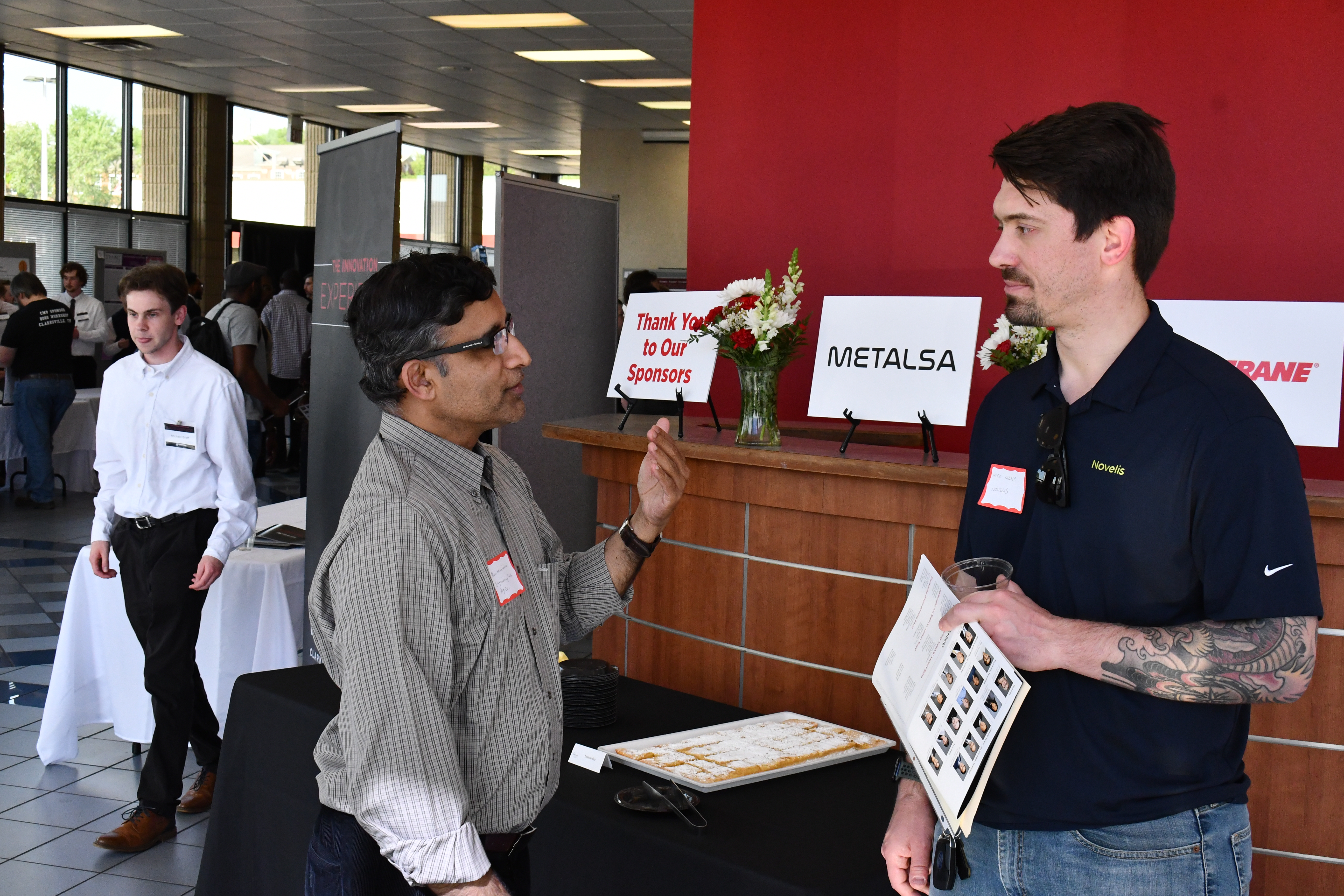
Dr. Ravi Manimaran, chair of APSU’s Department of Engineering Technology, at an Innovation Experience event aimed at showcasing students’ work to industry partners. | Photo by Colby Wilson
Strengthening industry partnerships
The grant also focuses on enhancing industry understanding of both programs' strengths. Manimaran, chair of the Department of Engineering Technology, points to the perfect match between his program and the booming regional economy.
"The growth around here has been incredible," Manimaran said. "Hankook, LG, all these major manufacturers - they're building like crazy. Engineering tech brings that hands-on, applied approach that connects directly to what they need. This grant helps us showcase that strength even better."
Alberd, who teaches Introduction to Engineering Technology and is himself a graduate of Austin Peay’s engineering technology program, emphasized the complementary nature of both programs.
"Someone has to design the next innovative model—that's where engineering physics shines," he said. "But when the rubber meets the road and you need to implement that design, manufacture it, troubleshoot it - that's where engineering technology excels. Industry needs both, and this grant helps them see how to use both effectively."
Military connection enhances mission
The work is particularly important for Austin Peay's substantial military-affiliated student population, which comprises approximately 32% of its learners.
Veterans often come with focused career goals and the discipline to succeed - they just need clear information about which path aligns with their aspirations. When students switch programs midstream, lost credits can create financial challenges, particularly for those using GI Bill benefits with time limitations.
"Military-affiliated students often have focused career goals, so we need to serve them effectively by ensuring they understand all their options from day one," Vaughn said.
The grant's emphasis on early clarity resonates particularly well with student veterans who approach their education with mission-focused precision.
Building the "Change Army"
The planning grant employs what researchers call "change theory" - a systematic eight-step approach to organizational transformation. Central to this strategy is assembling a "change army" of stakeholders ranging from students to industry leaders to university administrators.
Two students, one from each program, will join the research team as paid collaborators. The project will survey current students and host innovative group-level assessments where up to 40 students work together to develop solutions.
"Most research involves one or two undergraduates helping out," Vaughn said. "This approach lets us hear from many more student voices in shaping how we serve them."
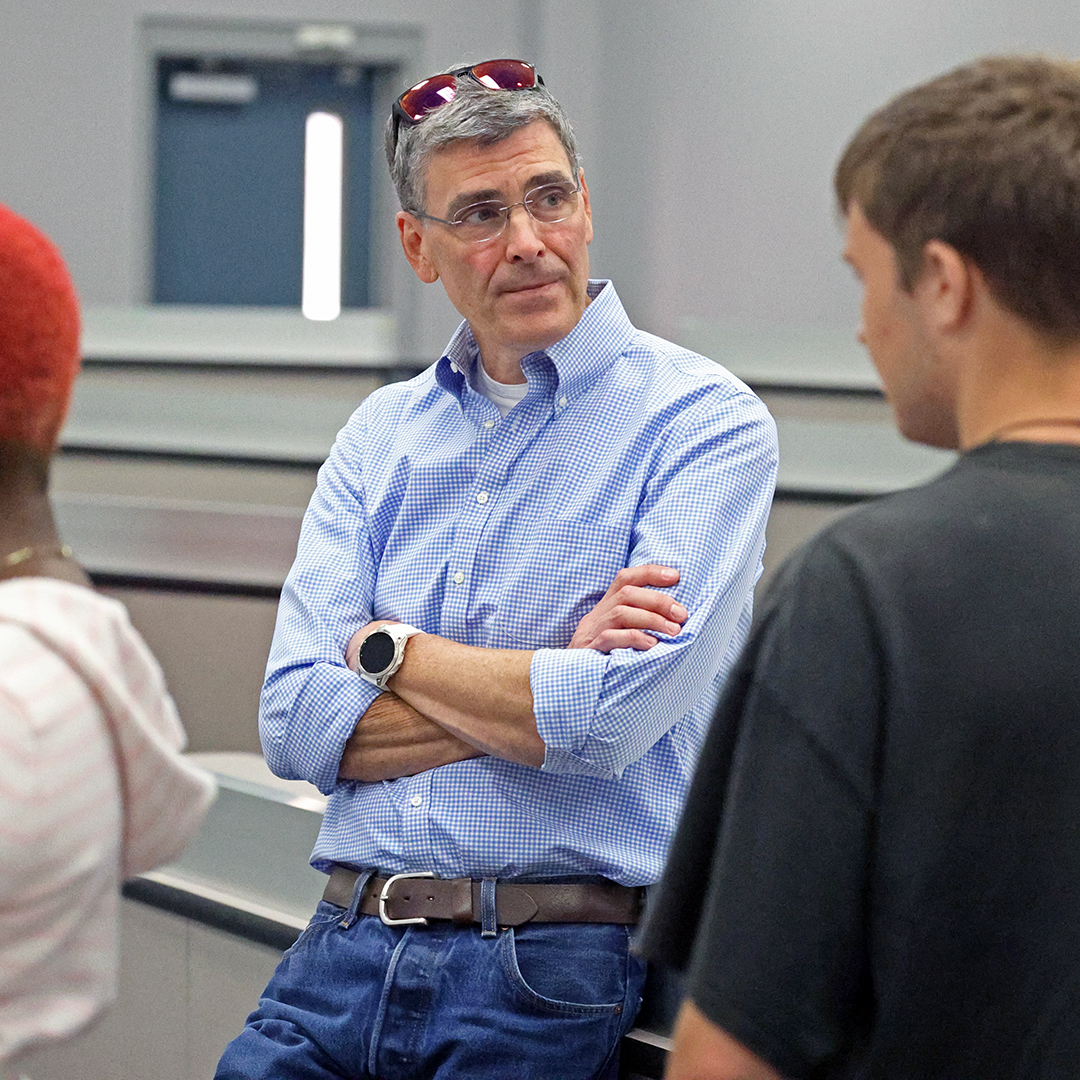
Dr. Alex King, chair of the Department of Physics, Engineering and Astronomy, in a lecture with students. | Photo by Colby Wilson
From planning to implementation
Success with this two-year planning grant opens the door to a much larger implementation grant, with a long-term vision to create smoother pathways for students to transition between programs when needed, while ensuring most students land in their ideal program from the start.
"We want students to end up where they think they're being placed when they start their degree," King said. "But when someone does need to switch paths, we want to make that as seamless as possible."
The collaboration represents something increasingly rare in academia - two departments working together to strengthen both programs rather than compete for students.
"We're serving all students in this," Vaughn said. "Both programs have tremendous value. Our job is helping students discover which path will let them make their greatest contribution."
The grant positions Austin Peay to become a national model for collaborative engineering education. As the region's industrial base continues expanding and both programs prepare graduates for high-demand careers, this NSF investment promises benefits that extend far beyond campus—strengthening the pipeline of skilled professionals from Austin Peay who will drive innovation and economic growth throughout Middle Tennessee and beyond.
About the Austin Peay College of STEM
The College of Science, Technology, Engineering & Mathematics (STEM) provides studies for students in the areas of agriculture, astronomy, aviation sciences, biology, chemistry, computer science, earth and environmental sciences, engineering physics, engineering technology, information technology, mathematics, medical laboratory sciences, radiologic sciences and physics. Our outstanding, discipline-based programs are student-centered and designed to prepare students for responsible positions at all levels of research, industry, education, medicine and government.