


Brass on the Caribbean: APSU’s Aurum Sonor Brass Quintet brings music to Costa Rica’s remotest schools
By: Grayson Nicholson February 27, 2026
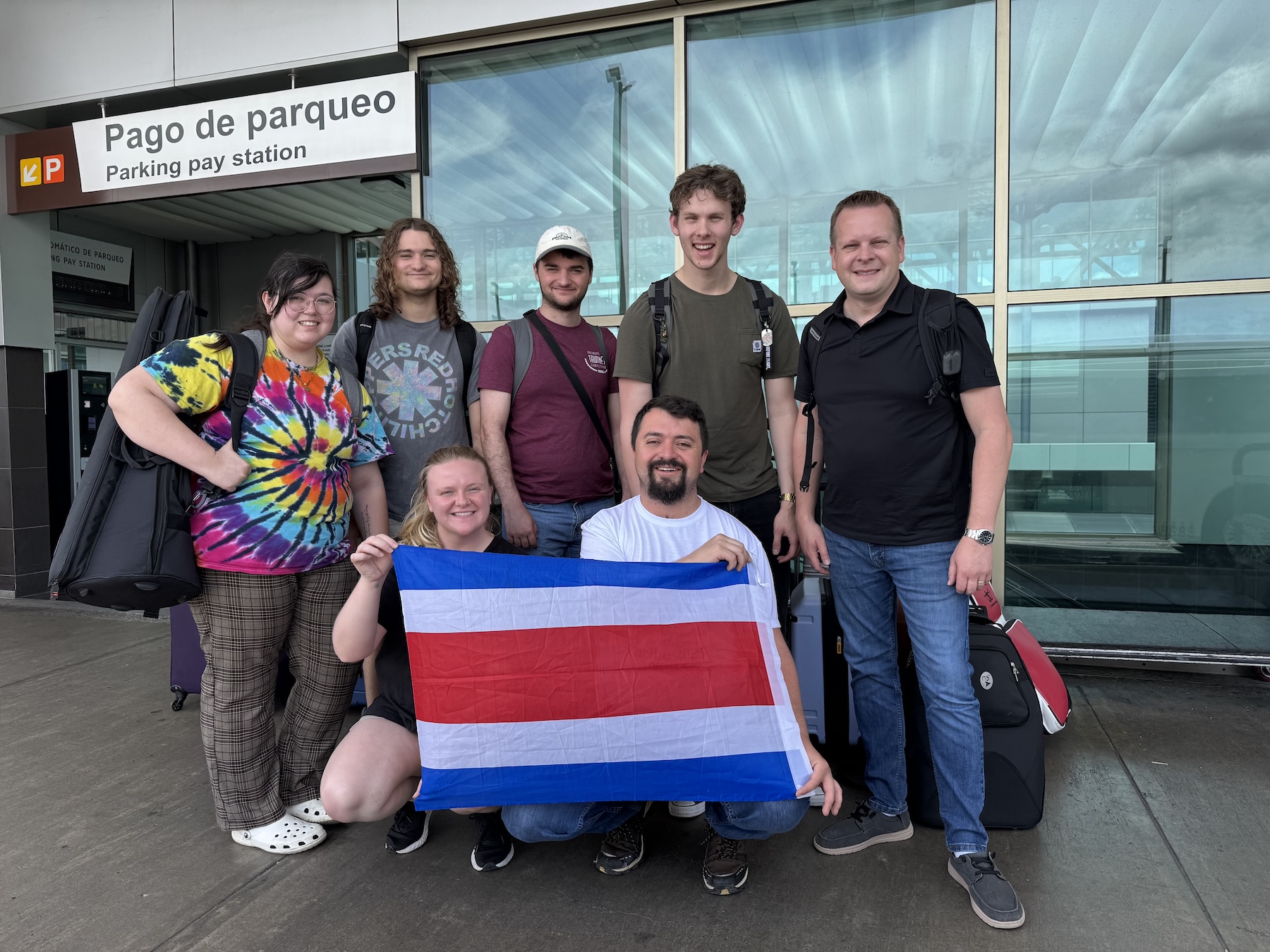 The Aurum Sonor Brass Quintet members with Dr. Rob Waugh and APSU alum Ariel Mendez. Back row, from left: Savanna Watson,
Zack Marhover, Dylan Thompson, Jed Edmondson, Waugh. Front row, from left: Emily Sholar,
Mendez. | Contributed photo
The Aurum Sonor Brass Quintet members with Dr. Rob Waugh and APSU alum Ariel Mendez. Back row, from left: Savanna Watson,
Zack Marhover, Dylan Thompson, Jed Edmondson, Waugh. Front row, from left: Emily Sholar,
Mendez. | Contributed photo
CLARKSVILLE, Tenn. - In remote mountain schools on Costa Rica’s Caribbean side, children saw brass instruments up close for the first time when Austin Peay State University’s Aurum Sonor Brass Quintet arrived to begin a 10-day run of concerts, master classes, and community outreach from Limón to San José.
“We were ambassadors,” said Dr. Rob Waugh, professor of trumpet in Austin Peay’s Department of Music. “For the students there, it was the first time hearing this type of music. Some had never seen a horn, a trombone, or a tuba in person.”
The Aurum Sonor Brass Quintet traveled from May 16-26, 2025, splitting time between Limón on the Caribbean coast and the capital, San José. The trip was initiated by APSU alum Ariel Mendez, a Costa Rican teaching at the University of Costa Rica. Through his connections, the quintet was invited to perform, coach, and collaborate across multiple venues and communities.
Across 10 days, Mendez scheduled 19 activities for the ensemble: four education concerts for grade-school students, seven community concerts, and eight master classes or educational exchanges with university students.
Ensemble roster:
- Jed Edmondson, trumpet
- Dylan Thompson, trumpet
- Emily Sholar, horn
- Savanna Watson, trombone
- Zack Marhover, tuba
Limón was the quintet’s launch point: hot, humid, and buzzing with wildlife. Students stayed in open-air bungalows and woke to the sound of howler monkeys. By day, they played a campus recital and worked with university students.
That work took them farther inland, up unpaved roads to schools in what locals call the indigenous zone, areas without public access in the way outsiders might expect. The government-funded schools are open to the elements: classrooms on poles with roofs to shed daily rain, walls replaced by air and light. The quintet played a 45 to 50-minute program blending pop, jazz, and brass standards.
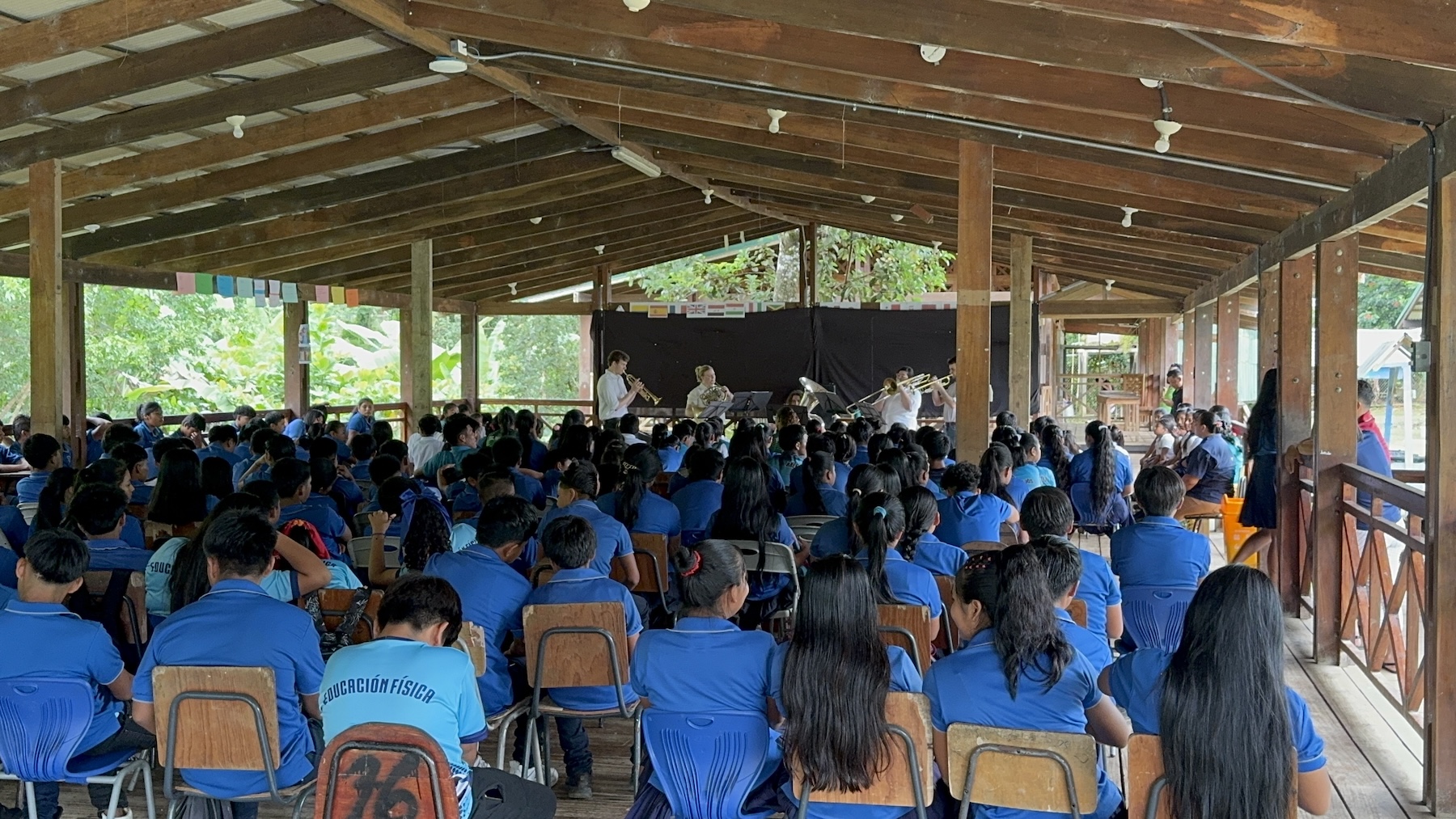 APSU’s Aurum Sonor Brass Quintet performs for over 120 grade school children in the
Indigenous Peoples Zone. | Contributed photo
APSU’s Aurum Sonor Brass Quintet performs for over 120 grade school children in the
Indigenous Peoples Zone. | Contributed photo
After the performance, the school served lunch, including local beef, rice, and vegetables, all cooked on-site.
“One of the best meals of the whole trip was a school lunch,” Waugh said. “It’s homemade every day.”
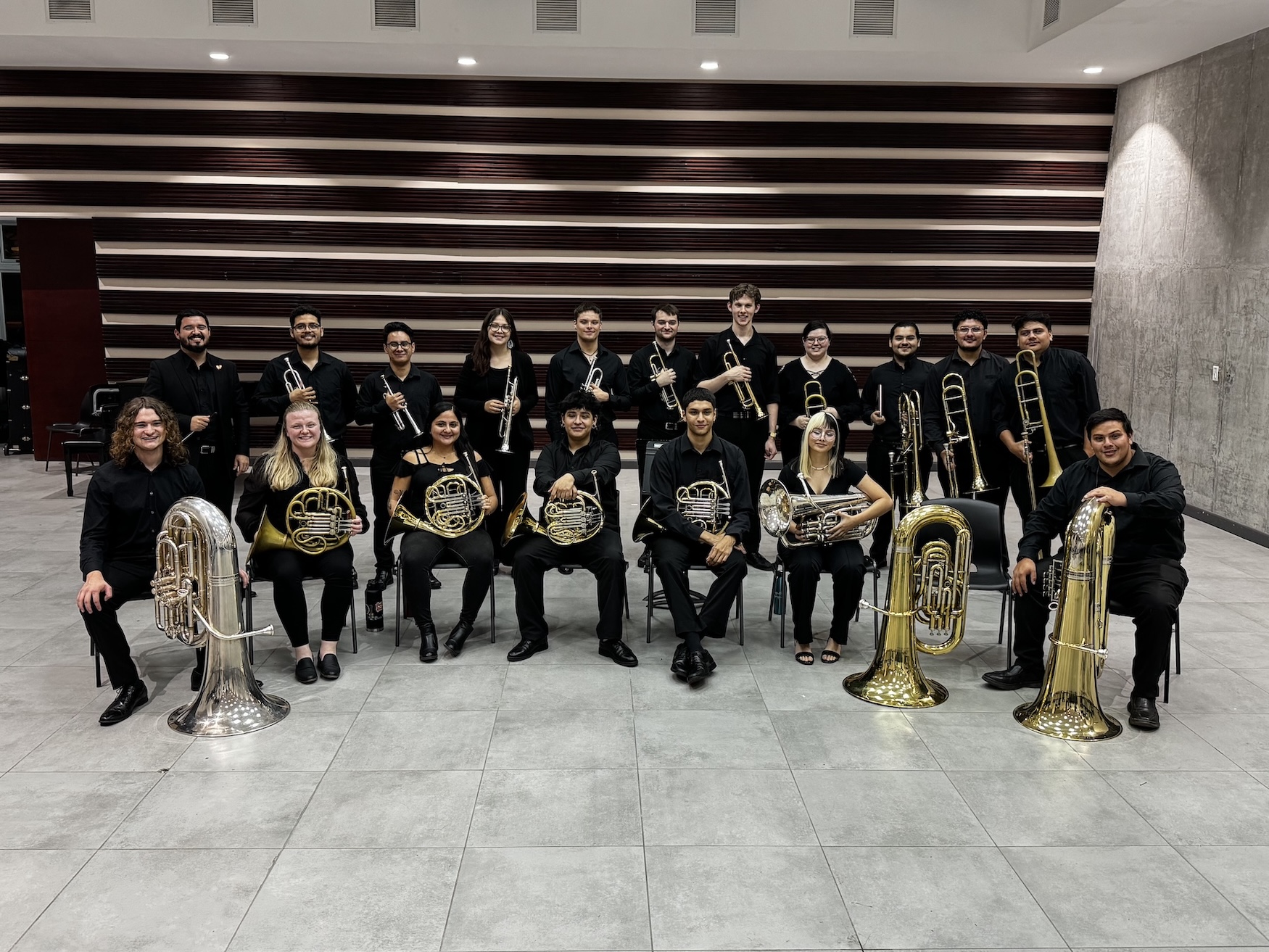 APSU’s Aurum Sonor Brass Quintet meets with fellow musicians while in Costa Rica.
The ensemble was able to play with both college peers and National Concert Bands during
their trip. | Contributed photo
APSU’s Aurum Sonor Brass Quintet meets with fellow musicians while in Costa Rica.
The ensemble was able to play with both college peers and National Concert Bands during
their trip. | Contributed photo
From Limón, the quintet traveled to San José for six more days of near-daily performances at the University of Costa Rica and the National Institute of Music. They played for and alongside college peers in side-by-side concerts, swapping parts and sharing the stage.
They also joined the National Concert Bands, government-funded ensembles serving local audiences since 1895.
“These are professional jobs,” Waugh said. “We have Cumberland Winds in Clarksville as a community band. In Costa Rica, those groups are professional and government-funded, doing concerts for high school students and adults across the city.”
The schedule was relentless: two daytime concerts, an evening performance for a general audience, and a collaboration with a community school band.
“Leaving at 7 a.m. almost every day, we would get out of the van with little to no time to warm up,” Edmonson said. “For the first couple of days, this was very challenging; as brass players, the time to get ready for performance can be more defining than the performance itself.”
By the fourth day, the students adapted to the performance cycle and found their rhythm.
“We started playing together, often better than we had back in Tennessee, communicating more through playing and the gestures that came with it,” Edmonson said. “We were growing and developing in real time.”
Between rehearsals and concerts, Waugh performed as a trumpet soloist with a community band and a National Concert Band, playing La Virgen de la Macarena, the traditional bullfighter’s song. The quintet’s set lists moved from familiar tunes to styles new to the audience, meeting listeners where they were and expanding the frame.
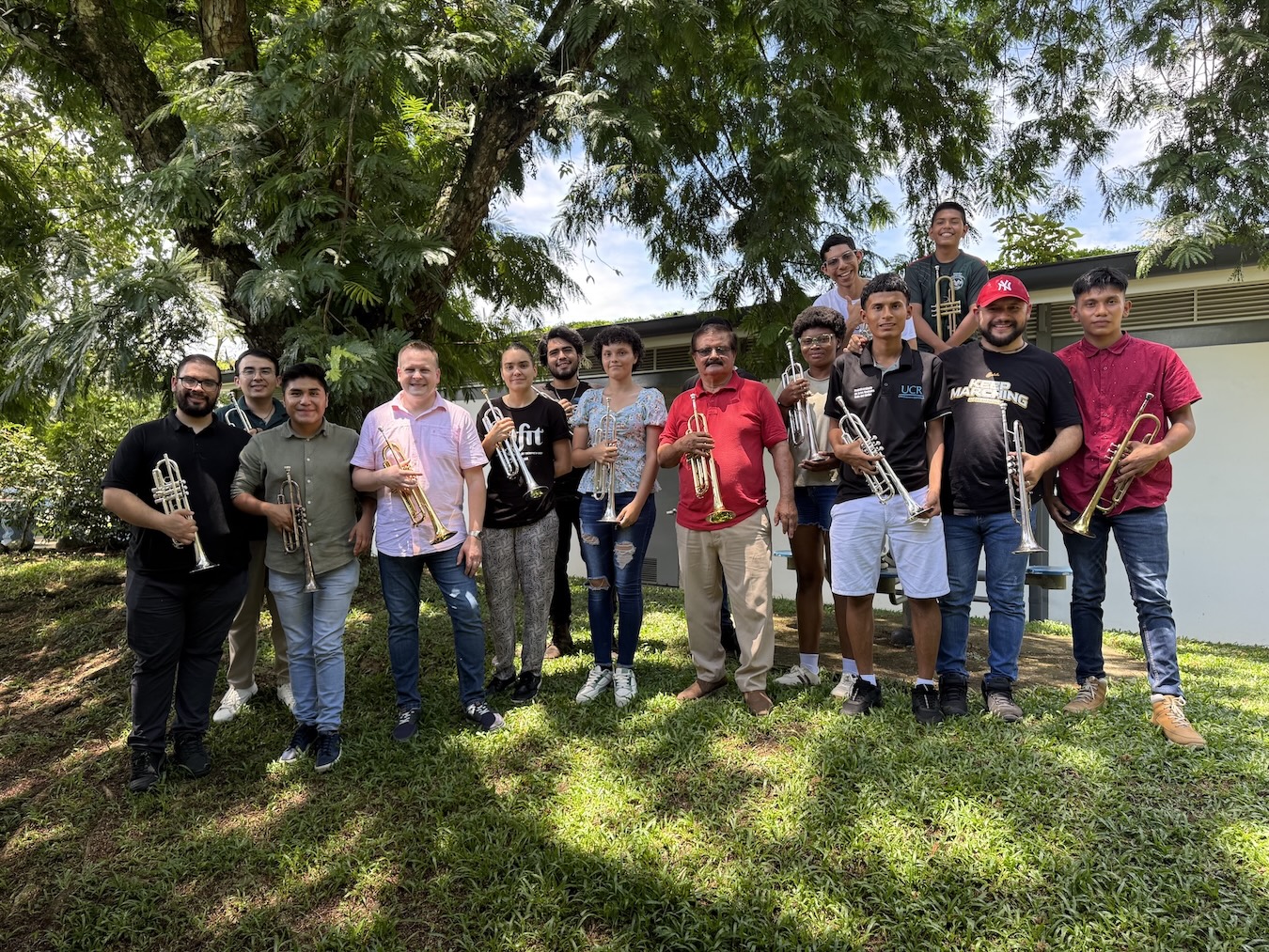 Dr. Rob Waugh, professor of trumpet at APSU, with a community band and a National
Concert Band in Costa Rica. | Contributed photo
Dr. Rob Waugh, professor of trumpet at APSU, with a community band and a National
Concert Band in Costa Rica. | Contributed photo
“Most music the kids in the mountains knew was guitar and singing, folk songs,” Waugh said. “Hearing a brass quintet, live, right in front of you, that’s a different world.”
Support for the trip came from the Center of Excellence for the Creative Arts, the College of Arts & Letters, the Office of the Provost, and a fundraiser the Aurum Sonor Brass Quintet played at Madison Street United Methodist Church.
In Costa Rica, key support came from the University of Costa Rica’s Social Action Department, the UCR Caribbean Campus, and the Municipal Music School of Goicoechea.
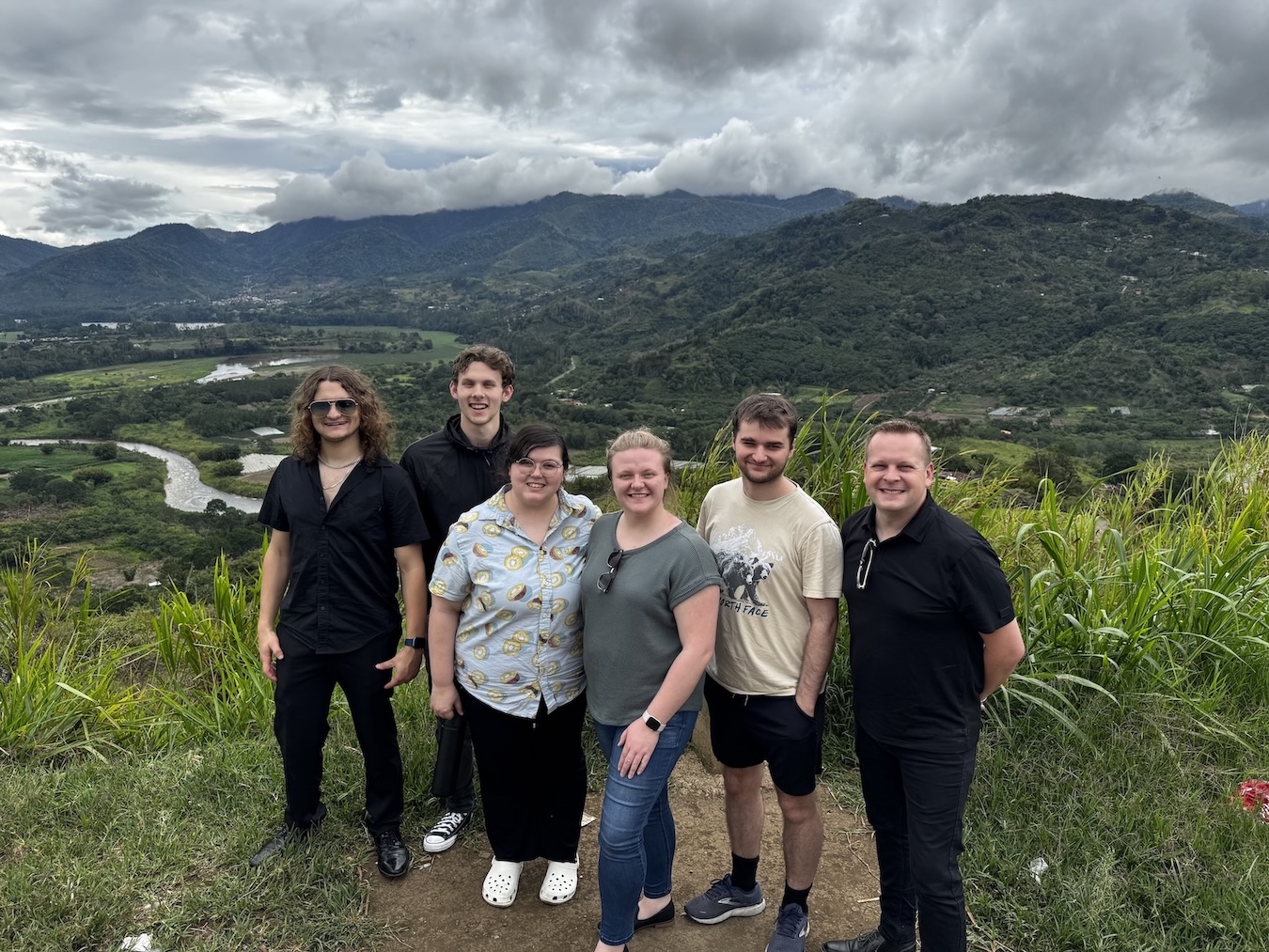 APSU’s Aurum Sonor Brass Quintet and Dr. Rob Waugh, professor of trumpet, enjoy the
landscapes and views while traveling in Costa Rica. | Contributed photo
APSU’s Aurum Sonor Brass Quintet and Dr. Rob Waugh, professor of trumpet, enjoy the
landscapes and views while traveling in Costa Rica. | Contributed photo
For Austin Peay’s students, the travel wasn’t just about technique or stamina; it was perspective. Some of the children they met walk hours to and from school each day. The roads are slow, the access narrow, but the welcome was wide.
“Costa Rica was such a wonderful experience,” Edmonson said. “For my first time out of the country, it was thrilling and challenging in so many ways. Wonderful food, stunning views, amazing people, and playing music that none of us could have prepared for … I’m so thankful for everyone I got to meet while I was there, the new experiences, and my time spent in the country.”
Waugh said those experiences will leave a lasting impact on the ensemble and the audiences they performed for.
“This is something the students will remember for the rest of their lives,” Waugh said. “And those kids will, too.”