APSU's College Possible coaches inspire national best practices through training event
(Posted on Friday, April 21, 2023)
CLARKSVILLE, Tenn. - Austin Peay State University has partnered with College Possible to provide first-generation college students with near-peer coaching support since 2019, and the innovative partnership is already influencing national practices.
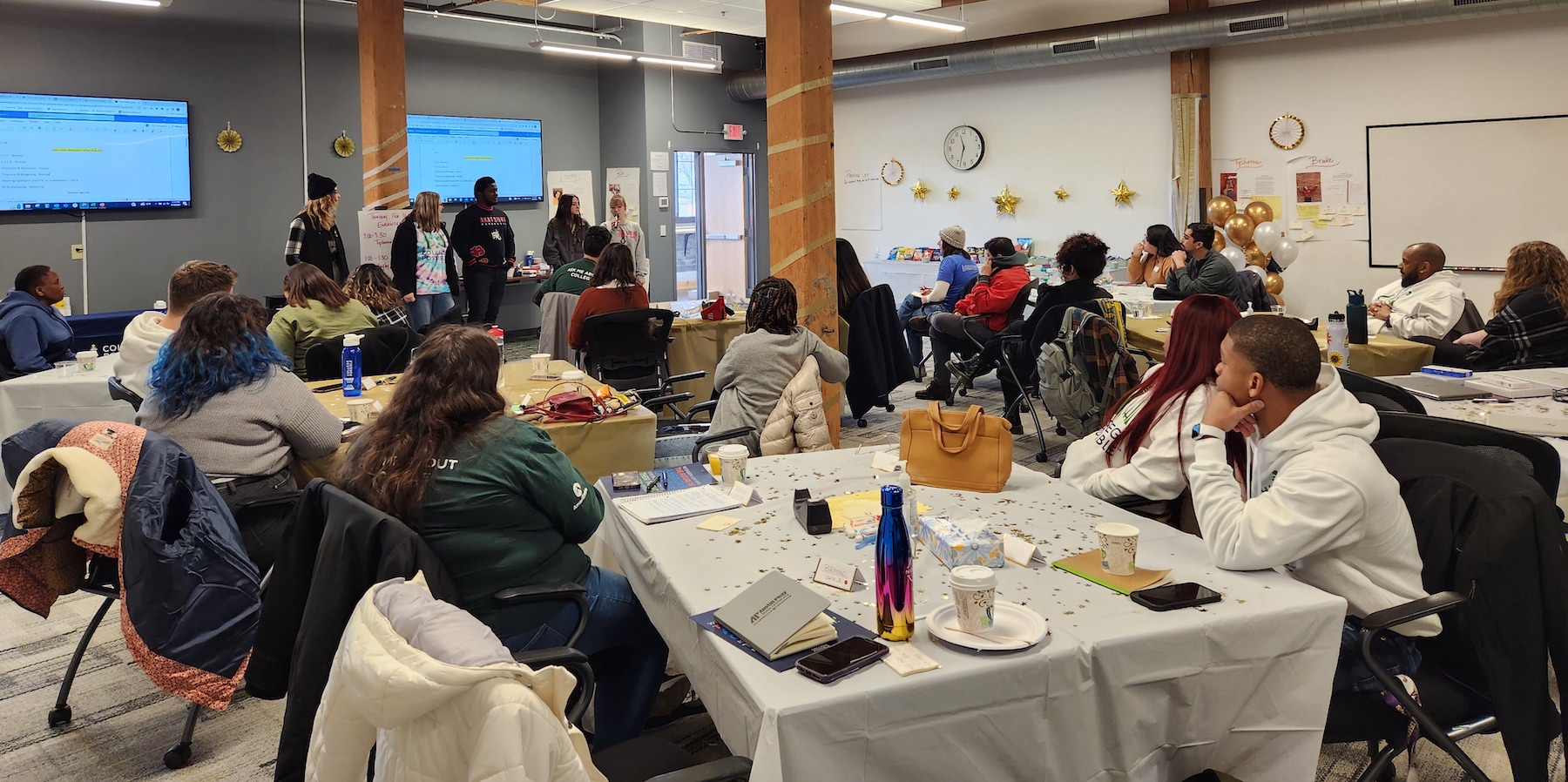
Five College Possible success coaches from Austin Peay - Brooke Gibson, Demetrius Hobbs, Hayley Roddy, Kristen Nanney and Olivia McClendon - were recently invited to speak at a three-day College Possible Catalyze Coach Mid-Year Retreat in St. Paul, Minnesota. Each of them led individual retreat activities, and they also co-facilitated a workshop on collaboration and best practices for higher education partners across the nation.
“Professionally, it’s always great to be able to share your expertise and best practices with colleagues,” said Dr. Dametraus Jaggers, executive director of the Office for Student Success. “This [gave] our coaches the opportunity to showcase the great work that they’re doing … and the opportunity to present really helps to develop your confidence and can lead to other opportunities as you progress in your career.”
College Possible success coaches serve through AmeriCorps and currently mentor approximately 800 freshman students from first generation and under-resourced backgrounds. Each coach supports a different college success team while collaborating weekly to support the development of College Possible student programming throughout the year.
“Within the Austin Peay coaching team, we choose to do meetings twice a week to connect and share information,” said McClendon, who works primarily with students in the College of STEM. “That’s not something that’s common among other institutions, and they wanted us to show how we structure our meetings and assign roles to different coaches.”
Hobbs, who primarily works with students in the College of Arts and Letters, said the coaches also shared information on how they plan their days to maximize efficiency and streamline processes.
“For a lot of us, it was our first time being looked to for advice in a leadership position,” he said. “I felt very lucky to have been asked to speak, and it was definitely an experience I appreciated. It was really intimidating, but it made me feel more confident about being able to handle the day-to-day problems the students have.”
Success coaches like Hobbs and McClendon live on campus so they can connect with students and help them reach their academic goals. The program focuses primarily on first-generation college students and those eligible for Federal Pell Grants.
“With some students I’ve been focused on helping them build LinkedIn profiles and looking at internships for the summer,” McClendon said. “Lately, there’s been more of a focus on study skills and time management, especially going into finals … and we help them make sure they’re aware of their resources, so they know going forward they have a team of people who are dedicated to seeing their success through to graduation.”
Even if students are doing well in their classes, Hobbs said success coaches can help them make the most of their college experience. Since each of them recently graduated from Austin Peay, they are familiar with the day-to-day problems students may face.
“I think a huge part of it has just been the relationship building,” he said. “A lot of the students I work with, their parents didn’t go to college, so they don’t understand a lot of the steps and it’s important to let them know they’re not alone. Some of my students will book appointments with me just to tell me about dreams they have, and we’ll talk about what it could mean. Other times we help them out with setting therapy appointments.”
Student Success Coordinator Whitney Milliken said Austin Peay’s College Possible program has steadily grown over the years, allowing coaches to leave a lasting impact on the students who participate in the program.
“This year we’re supporting a larger group of students than we have in previous years by engaging additional coaches,” she said. “Almost 800 students are being supported by six College Possible success coaches ... I think it’s great that each year we’ve continued to increase the student population that we’re serving.”
Austin Peay’s presentation at the College Possible training event may help other institutions replicate that success, and College Possible’s leadership said the success coaches excelled at communicating their ideas.
“We were impressed with the leadership and professionalism that Austin Peay’s success coaches showed,” said Catherine Marciano, vice president of partnerships for College Possible. “Coaches from several other College Possible partners remarked that the Austin Peay presentation was one of their favorite parts of the training.”
For more information on Austin Peay’s College Possible program, visit https://www.apsu.edu/student-success/college-possible.php.