APSU named “bright spot” in state for Black and Latino student inclusion
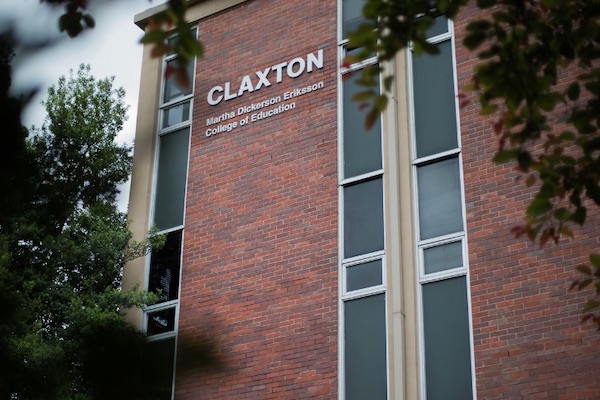
CLARKSVILLE, Tenn. – Late last year, the Education Trust of Tennessee released a sobering report on the number of Black and Latino students enrolled in colleges across the state.
“In 2019, Black and Latino Tennesseans respectively made up 21.2% and 5.7% of the state’s 18- to 24-year-old population, though they are largely underrepresented at many of our state’s public higher education institutions,” Kiah Albritton, a higher education policy fellow with the trust, said.
Several Tennessee schools received failing grades for their efforts, but on page 14, the report highlighted one of the “bright spots” of Tennessee higher education – Austin Peay Peay State University’s Eriksson College of Education. Austin Peay was one of only two Tennessee universities to receive an “A” for the report’s Black Student Access Grade and an “A” for the Latino Student Access Grade. The Education Trust of Tennessee also spotlighted the College of Education’s accelerated Grow Your Own Teacher Residency program.
Originally developed with the Clarksville-Montgomery County School District, the program provides recent high school graduates with a free path to become full-time teachers, and a guaranteed job in partner districts, in just three years. The program specifically targets minority and first-generation college students, increasing diversity both within the school system and at Austin Peay.
According to the report, “50% of each Grow Your Own cohort is composed of Black or Latino students. By publicly stating and restating these goals, Austin Peay has held itself accountable to increasing outcomes for Black and Latino students.”
Dr. Prentice Chandler, dean of APSU’s College of Education, is pleased with Austin Peay’s score, but he said they still need to work harder to recruit diverse students and professors to campus. The College of Education recently partnered with the Tennessee Educators of Color Alliance (TECA) to develop the college’s inaugural Strategic Diversity Plan, which should be completed by April. The Grow Your Own programs are a good first step, and he said much of the credit goes to the school system’s leadership.
“The very first conversations we had with the district about this idea of residency programs, it became clear very quickly that our strategic goals and the district’s goals were the same,” Chandler said. “This is a good example of what we can do when we partner with a top-notch school district.”
The Grow Your Own programs allow school districts to recruit and train teaching candidates amid a national teaching shortage, while also providing more education students to Austin Peay’s College of Education. But Chandler said there’s a more important reason for initiating programs that provide minority students with free, accelerated education.
“It’s the right thing to do,” he said. “We are intentionally targeting unrepresented people to be teachers. There’s research out there that students perform better who have teachers who look like them.”
To read the Education Trust of Tennessee’s report, “Tennessee: Segregation Forever?,” visit https://edtrust.org/wp-content/uploads/2014/09/120920-ETT-SegregationForever-Report-web.pdf.
News Feed
View All News
Dr. Debra Rose Wilson, professor and Lenora C. Reuther Chair of Excellence in Austin Peay State University's School of Nursing, has been selected for induction as a Fellow of the American Academy of Nursing, one of the profession's most prestigious distinctions.
Read More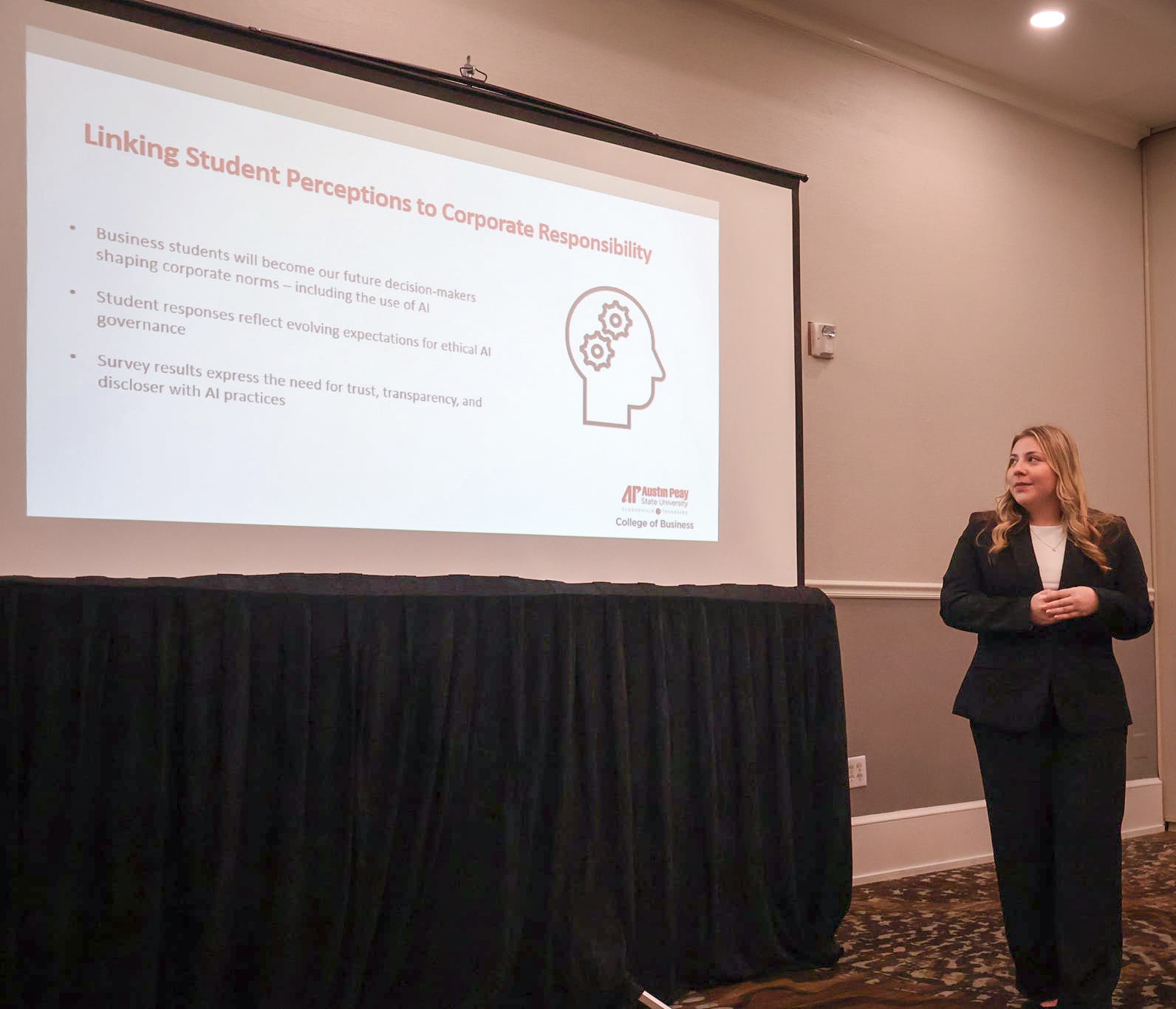
With fewer entry-level jobs available, Austin Peay State University's College of Business has responded by increasing experiential learning participation by 37%--connecting students with real organizations, AI-focused coursework, and global immersion experiences to build the skills employers value most.
Read More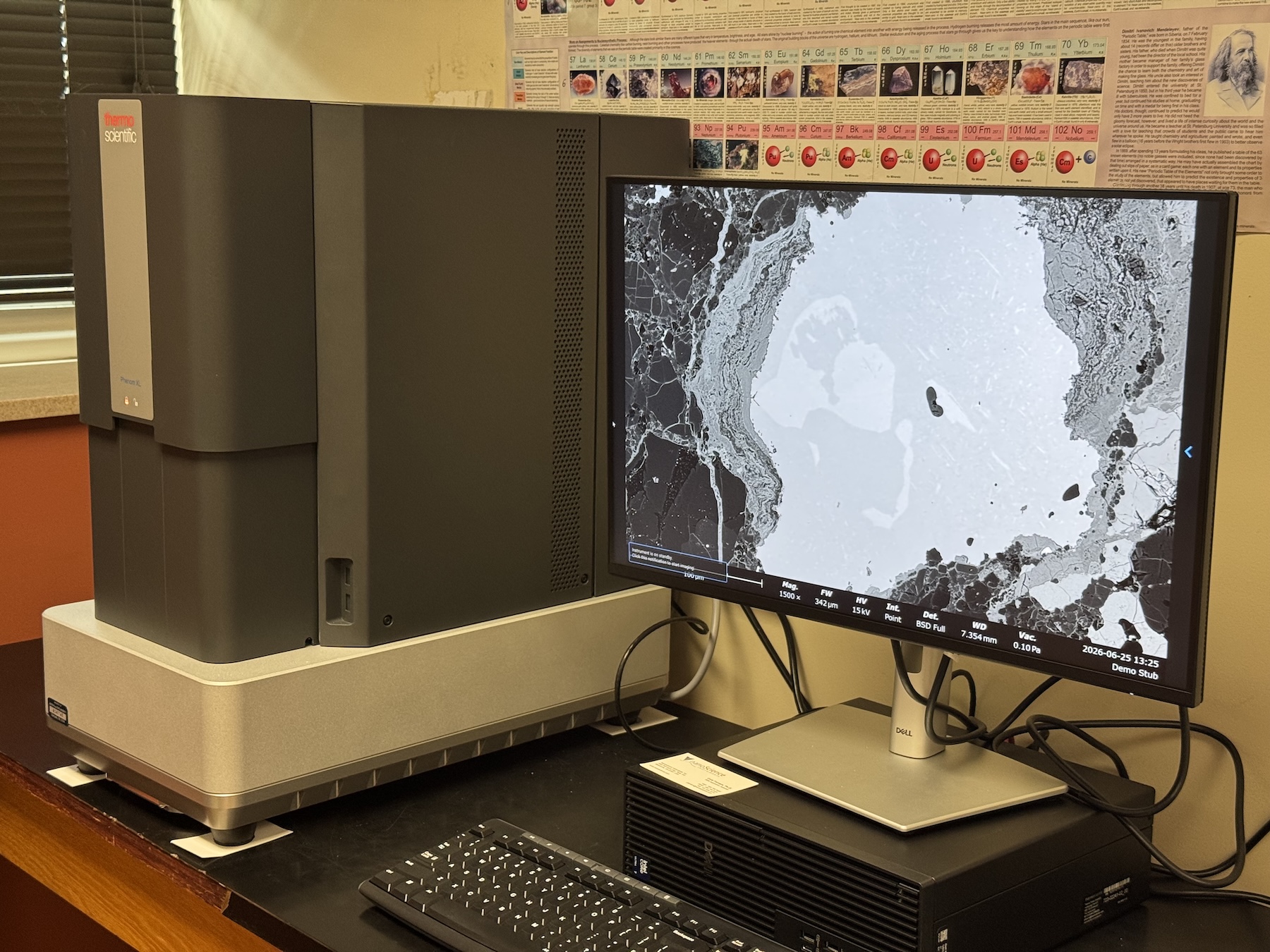
The Department of Earth and Environmental Sciences has acquired a new scanning electron microscope, giving students publication-quality imaging and chemical analysis capabilities -- including the chance to study meteorites -- previously accessible only at major research institutions.
Read More